News
Saraki Files Fresh Suit to Stop Trial At CCT


The Senate President, Senator Bukola Saraki has asked Justice Gabriel Kolawole of a Federal High Court sitting in Abuja to stop his on-going trial at the Code of Conduct Tribunal.Saraki is standing trial before the tribunal over alleged false assets declaration.The suit which is an enforcement of fundamental human rights was marked FHC/ABJ/CS/117/2016 and filed by one Timipa Jenkins Okponipere, on behalf of the Senate President.The lawyer is seeking the court’s declaration that “the plan to resume the trial of Senator Abubakar Saraki at the CCT is a breach of his fundamental right to fair hearing as guaranteed by Section 36(1) of the 1999 Constitution (as amended).He is also praying for an order compelling the CCT and AGF to suspend indefinitely, any plan to resume the trial at the CCT.Among the grounds relied on by the applicant, include that the trial at CCT was commenced at the wrong time; four years after Saraki allegedly committed the offences.According to him, “Having regard to the aims and objectives of the Code of Conduct Bureau (CCB) and its functions in sections 2 and 3 of the Code of Conduct Bureau and Tribunal (CCBT) Act, Senator Saraki ought to have been prosecuted by the respondents long before he returned to public life again in 2015 as an elected Senator.”Indeed, the CCBT Act never contemplated that an incumbent public office holder was already corrupt before he attained public office, otherwise, people like Senator Saraki, who had a case to answer regarding his activities between 2003 and 2011 would not have been permitted to return to public life.”However, four years later in 2015 Senator Saraki not only returned to public life as a Senator, he went on to become the President of the Senate, Chairman of the National Assembly and Nigeria’s number three citizen”It is nobody’s fault that the 1st and 2nd respondents were not vigilant enough to stop or prevent Senator Sarki from attaining public office. If truly the respondents were proactive institutions of government, they ought to have prosecuted Senator Sarki immediately after he left office as Governor of Kwara State in 2011, but they never did.”The failure, refusal and/or negligence of the respondents to prosecute Senator Saraki for the offences he allegedly committed between 2003 and 2011 before he returned again to public life as a Senator, vitiated all his past alleged misdeeds such that, as of June 8, 2015 when he was inaugurated as a Senator, he was assumed to be a public office holder without blemish in the eyes of the law and in the eyes of the respondents, otherwise they would have long since initiated proceedings against him.”The subsequent attempt to put Senator Saraki on trial over offences allegedly committed between 2003 and 2011 are not only tainted with political mischief and desperation, they constitute a breach of his fundamental right to fair hearing”.Responding to the suit, the AGF, in a notice of preliminary objection, faulted the suit and urged the court to dismiss it for lacking in merit.The AGF noted that the subject matter of the suit did not fall within the provisions of chapter four of the Constitution, containing the guaranteed fundamental human rights. The case has been adjourned to November 16, 2016.


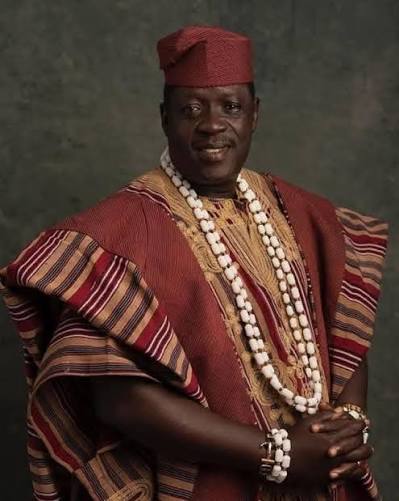
The remains of veteran Nollywood actor Taiwo Hassan, popularly known as Ogogo, will be laid to rest on Monday, August 24, 2026, in his hometown of Ilaro, Ogun State.
The burial arrangements were announced following the actor’s death on Sunday at the age of 66. His death was confirmed by his daughter, Kira Taiwo, and a family friend.
According to the burial arrangements, Ogogo’s remains will be taken to Ilaro, where a lying-in-state ceremony is scheduled to take place before his burial on Monday.
A separate announcement by the Ilaro Muslim Community indicated that the burial prayer for the late actor will take place at the Asade Agunloye Pavilion Ground in Ilaro at 10 a.m. on Monday.
The development follows an emotional outpouring of tributes from colleagues, friends, fans and members of the Yoruba film industry following the news of his death.
Ogogo had been battling stage-four cancer in the weeks preceding his death.
Earlier in August, his daughters, Lima and Kira Taiwo, publicly appealed for medical assistance, revealing the severity of his condition and seeking help from hospitals and cancer specialists.
The family had initially dismissed reports of his death when rumours circulated online on August 18, urging the public to disregard the unverified reports.
He was later confirmed dead on Sunday, August 23.
Ogogo was one of the prominent figures in Yoruba-language cinema, with a career spanning more than four decades.
He worked as an actor, filmmaker, producer and screenwriter and became widely recognised for his performances in indigenous Nigerian productions.
His career included appearances in films such as Omo Ghetto, Anikulapo and Anikulapo: Rise of the Spectre, among numerous other productions.
His contribution to Yoruba theatre and Nollywood earned him respect from colleagues across different generations of the Nigerian entertainment industry.
News of Ogogo’s death has triggered tributes from prominent members of the Nigerian film industry, who have described his passing as a major loss to Nollywood.
His long-time colleagues and friends, including veteran actors who worked alongside him for decades, have continued to mourn his contribution to the industry.
As the entertainment community prepares to accompany him on his final journey, attention will turn to Ilaro on Monday for the burial rites of one of Yoruba cinema’s most recognisable veterans.
Taiwo Hassan ‘Ogogo’ was 66.
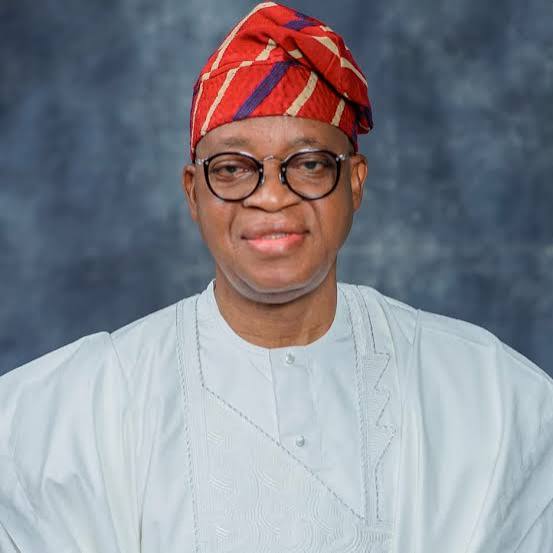
The United States Coast Guard (USCG) has lifted a 12-year-old Condition of Entry (CoE) imposed on vessels arriving in the United States after calling at Nigerian ports, Minister of Marine and Blue Economy Adegboyega Oyetola has announced.
The development ends a regime of additional security requirements that had affected vessels operating between Nigeria and the United States since June 25, 2014.
Under the former arrangement, vessels heading to the US that had visited designated Nigerian ports within their previous five port calls were subjected to additional security measures and enhanced scrutiny before being allowed into American waters.
Oyetola said the decision followed significant improvements in Nigeria’s maritime security system and its implementation of the International Ship and Port Facility Security (ISPS) Code.
The minister credited the achievement to collaboration between the Federal Ministry of Marine and Blue Economy, Nigerian Maritime Administration and Safety Agency (NIMASA), government agencies, port and terminal operators, shipping companies and other stakeholders.
According to Oyetola, the US Coast Guard conducted four comprehensive assessments of Nigeria’s maritime security framework and port facilities between 2024 and 2026.
The assessments took place in March and April 2024, March 2025 and April 2026, with the findings showing improvements in Nigeria’s compliance with international maritime security standards.
The lifting of the restriction is expected to have implications beyond security compliance.
According to the minister, Nigerian ports could benefit from faster vessel turnaround times, improved shipping schedules and lower operational costs, as vessels will no longer face the additional requirements imposed specifically under the CoE.
The development could also make Nigerian ports more attractive to international shipping operators and potentially encourage greater shipping activity, trade and investment.
For more than a decade, the additional requirements had contributed to increased security and operational expenses for shipping companies, as well as extra inspections, documentation and delays.
Oyetola described the lifting of the restriction as an important milestone for Nigeria’s maritime sector and an indication that the country’s efforts to improve port security are yielding results.
He also commended NIMASA Director-General Dayo Mobereola and his team for their contribution to the process.
The minister said the Federal Government would continue working to maintain the progress made and position Nigeria as a safe, secure and competitive destination for international shipping.
The removal of the US restriction is therefore being seen as a significant development for Nigeria’s maritime industry, particularly as the country seeks to improve port efficiency and strengthen its role in international trade.
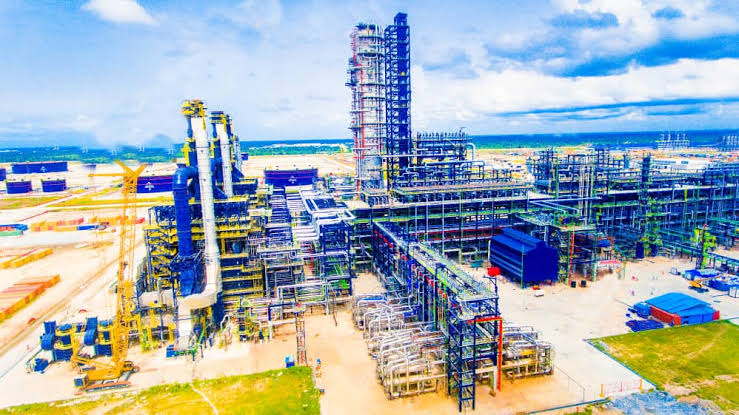
Dangote Petroleum Refinery has secured a $400 million underwriting commitment as preparations continue for its planned initial public offering (IPO), which could become one of Africa’s largest-ever stock market listings.
The underwriting commitment was announced by IPO advisers Marob Strategies and Consulting DIFC Ltd and Lilium Capital Group. It forms part of a broader $1 billion underwriting programme supporting the proposed offering.
The programme comprises a $600 million completed and funded private placement alongside the new $400 million underwriting commitment.
The refinery, owned by Nigerian billionaire Aliko Dangote, has submitted an application to Nigeria’s Securities and Exchange Commission (SEC) for a potential $5 billion IPO. However, the final size of the offering has not yet been determined and will depend on regulatory approval and market conditions.
According to the advisers, the $400 million underwriting facility will become effective when the IPO is launched, subject to prevailing market conditions and the necessary regulatory approvals.
The development represents another major step in the refinery’s plans to broaden its ownership base and raise additional capital for future growth.
The company has been preparing for a retail-focused Nigerian IPO, with management previously indicating that the offering is intended to give Nigerian investors an opportunity to participate directly in the refinery’s growth.
The proposed $5 billion offering has attracted considerable attention because of its potential scale.
Dangote Refinery is Africa’s largest refinery, with an initial refining capacity of about 650,000 barrels per day. The company has also set out plans to increase capacity to approximately 1.4 million barrels per day within three years, with the expansion expected to be financed partly through IPO proceeds and debt.
The refinery’s management has said preparations for the IPO are progressing, while investor interest has been strong during pre-marketing activities.
A $2.5 billion private placement in July reportedly valued the refinery at around $40 billion. The transaction was said to have been heavily oversubscribed, attracting interest from African and international institutional investors.
Dangote Refinery has also strengthened its position in international fuel markets amid disruptions linked to the conflict involving Iran.
The refinery has become a major supplier of aviation fuel to markets across Africa and Western Europe, with its management saying it became Europe’s largest supplier of jet fuel in June and July.
The company also benefits from its access to Nigeria’s crude oil resources, strong domestic fuel demand and its integrated refining operations.
Unlike plans for an immediate foreign listing, the company currently intends to focus its IPO on the Nigerian market.
Dangote Refinery’s CEO, David Bird, said the company wants the offering to encourage broad participation by Nigerians and create an opportunity for citizens to share in the refinery’s future growth.
A potential foreign listing could be considered later, after the company establishes a longer track record of production and financial performance.
With the new $400 million underwriting commitment and preparations for a potential $5 billion offering continuing, the Dangote Refinery IPO is shaping up to be a major development for Nigeria’s capital market and the country’s energy sector.

 News3 years ago
Hardship: We Plan To Establish A National Commodity Board To Crash Food Prices – VP Shettima
- News8 years ago
Blog Reader; Samson Osagiede Celebrates Fiancè Benedicta Daniels’s Birthday With Sweet Words
- Home10 years ago
News Channel claims Donald Trump is an orphan from Pakistan,share alleged childhood photo
- Home10 years ago
Another $175m Found in Patience Jonathan’s wife’s firm’s Bank Account
- Home10 years ago
Oil Spillage: House of Reps Member Shares Photos of the Water her Constituents Drink .
- Home10 years ago
Zara Buhari & Ahmed Indimi’s Wedding Access Card
 Sport8 years ago
Modric, Marta Wins 2018 FIFA Best Player Of The Year Awards ⚽️
- News8 years ago
The Best Video You’ve Seen Today?