News
How FIRS Plans To Realise Its Revenue Target -Fowler


The Federal Inland Revenue Service (FIRS) says it plans to realize its revenue target for the year through recoveries from defaulting millionaire taxpayers, values added (VAT) and compliance enforcement activities.
The Chairman of FIRS, Tunde Fowler, said in January that the agency’s revenue collection target for 2019 was about N8 trillion.
Mr Fowler told the House of Representatives joint committees on Finance, Appropriations, Aids, Loans and Debt Management Legislative Budget and Research and National Planning and Economic Development that he hopes about N750bn would be realized from about 55,000 defaulting taxpayers during the year.
Mr Fowler, who spoke on the 2019/2021 Medium Term Expenditure Framework (MTEF) and Fiscal Strategy Paper (FSP), said using banking information to bring non-compliant taxpayers with N1 billion and above turnover to comply about N23.25 billion has been recovered so far.
He also restated that 85% of VAT collected goes to State Governments. He said the exercise has been extended to cover those with turnover of N100 million and above.
“To date, about 500 of the tax defaulters have come forward and have paid about N24 billion. We believe we should be able to go through the 55,000 before the middle of this year.
“In terms of estimates we should be able to be able to generate from this exercise alone about N750 billion.”
Besides, Mr Fowler said the FIRS also expects that the increase in Value Added Tax (VAT) collection between 2015 and 2018 will continue during the year.
He said FIRS is already broadening its VAT collection scope with the adoption of States Accountants Generals (SAG) collection platform, VAT Auto-Collect, integration of the GIFMIS platform with Ministries, Departments and Agencies, (MDAs) and through e-Service payment options.
Out of about N5.3 trillion, a large percentage of the revenue is shared between states and local governments.’ In VAT, there has been a growth of over 44 per cent between 2015 and 2018 at the current rate of 5 percent.
“When you look at Africa as a continent, Nigeria still has the lowest VAT rate. When we look at the items that do not attract VAT, they include basic food items, medicals, and education.
Insisting VAT is not for the poor, Mr Fowler said if one is able to go to a restaurant to eat and drink the same thing one can buy in the open market, then one can pay VAT.
“So, VAT basically is a consumption tax, and those who choose not to go to the open market to buy their food and cook at home are subject to VAT. So, VAT is not a hardship on the low income earners.
“For those who have the ability and the desire to take the choice of going to areas where they have to pay VAT, then they should be allowed to pay VAT,” he added. He said revenue collection by FIRS increased by about 32 per cent from N4.02 trillion in 2017 to N5.3 trillion in 2018.
The FIRS Chairman told the committee that through enforcement activities in respect of defaulting taxpayers from various tax offices, tax audit and investigation assessments, the agency recovered about N28. 51 billion and $77. 83 million.
Also, the FIRS is partnering with the Economic and Financial Crimes Commission (EFCC) and Joint Tax Force (JTF) since 2018 to enhance the fight against tax related economic fraud. As at December 2018, he said about N6. 94 billion and $278,430 had been recovered by the JTF as part of initiatives to boost revenue generation.
To deepen tax revenue collection and expand the nation’s tax net as well as increase the revenue base, Mr Fowler said the FIRS also initiated income tax on property owners in Abuja and Lagos.
He said the initiative, which was initially targeted at property owners in Abuja and Lagos, has so far yielded N4.3 billion, and is being extended to other locations like Oyo and Kaduna states.
“It is important to note that this is not a property tax, but rather the use of the provisions of the law to bring into the tax net companies that own properties but failed to file necessary tax returns and pay appropriate taxes due,” Mr Fowler said.
On tax audit exercise of the Service, the FIRS boss said this will cover both the National Tax Audit (NTA) and the Pioneer Audit (PA). The NTA exercise contributed the sum of N212.79 billion to tax collection in 2018.


The National Examinations Council (NECO) has released the results of the 2026 Senior School Certificate Examination (SSCE) Internal, with 58.67 per cent of candidates obtaining at least five credits, including English Language and Mathematics.
NECO Registrar and Chief Executive, Professor Dantani Wushishi, announced the results on Thursday at the council’s headquarters in Minna, Niger State.
A total of 1,378,048 candidates registered for the examination, comprising 682,352 males and 695,696 females. Of the registered candidates, 1,371,992 eventually sat for the examination.
According to NECO, 804,948 candidates, representing 58.67 per cent, obtained five credits and above, including English Language and Mathematics. Another 1,162,118 candidates, representing 84.70 per cent, obtained at least five credits irrespective of their results in the two subjects.
The 2026 examination was conducted between June 15 and July 23 across Nigeria and six foreign countries: Benin Republic, Equatorial Guinea, Niger Republic, Côte d’Ivoire, Togo and Saudi Arabia. The nationwide marking exercise took place from August 17 to September 4.
NECO also reported a significant reduction in examination malpractice. The council said the number of candidates involved in malpractice fell from 3,878 in 2025 to 1,406 in 2026, representing a 64.74 per cent decline.
The registrar attributed the reduction to strengthened examination monitoring, improved processes and collaboration with security agencies and other stakeholders.
The council also disclosed that candidates with special needs participated in the examination, as part of its efforts to make the examination process more inclusive.
NECO said candidates can now access their results through its official result-checking platform using their examination registration details.
The release of the results comes 63 days after the conclusion of the 2026 SSCE examination.

Nigeria’s foreign exchange supply increased by 20.5 per cent to $8.94 billion in 2025, up from $7.43 billion recorded in 2024, according to data from the Central Bank of Nigeria (CBN).
The figures were contained in the apex bank’s 2025 Statistical Bulletin and represent an increase of about $1.51 billion in annual foreign exchange supply.
Monthly figures showed that supply remained relatively low at the beginning of 2025 before rising significantly in March and April.
FX supply stood at $590.64 million in January and $607.63 million in February. It then climbed to $1.04 billion in March before reaching its highest monthly level of $1.65 billion in April.
However, supply declined in the following months, falling to $838.93 million in May and $676.31 million in June. It recovered slightly to $759.02 million in July before dropping to $677.84 million in August and $399.80 million in September.
October recorded the lowest monthly figure for the year at $150.10 million. Supply later recovered to $638.38 million in November and $910.73 million in December.
The CBN also reported that total foreign exchange inflows into Nigeria rose from $96.53 billion in 2024 to $109.86 billion in 2025, representing a 13.81 per cent increase.
However, foreign exchange outflows also increased during the period, rising by 27.83 per cent from $38.37 billion to $49.05 billion.
As a result, Nigeria recorded a net foreign exchange inflow of $60.81 billion in 2025, compared with $58.16 billion in 2024.
The CBN data, however, do not provide a detailed breakdown of the sources of the $8.94 billion supplied during the year.
The increase in FX supply comes amid continued efforts to improve liquidity and stability in Nigeria’s foreign exchange market, although the market remained volatile in 2026.
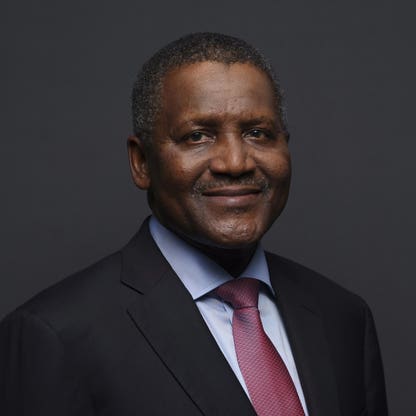
Africa’s richest man and President of Dangote Group, Aliko Dangote, has reacted to the wave of viral memes generated by Nigerians who recently bought shares in the Dangote Petroleum Refinery.
The memes emerged following the launch of the refinery’s Initial Public Offering (IPO) on the Nigerian Exchange on September 14, with investors jokingly presenting themselves as business partners and co-owners of the multibillion-dollar refinery.
Dangote addressed the trend while speaking with CNN correspondent Larry Madowo at the Unstoppable Africa 2026 summit in New York.
The billionaire said the IPO was designed to attract investors from across Africa, with an ambition of having up to 10 million shareholders.
According to Dangote, the objective is to broaden ownership and increase participation in Africa’s capital markets.
He also expressed confidence in the future value of the company, saying the share price would continue to grow and that he expected the refinery to become Africa’s most profitable company.
The viral memes began after the minimum subscription was set at 10 shares, allowing more Nigerians to participate in the offer with a relatively small amount of money.
Some new shareholders jokingly demanded board meetings, while others posted memes portraying themselves as senior executives of the refinery. The trend even inspired humorous videos from Nigerian comedians and content creators.
Reuters also reported that the IPO triggered significant interest among retail investors, with some digital investment platforms experiencing technical difficulties as people rushed to participate.
The Dangote Refinery IPO involves 4.1 billion ordinary shares, with the offer scheduled to close on October 13, 2026. The funds are intended to support the company’s expansion plans, including an increase in refining capacity.
Dangote also said the expected number of shareholders could be so large that the company’s annual general meeting would need to be held in a stadium.
The development has turned what is essentially a major capital-market transaction into a major social-media talking point, with Nigerians using humour to celebrate their newly acquired stakes in one of the country’s biggest industrial projects.

 News3 years ago
Hardship: We Plan To Establish A National Commodity Board To Crash Food Prices – VP Shettima
- News8 years ago
Blog Reader; Samson Osagiede Celebrates Fiancè Benedicta Daniels’s Birthday With Sweet Words
- Home10 years ago
News Channel claims Donald Trump is an orphan from Pakistan,share alleged childhood photo
- Home10 years ago
Another $175m Found in Patience Jonathan’s wife’s firm’s Bank Account
- Home10 years ago
Oil Spillage: House of Reps Member Shares Photos of the Water her Constituents Drink .
- Home10 years ago
Zara Buhari & Ahmed Indimi’s Wedding Access Card
 Sport8 years ago
Modric, Marta Wins 2018 FIFA Best Player Of The Year Awards ⚽️
- News8 years ago
The Best Video You’ve Seen Today?