News
Kaduna State Government Extends Quarantine By 30 Days

Kaduna State Governor Nasir El-Rufai has extended the quarantine orders being enforced in the state for another 30 days. The governor’s decision follows a recommendation to that effect by the State Standing Committee on Covid-19, which is chaired by the Deputy Governor, Dr. Hadiza Balarabe. This is effective from today, 26th April 2020.

With Covid-19 cases rising rapidly in neighbouring states and the FCT, and with strong evidence of interstate travel being a major means of spreading the virus, the Standing Committee’s evaluation is that measures to protect Kaduna State residents require further strengthening and more vigorous enforcement.
Malam Nasir El-Rufai has endorsed this evaluation and has accordingly reviewed the Quarantine Orders to strengthen the provisions against unauthorised movements. The two-day window during which the restriction of movement is relaxed on Tuesdays and Wednesdays has been reduced to only one day.
Henceforth, only Wednesdays will be lockdown-free, until the trajectory of Covid-19 infections becomes clearer.
All persons that venture out of their homes for whatever reason must wear facemasks and observe social distancing everywhere they go, in markets and in authorised vehicles. Government is making efforts to provide facemasks for poor and vulnerable residents, and it appeals to everyone that can afford it to get their tailors to make them cloth facemasks which they can wash after every use. The government also encourages tailors to produce facemasks for sale to those that are neither poor nor vulnerable.
Wearing of facemasks will be robustly enforced as a critical public health measure to reduce person-person transmission.
The state government said that the measures announced on 26th March 2020, to contain Covid-19 remain in force and have been renewed. These were imposed in exercise of the powers vested in the Governor by Section 45 of the Constitution of the Federal Republic of Nigeria 1999, (as amended), Sections 2 and 8 of the Quarantine Act 1926, now known as CAP Q2, Laws of the Federation of Nigeria 2004 and the Public Health Law of 1917.
Therefore, further to these declarations, and in accordance with the law, the quarantine orders imposed at midnight on Thursday, 26th March 2020, are further extended for another 30 days, with the following conditions, amongst others:
i. All residents of Kaduna State are quarantined and must stay at home.
ii. No office, event centre, market, shop or business of any sort or place of worship is allowed to open;
iii. The only category of persons exempted are workers in essential services such as health workers, the fire service, water corporation, electricity distribution and security personnel. Tankers conveying fuel to petrol stations are also permitted to move;
iv. Businesses in the food and pharmaceutical value-chain are exempted; and shall enjoy the protections accorded to other essential services;
v. Schools, places of worship, event centres, sports grounds, bars, restaurants, public parks and all other places where large crowds could gather are to remain closed until further notice.
vi. Residents are advised to stay at home, observe social distancing, avoid large gatherings, wear facemasks and wash their hands regularly with soap and water.
The Quarantine Orders prescribe fines, imprisonment and forfeiture for violations of the provisions specified therein.
The Kaduna State Government has clearly stated that no visitor is welcome to enter the state while the Covid-19 pandemic is raging. Entry into or passage through Kaduna State is prohibited whilst the Quarantine Orders remain in force. Persons seeking to come into the state will be denied entry. Such persons will be given the option of returning to their take-off points or entering isolation for 14 days in locations and conditions that are so austere that nobody can mistake them for holiday resorts.
The vehicles being used to enable such attempts to breach the quarantine conditions will be confiscated and forfeited to the government. The companies operating those vehicles will also be prosecuted and shall lose their license to operate in the state, even after the Covid-19 pandemic is contained. Within the state, vehicles of whatever type that are determined to be in violation will be confiscated and forfeited to the government, while the persons driving them will be fined, and may be imprisoned upon conviction. Motorcycle taxis and tricycles (popular known as Keke Napep) are prohibited in the state. Persons driving or riding in them shall be prosecuted while the vehicles shall be forfeited upon conviction.
Mobile courts have been empowered by the Quarantine Orders to try violators and impose the prescribed penalties, including fines, imprisonment and forfeiture of vehicles, upon conviction.
Conscious of the need to keep vital industries and businesses in the farming, food and pharmaceutical value chains operational, trailers and trucks conveying food, seeds, fertilizer and medical products are exempted from the restriction of movement. Such vehicles must, however, not carry more than three persons, including the driver. Otherwise they will be deemed to be engaging in illegal transport of persons which is a breach of quarantine orders.
Anyone thinking of disguising as a food vendor by parading a few bags of rice or other food in their cars must cut the pretence as they will be prosecuted at the mobile court and the vehicle forfeited to the government upon conviction.
The Kaduna State Government has also directed the Ministry for Local Government to ensure that local government chairmen are fully involved in enforcing the quarantine orders in their council areas. The Ministry of Local Government has also reminded traditional and community leaders of their obligation to report violations of quarantine conditions in their localities. Places of worship that violate the quarantine orders in any form will lose their titles to the land and the buildings will be demolished.
Regarding burials, guidelines from the Ministry of Health will outline the maximum number of persons that can attend any burial, while observing safety and social distancing rules. Gatherings for condolence are prohibited until the Covid-19 pandemic is declared over. The burial of any fatality from Covid-19 will be in accordance with the strict protocol to be announced by the Commissioner of Health.
The extension of the quarantine conditions imposes an obligation to make provision for the low income, poor and vulnerable persons that would be adversely affected, as they may be unable to earn any income while the lockdown persists. The state government has done a first phase of distribution of food across 59 community clusters in nine local government areas. The next phase will be conducted across the 23 local government areas.
To fund the provision of these support packages, the Kaduna State Government expects all those fortunate enough to still earn a regular income to live up to their neighbourly responsibility towards those who are unable to earn any money due to no fault of theirs. Therefore, the less than 100, 000 persons who work for the Kaduna State Government as political appointees and public servants must contribute financially towards enabling the almost 10m persons living in the state to survive and thrive in this emergency period.
Therefore, the Kaduna State Government has directed all its senior appointees, including Commissioners, Permanent Secretaries, Special Advisers and Heads of Agencies to each donate N500,000 in April 2020. In subsequent months, they will donate 50% of their salaries until the quarantine ends. Other categories of political appointees will also be making monthly donations to support the provision of relief to the low income, poor and vulnerable residents of the state.
Career public servants earning a net pay of N67,000 and above after tax will also donate 25% of their pay monthly whilst the quarantine conditions are in place. No public servant will have less than N50,000 monthly to manage in this emergency period.
We are obliged to demonstrate that as government workers, we care enough for others to donate part of our earnings for their wellbeing. As a state government, we are also seeking donations from high net worth individuals, the private sector and development partners to support our efforts to contain Covid-19 and its consequences.
The Kaduna State Government wishes to inform potential donors that we prefer donations to be in kind: personal protective equipment, PCR machines, medical facilities and equipment, facemasks, food, pharmaceuticals, and fertilizer, seeds and seedlings and other support for farmers. The state government will publicly acknowledge all donations in addition to the letters of appreciation that shall be sent to all donors.
Signed
Muyiwa Adekeye
Special Adviser to the Governor (Media & Communication)
26th April 2020


The National Examinations Council (NECO) has released the results of the 2026 Senior School Certificate Examination (SSCE) Internal, with 58.67 per cent of candidates obtaining at least five credits, including English Language and Mathematics.
NECO Registrar and Chief Executive, Professor Dantani Wushishi, announced the results on Thursday at the council’s headquarters in Minna, Niger State.
A total of 1,378,048 candidates registered for the examination, comprising 682,352 males and 695,696 females. Of the registered candidates, 1,371,992 eventually sat for the examination.
According to NECO, 804,948 candidates, representing 58.67 per cent, obtained five credits and above, including English Language and Mathematics. Another 1,162,118 candidates, representing 84.70 per cent, obtained at least five credits irrespective of their results in the two subjects.
The 2026 examination was conducted between June 15 and July 23 across Nigeria and six foreign countries: Benin Republic, Equatorial Guinea, Niger Republic, Côte d’Ivoire, Togo and Saudi Arabia. The nationwide marking exercise took place from August 17 to September 4.
NECO also reported a significant reduction in examination malpractice. The council said the number of candidates involved in malpractice fell from 3,878 in 2025 to 1,406 in 2026, representing a 64.74 per cent decline.
The registrar attributed the reduction to strengthened examination monitoring, improved processes and collaboration with security agencies and other stakeholders.
The council also disclosed that candidates with special needs participated in the examination, as part of its efforts to make the examination process more inclusive.
NECO said candidates can now access their results through its official result-checking platform using their examination registration details.
The release of the results comes 63 days after the conclusion of the 2026 SSCE examination.

Nigeria’s foreign exchange supply increased by 20.5 per cent to $8.94 billion in 2025, up from $7.43 billion recorded in 2024, according to data from the Central Bank of Nigeria (CBN).
The figures were contained in the apex bank’s 2025 Statistical Bulletin and represent an increase of about $1.51 billion in annual foreign exchange supply.
Monthly figures showed that supply remained relatively low at the beginning of 2025 before rising significantly in March and April.
FX supply stood at $590.64 million in January and $607.63 million in February. It then climbed to $1.04 billion in March before reaching its highest monthly level of $1.65 billion in April.
However, supply declined in the following months, falling to $838.93 million in May and $676.31 million in June. It recovered slightly to $759.02 million in July before dropping to $677.84 million in August and $399.80 million in September.
October recorded the lowest monthly figure for the year at $150.10 million. Supply later recovered to $638.38 million in November and $910.73 million in December.
The CBN also reported that total foreign exchange inflows into Nigeria rose from $96.53 billion in 2024 to $109.86 billion in 2025, representing a 13.81 per cent increase.
However, foreign exchange outflows also increased during the period, rising by 27.83 per cent from $38.37 billion to $49.05 billion.
As a result, Nigeria recorded a net foreign exchange inflow of $60.81 billion in 2025, compared with $58.16 billion in 2024.
The CBN data, however, do not provide a detailed breakdown of the sources of the $8.94 billion supplied during the year.
The increase in FX supply comes amid continued efforts to improve liquidity and stability in Nigeria’s foreign exchange market, although the market remained volatile in 2026.
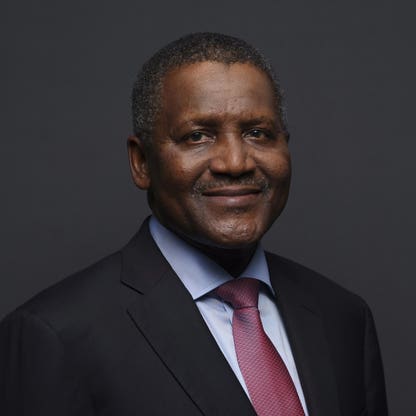
Africa’s richest man and President of Dangote Group, Aliko Dangote, has reacted to the wave of viral memes generated by Nigerians who recently bought shares in the Dangote Petroleum Refinery.
The memes emerged following the launch of the refinery’s Initial Public Offering (IPO) on the Nigerian Exchange on September 14, with investors jokingly presenting themselves as business partners and co-owners of the multibillion-dollar refinery.
Dangote addressed the trend while speaking with CNN correspondent Larry Madowo at the Unstoppable Africa 2026 summit in New York.
The billionaire said the IPO was designed to attract investors from across Africa, with an ambition of having up to 10 million shareholders.
According to Dangote, the objective is to broaden ownership and increase participation in Africa’s capital markets.
He also expressed confidence in the future value of the company, saying the share price would continue to grow and that he expected the refinery to become Africa’s most profitable company.
The viral memes began after the minimum subscription was set at 10 shares, allowing more Nigerians to participate in the offer with a relatively small amount of money.
Some new shareholders jokingly demanded board meetings, while others posted memes portraying themselves as senior executives of the refinery. The trend even inspired humorous videos from Nigerian comedians and content creators.
Reuters also reported that the IPO triggered significant interest among retail investors, with some digital investment platforms experiencing technical difficulties as people rushed to participate.
The Dangote Refinery IPO involves 4.1 billion ordinary shares, with the offer scheduled to close on October 13, 2026. The funds are intended to support the company’s expansion plans, including an increase in refining capacity.
Dangote also said the expected number of shareholders could be so large that the company’s annual general meeting would need to be held in a stadium.
The development has turned what is essentially a major capital-market transaction into a major social-media talking point, with Nigerians using humour to celebrate their newly acquired stakes in one of the country’s biggest industrial projects.

 News3 years ago
Hardship: We Plan To Establish A National Commodity Board To Crash Food Prices – VP Shettima
- News8 years ago
Blog Reader; Samson Osagiede Celebrates Fiancè Benedicta Daniels’s Birthday With Sweet Words
- Home10 years ago
News Channel claims Donald Trump is an orphan from Pakistan,share alleged childhood photo
- Home10 years ago
Another $175m Found in Patience Jonathan’s wife’s firm’s Bank Account
- Home10 years ago
Oil Spillage: House of Reps Member Shares Photos of the Water her Constituents Drink .
- Home10 years ago
Zara Buhari & Ahmed Indimi’s Wedding Access Card
 Sport8 years ago
Modric, Marta Wins 2018 FIFA Best Player Of The Year Awards ⚽️
- News8 years ago
The Best Video You’ve Seen Today?