
News
Two Lives And Other Stories By Reuben Abati

Two lives lost recently in the creative industry convey useful messages in terms of the import of their careers and the circumstances of their departure: the elderly actress, simply known as Bukky Ajayi, and the music entrepreneur, multi-talented artiste, producer and musician, Babatunde Okungbowa, popularly known as OJB Jezreel. Bukky Ajayi died aged 82, and she has been well mourned by the artistic community especially members of Nollywood who have described her as a role model, an iconic figure and a motherly figure to younger actors and actresses.
Many mourners have added that her death is shocking: every death in Nigeria is considered shocking ironically, even when the dead is as old as 100, or has been known to be terminally ill. In March 2016, when Bukky Ajayi received the Industry Merit Award at the Africa Magic Viewers Choice Ceremony, she was already wheel-chair bound and terminally ill. But I guess we are always shocked by death, because we always expect our loved ones to live forever. And 82-year old Mama Ajayi was truly a lovable figure. In a rich career that spanned 50 years, she proved her mettle as a talented and committed artiste. She started out as a television assistant, and later became a presenter, a producer of programmes, a newscaster and an actress.
She would later attain fame as an actress when she began to feature in the well-known Village Headmaster. She also featured in Amaka Igwe’s television series, Checkmate. Home video lovers further enjoyed her artistry and creativity in such movies as Mother of George, Diamond Ring, Witches, Thunderbolt, Elastic Light and Critical Assignment. In the course of her public career, she always encouraged younger artistes, appearing in their various works, musical and dramatic, including the video of Jesse King Buga’s anthem-like effort on Motherhood: “Mummy oh, oh, wa pe laye, mummy oh, oh, wa jeun omo, e niba ni ko ni ri be, a fo loju, a fo loju, a ko si enu trailer, a ku tu e.” Bukky Ajayi lived long: hers was a fruitful life of achievement and as at the time of her death, she could indeed look back with joy.
Every young artiste would wish to be as durable and as continuously relevant as she was, but while the younger generation can certainly emulate her professionalism and commitment, there is one other lesson that many of those now mourning, especially the much younger female artistes can learn from her example: and it is a lesson about virtuous professionalism, humility and decency. I do not mean to be offensive, but I hasten to say that many of the younger actresses mourning Bukky Ajayi have missed out on one of her important achievements as a female public figure for about 50 years. Her life was completely without scandal.
I say this to draw attention to a growing concern in Nollywood about the persona of today’s female actresses. There is a widespread impression that to be a Nigerian actress is to live an open, unhindered life, without moral boundaries. Very few actresses of the younger generation have been able to survive so far without scandals. They seem to have acquired for themselves a curious reputation as party boosters, serial baby mamas, husband snatchers, fortune-seeking, fortune-hunting, occasional porn artistes, with the most notorious in this category better known for the manner in which they flaunt body parts rather than their talents.
There are at least three of such actresses who are truly the most notorious poster girls. They claim that they have just one life to explore and their chosen lifestyle is part of showbiz. In a movie that is scheduled to hit the screens very soon, nearly all the actresses are in fact, bare-chested in the promotional trailer. They would call it art of course, or dignify it with the word, acting. There is also the bleaching, chameleon crowd of Nollywood beauties. Bukky Ajayi was proud of her African colour and identity. But go round Nollywood: too many of the actresses have changed from being dark-skinned to tomato colour and shouting yellow within a space of 15 years, such that their old photographs seem like they were taken by different persons bearing the same name. The overall effect is that the more remarkable stories about many of these actresses is not their creativity, but the size or shape of their biological parts, the kind of men they are able to attract, or the endless scandals about their private lives.
Those who claim that this new trend is a result of a creeping Hollywood effect in Nigeria, especially now that globalization, and the success of Nollywood is fasting closing the gap between Nigerian and American artistes miss the point. Decent professionals who can serve as good role models may well still be in the majority in the industry but the part-artiste-part-hustler members of the community are promoting a stereotype of the Nigerian actress that does damage to the integrity of the profession. It should be possible to be a celebrity and a showbiz personality and not be a constant supplier of outrageous stuff. Bukky Ajayi belonged to a different generation of Nigerian female artistes: those who combined virtue with professionalism. Enough said: her legacy of integrity, modesty and decency should be the big take-away for younger artistes as they mourn her departure.
Babatunde Okungbowa (OJB Jezreel)’s death raises a different kind of concern. There has been very little talk about his achievements as an artiste; whereas he was without doubt a multi-talented and resourceful creative worker whose contributions set a high standard for members of his generation and those who collaborated with him to produce good music. Unfortunately, his travails with kidney disease dominated the last three years of his life. In 2013, he underwent a kidney transplant in India; last month he died due to complications arising from the same problem.
One of the notable messages from his passing has been the reported complaint by members of his family and close associates that many of his colleagues who trooped out to mourn him, following the announcement of his death, distanced themselves from him when he was ill, and in urgent need of friendship. Extremely few artistes, if at all, bothered to contribute to the fund raising for his kidney transplant, or the OJB Foundation, which he established to promote public awareness about kidney diseases and assist persons on dialysis. The creative community should take special notice of this complaint.
Artistes are very good at preaching to the community; they can sing about love, unity and solidarity and inspire the public, but among themselves, they often find it difficult to support one another. It is this obsession with the self, and with profit, that has perhaps turned nearly every professional group or association, in the Nigerian creative industry into a battle-field of egos and hate words. The morality of creative compositions edifies, but artists can also be good citizens while in pursuit of individual happiness.
One other fall-out of the OJB story is the spread of kidney disease in Nigeria. Too many people are succumbing to kidney disease, hypertension, and heart attacks. There is greater need for public enlightenment about the risk factors that make this possible. In the absence of efficient medical facilities, prevention through enlightenment and precaution may help to reduce the public health crisis that the country faces. Kidney failure has robbed Nigeria of the great promise of OJB’s talent, in the same manner in which hypertension, heart attack and the sudden death syndrome have cut many lives short.
In mourning OJB, we should remember his darling wife, Mabel or Mama J, who in 2013 donated one of her kidneys so her husband may live. OJB was married to three women, through whom he fathered eight children. When he needed a kidney transplant, it was his first wife who volunteered to make the sacrifice. It was a sacrifice, because in any major surgery, anything could go wrong, and to donate one’s kidney, according to medical doctors, is to take an absolute leap of faith, because indeed anything could go wrong in a matter of years either with the donor or the recipient. OJB survived for three years after the transplant. Since his passing, I have heard people express the view that if they were in Mabel Okungbowa’s shoes, they would not have taken such a risk to save the life of a man who betrayed her by marrying two additional wives. One lady even swore: “may God forbid, any man that leaves me for another woman, should even be prepared to die in the first place, not to talk of me risking my life to save his.”
But the story of Mabel Okungbowa is one of courage and love, and as artists and others pay tribute to her husband, the more compelling tribute that I remember is not the tribute to the departed, but the tribute paid to Mabel Okungbowa by OJB, after the kidney transplant three years ago. He said: “She is a wonderful person because it is one thing if God is telling you to do something but another to do it. It takes a lot of courage to actually do it. Even when the doctors came to tell her that they would have to cut her all the way to the back and would have to remove a rib so they could have access to the kidney, she still agreed to go through it. It takes courage to go through with it. So, I will say she is a courageous woman.”
Such love. Such dignity. And a great lesson about sacrifice. Mama J is the heroine of the OJB Okungbowa story: she gave him three more years to live despite the betrayal she had suffered. There are not too many persons like her out there. Take heart, Madam. Life is like that. May the Lord comfort you and other members of the family.


News
Wole Olanipekun, Taiwo Oyedele Urge South-West Governors to Maximise Tinubu Presidency for Regional Growth

Senior Advocate of Nigeria (SAN), Wole Olanipekun, and Chairman of the Presidential Fiscal Policy and Tax Reforms Committee, Taiwo Oyedele, have called on South-West governors and political leaders to fully leverage President Bola Tinubu’s administration to drive accelerated development across the region.
The duo made the call on Monday in Akure, Ondo State capital, while speaking at a public lecture organised as part of activities marking the 50th anniversary of Ondo State’s creation.
They stressed that the South-West must prioritise massive investments in infrastructure, industrialisation, and economic reforms during Tinubu’s tenure to secure long-term regional prosperity.
Olanipekun cautioned that the political advantage of having a South-West president is temporary, noting that President Tinubu’s tenure will come to an end after his second term in 2031.
According to him, the region must act decisively within this window to strengthen its economic base and ensure sustainable development beyond the current administration.


Former Attorney-General of the Federation, Abubakar Malami (SAN), has disclosed details of his earnings while asking a Federal High Court in Abuja to set aside an interim order authorising the seizure of 57 properties allegedly linked to him.
Malami made the disclosure through his counsel, Joseph Daudu (SAN), in a motion on notice filed before the court. The application seeks to vacate an interim forfeiture order affecting three of the 57 properties currently under investigation by the Economic and Financial Crimes Commission (EFCC).
According to the court filing, Malami stated that he had fully and transparently declared his sources of income in his asset declaration submitted to the Code of Conduct Bureau (CCB).
The document outlined multiple income streams, including:
₦374.63 million earned from salaries, estacodes, severance allowances, and related entitlements.
₦574.07 million generated from the disposal of personal assets.
₦10.01 billion recorded as turnover from private business ventures.
₦2.52 billion issued as loans to various businesses.
₦958 million received as traditional gifts from personal friends.
₦509.88 million realised from the launch and public presentation of his book titled “Contemporary Issues on Nigerian Law and Practice: Thorny Terrains in Traversing the Nigerian Justice Sector – My Travails and Triumphs.”
Malami’s legal team argued that the declared earnings sufficiently explain the source of funds used to acquire the properties in question, urging the court to lift the interim seizure order.
The matter remains pending before the Federal High Court as the EFCC continues its forfeiture proceedings.




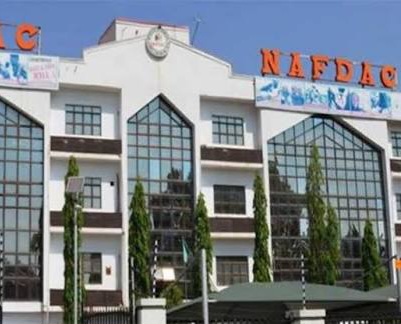
The Manufacturers Association of Nigeria has appealed to the Federal Government to restrain the National Agency for Food and Drug Administration and Control from proceeding with its ban on alcoholic beverages packaged in sachets and small PET bottles, warning of catastrophic economic consequences.
In a statement issued by Director-General Segun Ajayi-Kadir, MAN described NAFDAC’s renewed enforcement action as detrimental to indigenous industrial operators and fundamentally inconsistent with earlier government directives.
The manufacturers’ body emphasized that NAFDAC’s recent move directly contradicts the House of Representatives resolution dated March 14, 2024, which specifically restrained the agency from implementing the punitive ban following comprehensive stakeholder consultations through a public hearing.
“Rather than abiding by the generally agreed resolution, NAFDAC bided its time and chose to rely on a resolution of the Senate that was devoid of the usual stakeholders’ engagement,” Ajayi-Kadir stated, noting that operators now face confusion over conflicting directives from different arms of government.
MAN warned that enforcing the ban would devastate Nigeria’s manufacturing sector, threatening over ₦1.9 trillion in existing investments and triggering the retrenchment of more than 500,000 direct employees alongside approximately five million workers in the indirect value chain.
The association cautioned that the restriction would paradoxically undermine public health by creating market opportunities for illicit, substandard and unregulated products beyond the control of regulatory authorities.
“This is counterproductive as it will open up the market for illicit, sub-standard, and unregulated products. It will lead to an influx of imported alternatives, mostly smuggled. It will deny the government of revenues collectable from the companies,” Ajayi-Kadir declared.
The manufacturers’ group emphasized that alcohol served in sachets by local producers is manufactured under hygienic conditions and certified by regulatory agencies including NAFDAC itself, making the ban particularly contradictory.
MAN also challenged the untested assertion that sachet alcohol drives underage consumption, citing credible and empirical research that contradicts this claim. The industry has independently invested over ₦1 billion in nationwide media campaigns promoting responsible alcohol consumption and discouraging underage abuse.
The association stressed that banning certified products would deny adult consumers with limited budgets access to regulated alcoholic beverages while simultaneously depriving the government of substantial tax revenues.
Food, Beverages and Tobacco Senior Staff Association and National Union of Food, Beverages and Tobacco Employees have joined MAN in opposing the ban, demanding that NAFDAC provide empirical evidence that sachet alcoholic beverages are being consumed by children.
Labor unions have called for the suspension of NAFDAC Director-General Professor Mojisola Adeyeye, accusing her of siding with multinational companies to undermine local manufacturers.
However, NAFDAC has maintained its position, with Adeyeye insisting that enforcement is backed by law following the Senate’s unanimous resolution setting a December 2025 deadline that has now passed.
The NAFDAC chief argued that the proliferation of high-alcohol-content beverages in sachets has made such products easily accessible, affordable and concealable, contributing to widespread misuse and addiction among minors and commercial drivers.
“This public health menace has been linked to increased incidences of domestic violence, road accidents, school dropouts, and social vices across communities,” Adeyeye stated, describing the ban as protective rather than punitive.
In contrast, civil society organization Socio-Economic Rights and Accountability Project has approached the Federal High Court in Lagos seeking injunctive orders to prevent the Federal Government from interfering with NAFDAC’s statutory powers to enforce the ban.
SERAP argues that continued circulation of sachet alcohol violates the National Health Act 2014, the NAFDAC Act and international commitments under the World Health Organization’s Global Strategy to Reduce Harmful Use of Alcohol.
The legal and economic battle over sachet alcohol highlights deeper tensions between public health regulation, economic survival and stakeholder consultation in Nigeria’s policymaking process, with no clear resolution in sight as multiple court cases and regulatory actions unfold simultaneously.
-
 News2 years ago
Hardship: We Plan To Establish A National Commodity Board To Crash Food Prices – VP Shettima
-
News8 years ago
Blog Reader; Samson Osagiede Celebrates Fiancè Benedicta Daniels’s Birthday With Sweet Words
-
Home9 years ago
News Channel claims Donald Trump is an orphan from Pakistan,share alleged childhood photo
-
Home9 years ago
Another $175m Found in Patience Jonathan’s wife’s firm’s Bank Account
-
Home9 years ago
Oil Spillage: House of Reps Member Shares Photos of the Water her Constituents Drink .
-
Home9 years ago
Zara Buhari & Ahmed Indimi’s Wedding Access Card
-
 Sport7 years ago
Modric, Marta Wins 2018 FIFA Best Player Of The Year Awards ⚽️
-
News8 years ago
The Best Video You’ve Seen Today?