News
I Stayed in the Boko Haram Wing in Prison -FFK On His 2nd Experience in Detention

Permit me to begin this contribution with an apology for my disappearance from the literary and political scene for the last one month but this was due to circumstances beyond my control.
On October 21st, five days after my 56th birthday, I was arrested by the EFCC without an arrest warrant at the premises of the Federal High Court in Lagos where I had been earlier granted bail. Thereafter I was illegally detained by them without any detention order for 21 days.
Throughout the time of the second detention I was kept in a dingy underground cell at the EFCC headquarters in Abuja where I met a number of other high profile opposition figures like Senator Bala Mohammed, the former Minister of the Federal Capital Territory, Senator Musiliu Obanikoro, the former Minister of State for Defence and Mr. Reuben Abati, the former spokesman to President Goodluck Jonathan.
After that I heard nothing from them and I was told nothing though I had daily visits to the medical clinic at the EFCC due to my deteriorating health.
Three weeks later, on November 10th, I was brought before the Federal High Court in Abuja and arraigned on yet another set of spurrious, baseless and politically-motivated charges.
These ones were even more ridiculous and far-fetched than the first set in Lagos. I was falsely accused of receiving 26 million naira cash from the former National Security Advisor, Colonel Sambo Dasuki, for media work for the Jonathan administration in 2014.
Thankfully I was granted bail by the court and I was detained at Kuje prison for a further 4 days whilst I attempted to perfect my bail.
This was a frightful place and those that were locked up there were very dangerous and frightful people yet thankfully the Lord went ahead of me.
The single cells, though small, were clean, self-contained, well-ventilated, dry and very neat. The inmates were surprisingly very kind and friendly towards me and turned out to be my best friends and bodyguards whenever I toured th other parts of the prison.
I was very impressed with them and when I heard their stories and what some of them had been subjected to by the security forces and the state tears came to my eyes.
When I went to visit the great and brilliant freedom fighter, Nnamdi Kanu, who is the leader of IPOB and easily the most courageous, powerful and credible Igbo leader in Nigeria today in his cell we had a very instructive and long discussion.
I had never met Nnamdi before and I was amazed at his depth of knowledge, his immense courage and his deep convictions.
There is no doubt in my mind that that man is going places and in him the Igbo have an Ojukwu and a Nnamdi Azikiwe all rolled into one. He is destined for greatness.
Given what I have written about Boko Haram in the past and given my total aversion to any form of violence, terrorism and radical Islam, this was a classic case of God granting me favour before my enemies.
Everyone dreaded them in that prison but I am proud to say that they were my friends and I will never forget their courage, kindness and fellowship for the rest of my life.
This was the doing of the Lord and it was marvellous in my sight. Throughout my travails I have never questioned God and I have been inspired and comforted by His word which says that in all things we must give thanks to Him.
I am innocent of all the charges and allegations and as I have said elsewhere the whole thing is an attempt by the Federal Government and an increasingly desperate EFCC that is obsessed with my name and putting me away to discredit, break and silence me.
Like Nelson Mandela did at Robben Island prison every day for 26 years, I recited that poem three times a day on each and every day of my total of 90 days detention this year. And if I am arrested and detained again by the EFCC or any of President Buhari’s other numerous security or intelligence agencies I will continue to recite it. I have no fear of what men or satan can do to me and I trust and have faith in the God that I serve.



A Kano State High Court has sentenced Aminu Sulaiman, popularly known as Bamfasi, to 14 years’ imprisonment for conspiracy and kidnapping.
Justice Maryam Sabo delivered the judgment at the court sitting on Miller Road after finding Sulaiman guilty of conspiring with another person to abduct a boy, Muhammad Abdulaziz. The prosecution had charged him alongside Abdurrashid Ishak, who died in custody, with criminal conspiracy, kidnapping and culpable homicide.
The prosecution, led by Barrister S. M. Ibrahim, called two witnesses during the trial. The court sentenced Sulaiman to six years for conspiracy and four years for kidnapping, and ordered that he serve a total of 14 years in prison. He was also directed to perform two years of community service within the correctional facility.
However, the court discharged and acquitted Sulaiman of the culpable homicide charge, ruling that the prosecution had not presented sufficient evidence to prove it.
The case arose from the kidnapping of Abdulaziz at Kwana Hudu, where a ransom of N150,000 was demanded. The boy’s body was later found in a village in Minjibir Local Government Area.
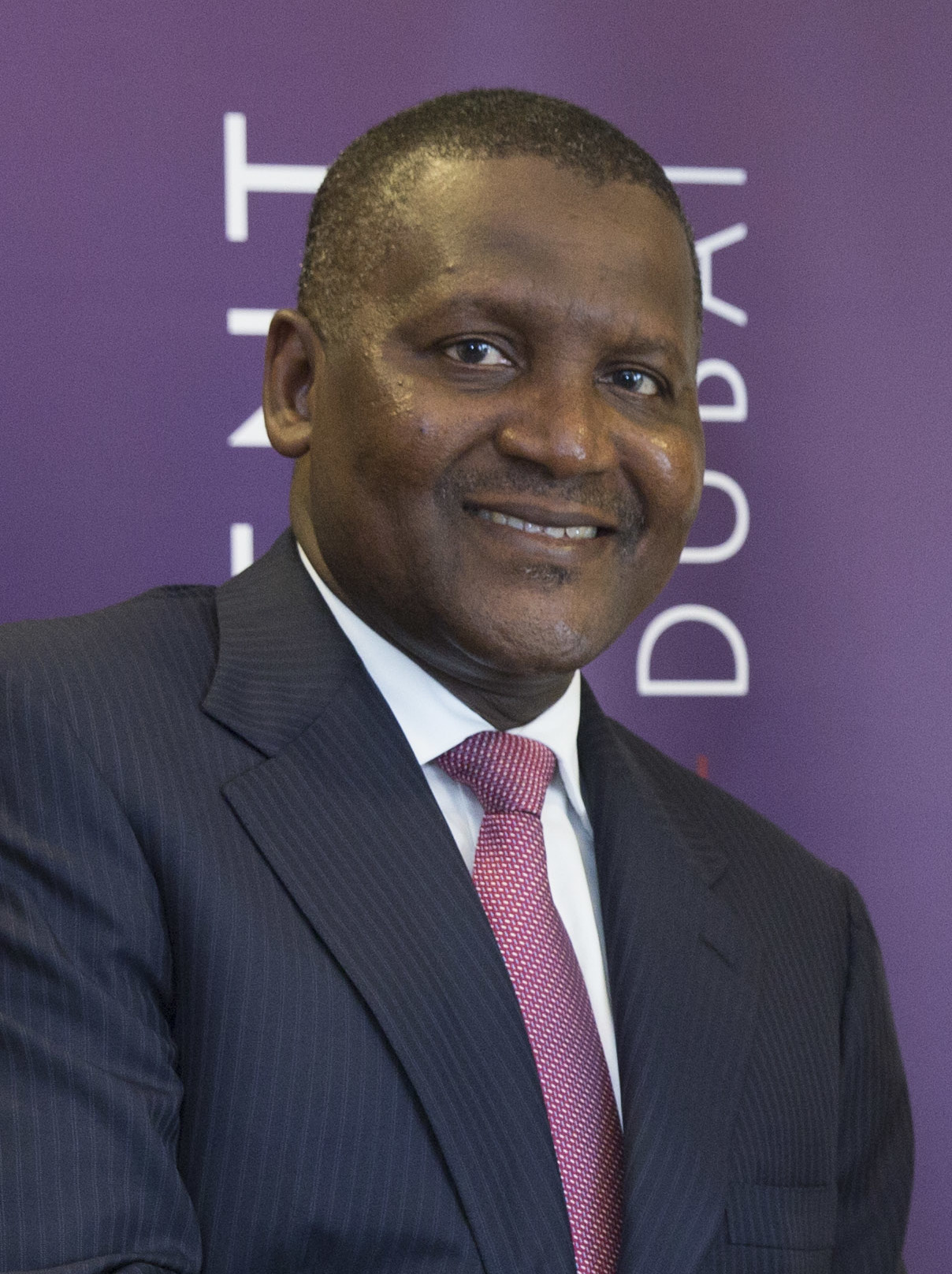
Aliko Dangote, president of Dangote Group, has been named recipient of the 2026 Obafemi Awolowo Prize for Leadership in recognition of his contributions to entrepreneurship, industrialisation and economic development in Nigeria and across Africa.
The Obafemi Awolowo Foundation announced Dangote’s selection in a statement issued on Monday. The selection committee was chaired by former Commonwealth Secretary-General, Chief Emeka Anyaoku, and assessed nominees against criteria including integrity, vision, courage, accountability and contributions to societal development.
The Foundation said Dangote was recognised for decades of investment in manufacturing, cement production, fertiliser, petroleum refining and other strategic sectors. It noted that his businesses had helped expand Africa’s productive capacity and strengthen prospects for economic self-reliance.
The committee also considered his philanthropic work through the Aliko Dangote Foundation, particularly in education, healthcare and social welfare. The Foundation’s education initiative, launched in 2026, is designed to support 45,000 students initially, with plans to reach 1.3 million by 2035. Its priorities include science, technology, engineering and mathematics education, literacy, teacher development and helping students move from education into employment.
The prize was established in honour of Chief Obafemi Awolowo, the first premier of Nigeria’s Western Region, whose legacy includes programmes in education, healthcare and rural development. The Foundation said the award recognises leadership that reflects his ideals of vision, integrity, discipline and people-centred development.
Dangote is expected to receive the prize on March 6, 2027, at a ceremony marking Awolowo’s birth anniversary. He will also deliver the Obafemi Awolowo Prize for Leadership Lecture.
In a related announcement, the Foundation named technology entrepreneur Iyinoluwa Samuel Aboyeji Jr. as the inaugural recipient of its Sectoral Leadership Award in Corporate Governance and Social Responsibility. The new awards will recognise contributions across four areas: politics and governance; corporate governance and social responsibility; educational transformation; and people-centred advocacy and support for the underprivileged.
The Centre for the Promotion of Private Enterprise (CPPE) says Nigeria’s graduate unemployment crisis is driven not only by skills deficiencies but also by inadequate job creation, weak labour-market absorption and declining investment in workforce development.
In a commentary released on Sunday, November 22, 2026, CPPE Chief Executive Officer, Dr Muda Yusuf, cautioned against describing Nigerian graduates broadly as unemployable. He said such claims overlook differences in educational quality across institutions and disciplines, as well as the economy’s limited capacity to generate suitable jobs.
Yusuf argued that graduates with technical, analytical and interpersonal skills may remain unemployed because appropriate job opportunities are unavailable. He said the debate must distinguish between a mismatch of skills and insufficient demand for skilled labour.
According to the CPPE, businesses face constraints including high borrowing costs, expensive energy, infrastructure deficits, logistics bottlenecks, taxation and regulatory burdens. These challenges, it said, can discourage investment and expansion, limiting employers’ capacity to create quality jobs.
The organisation acknowledged that some academic programmes have struggled to keep pace with changes in technology and workplace requirements. It identified digitalisation, artificial intelligence, automation, data analytics, financial technology and renewable energy as areas reshaping occupational demands.
However, Yusuf said skills gaps are not uniform across Nigeria’s education system. He pointed to practice-oriented fields such as medicine, nursing, pharmacy, laboratory sciences, architecture and information technology, where training often includes practical or clinical components.
The CPPE also called on employers to take greater responsibility for developing graduates, saying universities should not be expected to produce workers ready to perform specialised corporate roles without further training.
Yusuf urged businesses to strengthen graduate trainee schemes, internships, apprenticeships, mentoring and professional development. He said structured employer training had historically helped graduates build the industry-specific knowledge required for their roles.
The organisation further identified weak links between tertiary institutions and industry as a challenge. It recommended regular curriculum reviews involving employers and professional bodies, expanded industrial attachments, industry placements for lecturers and greater participation by experienced professionals in teaching and mentoring.
It also called for improved educational facilities, including laboratories, workshops, libraries and digital-learning infrastructure, alongside recruitment practices that assess candidates’ aptitude, adaptability and problem-solving abilities rather than relying excessively on academic qualifications.
Among its recommendations, the CPPE urged the government to pursue policies that encourage investment, business expansion and the creation of productive formal-sector jobs.
The organisation said addressing graduate unemployment requires action on both sides of the labour market: improving the relevance of skills supplied by educational institutions and expanding the economy’s capacity to absorb skilled workers.

 News3 years ago
Hardship: We Plan To Establish A National Commodity Board To Crash Food Prices – VP Shettima
- News9 years ago
Blog Reader; Samson Osagiede Celebrates Fiancè Benedicta Daniels’s Birthday With Sweet Words
- Home10 years ago
News Channel claims Donald Trump is an orphan from Pakistan,share alleged childhood photo
 Sport8 years ago
Modric, Marta Wins 2018 FIFA Best Player Of The Year Awards ⚽️
- Home10 years ago
Another $175m Found in Patience Jonathan’s wife’s firm’s Bank Account
- Home10 years ago
Zara Buhari & Ahmed Indimi’s Wedding Access Card
- Home10 years ago
Oil Spillage: House of Reps Member Shares Photos of the Water her Constituents Drink .
- Celebrities3 years ago
“Port Harcourt Has The Lousiest Men On Planet Earth” — Actress Sarah Martins Recounts How She Slapped A Married Man Who Asked Her For ‘H∞k Up’