Politics
Presidency Replies EU, UK And US On CJN’s Suspension (Full Statement)


The Nigerian presidency, in a statement made available to lagoslately has replied the European Union, US and UK on the recent suspension of the Chief Justice of Nigeria, Walter Nkanu Onnoghen.
Read the Full Statement, signed by Garba Shehu, below;
“The Presidency notes with interest the coordinated statements of the US, UK and EU linking the suspension of CJN Onnoghen to the conduct of the upcoming elections. We appreciate the concerns voiced by the three statements and accept that the authors of the statements believe they were acting in friendship toward Nigeria with regard to making the statements.
However, we also note that friends, when not properly informed or acting in haste, can indeed make serious mistakes even with the best of intentions. Such is the case here.
The statements by the three seem more driven by unfounded assumptions and to be honest, a certain condescension to this African democracy. This is unfortunate. But this gives us an opportunity to clarify some points in the hope that these three friends reach a deeper understanding of the situation.
The statements by the US, UK and EU speak of their respect for constitutional practice and fair elections. However, the positions they stake tend to contravene rather than strengthen these laudable objectives.
CJN Onnoghen’s situation is one of his own making and, to a large degree, his own choosing.
The CJN was brought before the CCT because of a serious breach of law regarding his assets declaration. This is not a mere technicality like innocently placing a document in a wrong file or mistakenly placing yesterday’s date on a document.
All credible evidence indicates the CJN owned and operated several secret bank accounts. Unexplained large sums of money, exceeding several million dollars have passed through these accounts. Several thousand dollars are currently parked in the accounts. Multiple deposits of equal sums of money were deposited in some of those accounts during the same day. Such rapid and equal deposits are indicative of a person attempting to evade banking reporting laws and regulations.
Thus far, CJN Onnoghen has given no plausible explanation for the funds or for failing to report the subject accounts in his assets declaration despite having ample time and opportunity to explain the omission. Given the amount of money involved and the CJN’s inability to explain the source of the funds, the most plausible explanation at this point is also the most unfortunate explanation. No one did this to CJN Onnoghen. He and he alone is to blame for this turn of events.
Over the years and with great frequency, the authors of the three statements have advised and even chided Nigeria about official corruption. Now we are presented with the sad and unwanted situation where the CJN is discovered to have a vast, unexplained amount of money in his pocket.
Because of this he has been thoroughly discredited. It is untenable that a person in such compromised circumstances would be allowed to preside over the entire judicial system of a great nation. That would travesty the nation and what it stands for.
Had the situation been reversed and the US, UK or any EU member government found that its chief judicial official is the recipient of large sums of money of questionable origin and Nigeria suggested that you retain the person in that position, you would question Nigeria’s bona fides. You also would swiftly move to suspend the official pending final determination of the causes against him.
Not one of your nations would allow a person enmeshed in legal uncertainty to preside over your legal systems until the cloud has been cleared from him. That would incentivize corruption and assault the rule of law.
Thus, the CJN should have and could have helped the process in this regard by recusing himself from the bench until this matter is settled.
Instead, he indefinitely postponed a NJC meeting for no plausible reason except to avoid any consideration of this matter by the NJC.
Again, this calls into question his motives while undermining the normal operations of the judiciary. The CJN cannot be allowed to use his office to shield himself from the normal operation of the law as applied to any other jurist or any other Nigerian for that matter. Such a ruse is effectively an abuse of office. His position is one of utmost public trust; it is not a shield to protect him from the fair consequence of his own actions.
Despite these errors and omissions by the CJN, let us make this very clear, he has not been removed from office. Nor has he been permanently replaced. Those who claim that he has been permanently removed, do so out of imprecision of thought or mischief.
CJN Onnoghen has been suspended pending the final determination of the substantive issues in his matter. The suspension is only temporary. This is only as it should be. He cannot sit as both defendant and umpire in his own matter. No legal system allows for such self-interested adjudication; the US, UK and EU should not now ask us to embrace such an anomaly.
While the three friends seem to give much credence to those who question the constitutionality of the suspension, they seem to give less to those who believe what we did is constitutional and protective of the integrity of the judiciary. Only the three can answer why they have assumed this bias.
Last, the three make a curious direct linkage between the CJN suspension and the elections. However, in Nigerian law there is no such linkage. The CJN does not run the election. Nor is he the first arbiter of any electoral complaints. He and the Supreme Court will only get involved as the final arbiter at the end of the appellate process.
For the authors to link the CJN to the elections in this way is illogical unless they assume that election complaints will be filed and will go all the way to the Supreme Court. Here perhaps they know something about the intentions of certain political actors to which we are not privy.
Yet, even with that, the US , UK and EU should want any such matters to be heard by a Supreme Court led by a CJN without an obvious and outstanding ethical and legal blemish on his ledger. To have such a person preside over any case, would call into question the impartiality of any decision rendered and undermine the rule of law.
This cannot be what these three friends of Nigeria intended. Thus, they should do a bit more research on this matter and refrain from being too hastily attracted by the arguments of those who have partisan agenda at odds with the government’s positions on most matters and who thus hope to use this issue as a new arrow in their quiver of partisan contestations.”The Nigerian presidency, in a statement sent to PoliticsNGR, has replied the European Union, US and UK on the recent suspension of the Chief Justice of Nigeria, Walter Nkanu Onnoghen.
Read the Full Statement, signed by Garba Shehu, below;
“The Presidency notes with interest the coordinated statements of the US, UK and EU linking the suspension of CJN Onnoghen to the conduct of the upcoming elections. We appreciate the concerns voiced by the three statements and accept that the authors of the statements believe they were acting in friendship toward Nigeria with regard to making the statements.
However, we also note that friends, when not properly informed or acting in haste, can indeed make serious mistakes even with the best of intentions. Such is the case here.
The statements by the three seem more driven by unfounded assumptions and to be honest, a certain condescension to this African democracy. This is unfortunate. But this gives us an opportunity to clarify some points in the hope that these three friends reach a deeper understanding of the situation.
The statements by the US, UK and EU speak of their respect for constitutional practice and fair elections. However, the positions they stake tend to contravene rather than strengthen these laudable objectives.
CJN Onnoghen’s situation is one of his own making and, to a large degree, his own choosing.
The CJN was brought before the CCT because of a serious breach of law regarding his assets declaration. This is not a mere technicality like innocently placing a document in a wrong file or mistakenly placing yesterday’s date on a document.
All credible evidence indicates the CJN owned and operated several secret bank accounts. Unexplained large sums of money, exceeding several million dollars have passed through these accounts. Several thousand dollars are currently parked in the accounts. Multiple deposits of equal sums of money were deposited in some of those accounts during the same day. Such rapid and equal deposits are indicative of a person attempting to evade banking reporting laws and regulations.
Thus far, CJN Onnoghen has given no plausible explanation for the funds or for failing to report the subject accounts in his assets declaration despite having ample time and opportunity to explain the omission. Given the amount of money involved and the CJN’s inability to explain the source of the funds, the most plausible explanation at this point is also the most unfortunate explanation. No one did this to CJN Onnoghen. He and he alone is to blame for this turn of events.
Over the years and with great frequency, the authors of the three statements have advised and even chided Nigeria about official corruption. Now we are presented with the sad and unwanted situation where the CJN is discovered to have a vast, unexplained amount of money in his pocket.
Because of this he has been thoroughly discredited. It is untenable that a person in such compromised circumstances would be allowed to preside over the entire judicial system of a great nation. That would travesty the nation and what it stands for.
Had the situation been reversed and the US, UK or any EU member government found that its chief judicial official is the recipient of large sums of money of questionable origin and Nigeria suggested that you retain the person in that position, you would question Nigeria’s bona fides. You also would swiftly move to suspend the official pending final determination of the causes against him.
Not one of your nations would allow a person enmeshed in legal uncertainty to preside over your legal systems until the cloud has been cleared from him. That would incentivize corruption and assault the rule of law.
Thus, the CJN should have and could have helped the process in this regard by recusing himself from the bench until this matter is settled.
Instead, he indefinitely postponed a NJC meeting for no plausible reason except to avoid any consideration of this matter by the NJC.
Again, this calls into question his motives while undermining the normal operations of the judiciary. The CJN cannot be allowed to use his office to shield himself from the normal operation of the law as applied to any other jurist or any other Nigerian for that matter. Such a ruse is effectively an abuse of office. His position is one of utmost public trust; it is not a shield to protect him from the fair consequence of his own actions.
Despite these errors and omissions by the CJN, let us make this very clear, he has not been removed from office. Nor has he been permanently replaced. Those who claim that he has been permanently removed, do so out of imprecision of thought or mischief.
CJN Onnoghen has been suspended pending the final determination of the substantive issues in his matter. The suspension is only temporary. This is only as it should be. He cannot sit as both defendant and umpire in his own matter. No legal system allows for such self-interested adjudication; the US, UK and EU should not now ask us to embrace such an anomaly.
While the three friends seem to give much credence to those who question the constitutionality of the suspension, they seem to give less to those who believe what we did is constitutional and protective of the integrity of the judiciary. Only the three can answer why they have assumed this bias.
Last, the three make a curious direct linkage between the CJN suspension and the elections. However, in Nigerian law there is no such linkage. The CJN does not run the election. Nor is he the first arbiter of any electoral complaints. He and the Supreme Court will only get involved as the final arbiter at the end of the appellate process.
For the authors to link the CJN to the elections in this way is illogical unless they assume that election complaints will be filed and will go all the way to the Supreme Court. Here perhaps they know something about the intentions of certain political actors to which we are not privy.
Yet, even with that, the US , UK and EU should want any such matters to be heard by a Supreme Court led by a CJN without an obvious and outstanding ethical and legal blemish on his ledger. To have such a person preside over any case, would call into question the impartiality of any decision rendered and undermine the rule of law.
This cannot be what these three friends of Nigeria intended. Thus, they should do a bit more research on this matter and refrain from being too hastily attracted by the arguments of those who have partisan agenda at odds with the government’s positions on most matters and who thus hope to use this issue as a new arrow in their quiver of partisan contestations.”


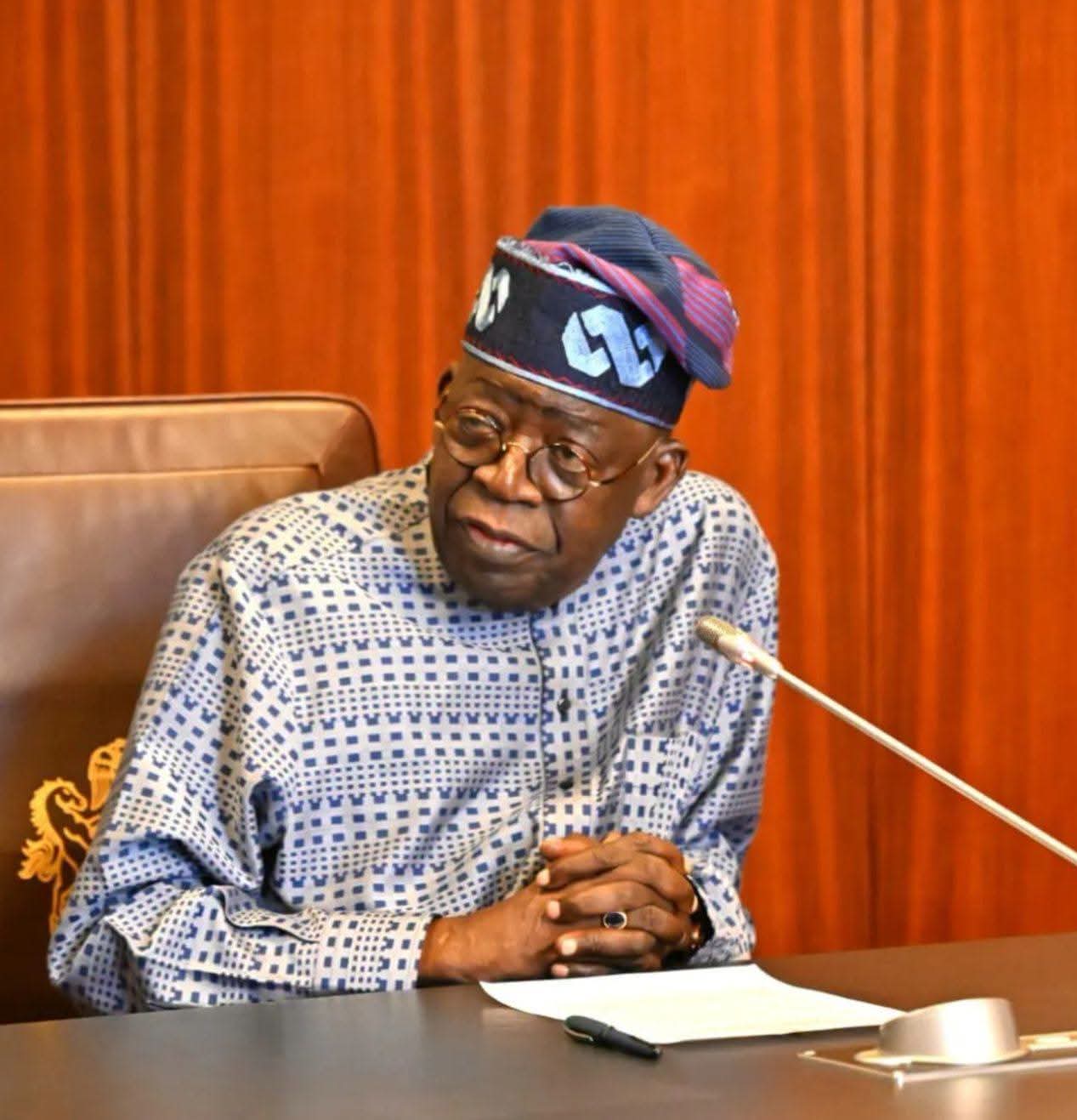
Burkina Faso has proposed high-level bilateral talks with Nigeria to review existing areas of cooperation and identify new opportunities for partnership as both countries seek to strengthen their diplomatic relations.
The proposal was made on Friday in Ouagadougou, when Nigeria’s newly appointed Ambassador to Burkina Faso, Ambassador Syndoph Endoni, presented his Letter of Credence.
Burkina Faso’s Minister of Foreign Affairs, Jean-Marie Traoré, received the Nigerian envoy and reaffirmed his country’s commitment to deepening relations with Nigeria.
Burkina Faso Calls for Review of Cooperation
Traoré described Endoni’s assumption of duty as an opportunity to reinforce the longstanding relationship between the two countries.
He highlighted the shared history, African heritage and common regional challenges connecting Nigeria and Burkina Faso.
The Burkinabe foreign minister subsequently backed the convening of a bilateral session where both governments could comprehensively review existing cooperation and explore new areas of partnership.
The proposed talks could provide an avenue for Abuja and Ouagadougou to address outstanding differences through direct diplomatic engagement while exploring cooperation in areas such as security, trade, diplomacy and regional stability.
Nigeria Advocates Stronger African Solidarity
Responding to the proposal, Ambassador Endoni conveyed President Bola Ahmed Tinubu’s appreciation to Burkina Faso’s leader, Captain Ibrahim Traoré, for accepting his accreditation.
The Nigerian envoy also thanked the Burkinabe government and its Ministry of Foreign Affairs for the reception accorded him since his arrival in Ouagadougou.
Endoni pledged to work with Burkinabe authorities to address issues of mutual concern and develop joint solutions to challenges affecting both countries.
He also called for stronger African solidarity and greater confidence among African countries in resolving their differences through dialogue.
“As Africans, we must learn to accept ourselves and make efforts to resist the urge to wash our dirty linens outside,” Endoni said.
Move Comes After Regional Diplomatic Tensions
The proposed engagement comes against the backdrop of recent diplomatic tensions involving Nigeria and the Alliance of Sahel States (AES), comprising Burkina Faso, Mali and Niger.
The three countries formally withdrew from the Economic Community of West African States (ECOWAS) on January 29, 2025, and subsequently strengthened their cooperation through the AES framework.
Nigeria, meanwhile, remains a leading member of ECOWAS and has continued to support diplomatic engagement with the Sahel countries.
The two sides have previously experienced diplomatic friction, including an incident in December 2025 involving Nigerian Air Force personnel and an aircraft that landed in Burkina Faso after the crew reported a technical problem. The matter was eventually resolved through diplomatic engagement.
New Ambassador Begins Mission
Endoni’s arrival in Burkina Faso marks the beginning of his diplomatic assignment in Ouagadougou.
His posting is part of President Tinubu’s deployment of newly appointed Nigerian ambassadors to various foreign missions.
The ambassador is expected to formally present his credentials to President Ibrahim Traoré as he settles into his new assignment.
Focus Shifts to Renewed Cooperation
The proposed bilateral session could provide Nigeria and Burkina Faso with an opportunity to move beyond recent disagreements and establish a new framework for engagement.
For both countries, renewed cooperation could focus on shared security concerns, economic relations, regional stability and stronger people-to-people ties.
The proposal also signals a willingness by Ouagadougou to maintain direct diplomatic channels with Abuja despite wider changes in West Africa’s political and security landscape.
.Political campaigning for Nigeria’s 2027 presidential and National Assembly elections officially begins today, August 19, 2026, opening a new phase in the race for the country’s presidency.
The Independent National Electoral Commission (INEC) has lifted the restriction on public campaigns, allowing political parties and candidates to begin rallies, grassroots mobilisation and other activities aimed at winning voters.
Under the Electoral Act 2026, public campaigns are permitted to begin 250 days before election day and must end 24 hours before voting. INEC’s timetable puts the presidential and National Assembly elections on January 16, 2027.
Campaigning for the governorship and State Houses of Assembly elections is scheduled to begin on September 9, 2026, ahead of those elections on February 6, 2027.
The presidential contest is expected to be dominated by three major political figures: incumbent President Bola Ahmed Tinubu of the All Progressives Congress (APC), former Vice President Atiku Abubakar of the African Democratic Congress (ADC), and former Anambra State Governor Peter Obi of the Nigeria Democratic Congress (NDC).
The emerging contest has similarities with the 2023 election, when Tinubu, Atiku and Obi were also among the leading candidates.
However, the political landscape has changed considerably since then, with opposition parties attempting to build a broader coalition capable of challenging the APC at the federal level.
One of the major developments ahead of the campaign season is the effort by opposition groups to establish a united front.
The G-100 Coalition, led by former APC national vice-chairman Salihu Lukman, has been working to bring opposition parties and political leaders together with the aim of producing a stronger challenge to the ruling party.
The coalition is expected to hold a unity summit in Abuja as part of efforts to reconcile competing interests and explore the possibility of a consensus presidential candidate.
However, reaching an agreement among major opposition figures could prove difficult because of their individual presidential ambitions and differing political interests.
While opposition parties continue their efforts to strengthen their alliance, the ruling APC says it is also preparing for the election.
The party’s Director of Media and Publicity, Bala Ibrahim, said the APC would work to retain the confidence of Nigerians and secure the renewal of President Tinubu’s mandate.
APC National Publicity Secretary Felix Morka also said the party was developing a comprehensive nationwide campaign programme after consultations with relevant stakeholders.
Morka noted that although August 19 is the earliest date parties are permitted to begin presidential campaigning, parties are not legally required to launch their campaigns on that exact day.
As candidates begin campaigning, major national issues are expected to dominate their messages to voters.
These include economic hardship, inflation, unemployment, insecurity, poverty and the impact of the Federal Government’s reforms.
The APC is expected to campaign on the achievements of the Tinubu administration and its Renewed Hope Agenda, while opposition candidates are likely to focus on areas where they believe the government has fallen short.
The ability of candidates to present credible solutions to these challenges could play a major role in determining how Nigerians vote.
With the campaign season officially underway, political activity is expected to intensify across the country in the coming months.
Parties will now seek to mobilise supporters, strengthen grassroots structures, sell their manifestos and convince undecided voters ahead of the January 2027 presidential poll.
The election is expected to be one of Nigeria’s most closely watched political contests, with the outcome set to determine the country’s direction for the next four years.
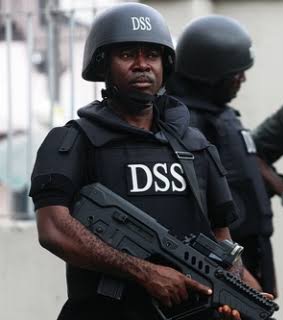
Security agencies have increased patrols and surveillance across Ile-Ife, Osun State, ahead of Saturday’s governorship election, as authorities move to prevent violence and protect residents and electoral materials.
The heightened security presence was noticeable across the ancient city on Friday, August 14, a day before voters are scheduled to cast their ballots. Personnel were deployed along major roads and other strategic locations as final preparations for the election continued.
Security officers were seen in areas including Oduduwa University, Ipetumodu, Mayfair, Lagere and Garage-Ilesa, among other locations.
Despite the increased deployment, normal activities continued in the city, with no major disruption reported as of Friday.
The Nigerian Army, Nigeria Police Force and Nigeria Security and Civil Defence Corps (NSCDC) were among the security agencies deployed to monitor the election and maintain law and order.
The agencies are expected to remain on the ground before, during and after voting as part of efforts to safeguard voters, electoral officials and sensitive election materials.
The intensified patrols are also aimed at preventing electoral violence, malpractice and other criminal activities that could disrupt the exercise.
With the election scheduled for Saturday, August 15, security authorities are expected to maintain their presence across key locations throughout the voting period.
Residents have been urged to exercise their civic rights peacefully and avoid actions capable of threatening public safety or interfering with the electoral process.
The heightened security measures come as political activities reach their peak in Osun, with authorities seeking to ensure that voters can participate in the election without intimidation or disruption.
The security agencies have also been tasked with ensuring that electoral materials are protected and that the movement of voters and officials does not become a source of conflict.
As Osun heads to the polls, attention will remain on the ability of security agencies to maintain a peaceful environment throughout the election and the announcement of the results.

 News3 years ago
Hardship: We Plan To Establish A National Commodity Board To Crash Food Prices – VP Shettima
- News8 years ago
Blog Reader; Samson Osagiede Celebrates Fiancè Benedicta Daniels’s Birthday With Sweet Words
- Home10 years ago
News Channel claims Donald Trump is an orphan from Pakistan,share alleged childhood photo
- Home10 years ago
Another $175m Found in Patience Jonathan’s wife’s firm’s Bank Account
- Home10 years ago
Oil Spillage: House of Reps Member Shares Photos of the Water her Constituents Drink .
- Home10 years ago
Zara Buhari & Ahmed Indimi’s Wedding Access Card
 Sport8 years ago
Modric, Marta Wins 2018 FIFA Best Player Of The Year Awards ⚽️
- News8 years ago
The Best Video You’ve Seen Today?