Politics
Presidency Replies EU, UK And US On CJN’s Suspension (Full Statement)


The Nigerian presidency, in a statement made available to lagoslately has replied the European Union, US and UK on the recent suspension of the Chief Justice of Nigeria, Walter Nkanu Onnoghen.
Read the Full Statement, signed by Garba Shehu, below;
“The Presidency notes with interest the coordinated statements of the US, UK and EU linking the suspension of CJN Onnoghen to the conduct of the upcoming elections. We appreciate the concerns voiced by the three statements and accept that the authors of the statements believe they were acting in friendship toward Nigeria with regard to making the statements.
However, we also note that friends, when not properly informed or acting in haste, can indeed make serious mistakes even with the best of intentions. Such is the case here.
The statements by the three seem more driven by unfounded assumptions and to be honest, a certain condescension to this African democracy. This is unfortunate. But this gives us an opportunity to clarify some points in the hope that these three friends reach a deeper understanding of the situation.
The statements by the US, UK and EU speak of their respect for constitutional practice and fair elections. However, the positions they stake tend to contravene rather than strengthen these laudable objectives.
CJN Onnoghen’s situation is one of his own making and, to a large degree, his own choosing.
The CJN was brought before the CCT because of a serious breach of law regarding his assets declaration. This is not a mere technicality like innocently placing a document in a wrong file or mistakenly placing yesterday’s date on a document.
All credible evidence indicates the CJN owned and operated several secret bank accounts. Unexplained large sums of money, exceeding several million dollars have passed through these accounts. Several thousand dollars are currently parked in the accounts. Multiple deposits of equal sums of money were deposited in some of those accounts during the same day. Such rapid and equal deposits are indicative of a person attempting to evade banking reporting laws and regulations.
Thus far, CJN Onnoghen has given no plausible explanation for the funds or for failing to report the subject accounts in his assets declaration despite having ample time and opportunity to explain the omission. Given the amount of money involved and the CJN’s inability to explain the source of the funds, the most plausible explanation at this point is also the most unfortunate explanation. No one did this to CJN Onnoghen. He and he alone is to blame for this turn of events.
Over the years and with great frequency, the authors of the three statements have advised and even chided Nigeria about official corruption. Now we are presented with the sad and unwanted situation where the CJN is discovered to have a vast, unexplained amount of money in his pocket.
Because of this he has been thoroughly discredited. It is untenable that a person in such compromised circumstances would be allowed to preside over the entire judicial system of a great nation. That would travesty the nation and what it stands for.
Had the situation been reversed and the US, UK or any EU member government found that its chief judicial official is the recipient of large sums of money of questionable origin and Nigeria suggested that you retain the person in that position, you would question Nigeria’s bona fides. You also would swiftly move to suspend the official pending final determination of the causes against him.
Not one of your nations would allow a person enmeshed in legal uncertainty to preside over your legal systems until the cloud has been cleared from him. That would incentivize corruption and assault the rule of law.
Thus, the CJN should have and could have helped the process in this regard by recusing himself from the bench until this matter is settled.
Instead, he indefinitely postponed a NJC meeting for no plausible reason except to avoid any consideration of this matter by the NJC.
Again, this calls into question his motives while undermining the normal operations of the judiciary. The CJN cannot be allowed to use his office to shield himself from the normal operation of the law as applied to any other jurist or any other Nigerian for that matter. Such a ruse is effectively an abuse of office. His position is one of utmost public trust; it is not a shield to protect him from the fair consequence of his own actions.
Despite these errors and omissions by the CJN, let us make this very clear, he has not been removed from office. Nor has he been permanently replaced. Those who claim that he has been permanently removed, do so out of imprecision of thought or mischief.
CJN Onnoghen has been suspended pending the final determination of the substantive issues in his matter. The suspension is only temporary. This is only as it should be. He cannot sit as both defendant and umpire in his own matter. No legal system allows for such self-interested adjudication; the US, UK and EU should not now ask us to embrace such an anomaly.
While the three friends seem to give much credence to those who question the constitutionality of the suspension, they seem to give less to those who believe what we did is constitutional and protective of the integrity of the judiciary. Only the three can answer why they have assumed this bias.
Last, the three make a curious direct linkage between the CJN suspension and the elections. However, in Nigerian law there is no such linkage. The CJN does not run the election. Nor is he the first arbiter of any electoral complaints. He and the Supreme Court will only get involved as the final arbiter at the end of the appellate process.
For the authors to link the CJN to the elections in this way is illogical unless they assume that election complaints will be filed and will go all the way to the Supreme Court. Here perhaps they know something about the intentions of certain political actors to which we are not privy.
Yet, even with that, the US , UK and EU should want any such matters to be heard by a Supreme Court led by a CJN without an obvious and outstanding ethical and legal blemish on his ledger. To have such a person preside over any case, would call into question the impartiality of any decision rendered and undermine the rule of law.
This cannot be what these three friends of Nigeria intended. Thus, they should do a bit more research on this matter and refrain from being too hastily attracted by the arguments of those who have partisan agenda at odds with the government’s positions on most matters and who thus hope to use this issue as a new arrow in their quiver of partisan contestations.”The Nigerian presidency, in a statement sent to PoliticsNGR, has replied the European Union, US and UK on the recent suspension of the Chief Justice of Nigeria, Walter Nkanu Onnoghen.
Read the Full Statement, signed by Garba Shehu, below;
“The Presidency notes with interest the coordinated statements of the US, UK and EU linking the suspension of CJN Onnoghen to the conduct of the upcoming elections. We appreciate the concerns voiced by the three statements and accept that the authors of the statements believe they were acting in friendship toward Nigeria with regard to making the statements.
However, we also note that friends, when not properly informed or acting in haste, can indeed make serious mistakes even with the best of intentions. Such is the case here.
The statements by the three seem more driven by unfounded assumptions and to be honest, a certain condescension to this African democracy. This is unfortunate. But this gives us an opportunity to clarify some points in the hope that these three friends reach a deeper understanding of the situation.
The statements by the US, UK and EU speak of their respect for constitutional practice and fair elections. However, the positions they stake tend to contravene rather than strengthen these laudable objectives.
CJN Onnoghen’s situation is one of his own making and, to a large degree, his own choosing.
The CJN was brought before the CCT because of a serious breach of law regarding his assets declaration. This is not a mere technicality like innocently placing a document in a wrong file or mistakenly placing yesterday’s date on a document.
All credible evidence indicates the CJN owned and operated several secret bank accounts. Unexplained large sums of money, exceeding several million dollars have passed through these accounts. Several thousand dollars are currently parked in the accounts. Multiple deposits of equal sums of money were deposited in some of those accounts during the same day. Such rapid and equal deposits are indicative of a person attempting to evade banking reporting laws and regulations.
Thus far, CJN Onnoghen has given no plausible explanation for the funds or for failing to report the subject accounts in his assets declaration despite having ample time and opportunity to explain the omission. Given the amount of money involved and the CJN’s inability to explain the source of the funds, the most plausible explanation at this point is also the most unfortunate explanation. No one did this to CJN Onnoghen. He and he alone is to blame for this turn of events.
Over the years and with great frequency, the authors of the three statements have advised and even chided Nigeria about official corruption. Now we are presented with the sad and unwanted situation where the CJN is discovered to have a vast, unexplained amount of money in his pocket.
Because of this he has been thoroughly discredited. It is untenable that a person in such compromised circumstances would be allowed to preside over the entire judicial system of a great nation. That would travesty the nation and what it stands for.
Had the situation been reversed and the US, UK or any EU member government found that its chief judicial official is the recipient of large sums of money of questionable origin and Nigeria suggested that you retain the person in that position, you would question Nigeria’s bona fides. You also would swiftly move to suspend the official pending final determination of the causes against him.
Not one of your nations would allow a person enmeshed in legal uncertainty to preside over your legal systems until the cloud has been cleared from him. That would incentivize corruption and assault the rule of law.
Thus, the CJN should have and could have helped the process in this regard by recusing himself from the bench until this matter is settled.
Instead, he indefinitely postponed a NJC meeting for no plausible reason except to avoid any consideration of this matter by the NJC.
Again, this calls into question his motives while undermining the normal operations of the judiciary. The CJN cannot be allowed to use his office to shield himself from the normal operation of the law as applied to any other jurist or any other Nigerian for that matter. Such a ruse is effectively an abuse of office. His position is one of utmost public trust; it is not a shield to protect him from the fair consequence of his own actions.
Despite these errors and omissions by the CJN, let us make this very clear, he has not been removed from office. Nor has he been permanently replaced. Those who claim that he has been permanently removed, do so out of imprecision of thought or mischief.
CJN Onnoghen has been suspended pending the final determination of the substantive issues in his matter. The suspension is only temporary. This is only as it should be. He cannot sit as both defendant and umpire in his own matter. No legal system allows for such self-interested adjudication; the US, UK and EU should not now ask us to embrace such an anomaly.
While the three friends seem to give much credence to those who question the constitutionality of the suspension, they seem to give less to those who believe what we did is constitutional and protective of the integrity of the judiciary. Only the three can answer why they have assumed this bias.
Last, the three make a curious direct linkage between the CJN suspension and the elections. However, in Nigerian law there is no such linkage. The CJN does not run the election. Nor is he the first arbiter of any electoral complaints. He and the Supreme Court will only get involved as the final arbiter at the end of the appellate process.
For the authors to link the CJN to the elections in this way is illogical unless they assume that election complaints will be filed and will go all the way to the Supreme Court. Here perhaps they know something about the intentions of certain political actors to which we are not privy.
Yet, even with that, the US , UK and EU should want any such matters to be heard by a Supreme Court led by a CJN without an obvious and outstanding ethical and legal blemish on his ledger. To have such a person preside over any case, would call into question the impartiality of any decision rendered and undermine the rule of law.
This cannot be what these three friends of Nigeria intended. Thus, they should do a bit more research on this matter and refrain from being too hastily attracted by the arguments of those who have partisan agenda at odds with the government’s positions on most matters and who thus hope to use this issue as a new arrow in their quiver of partisan contestations.”


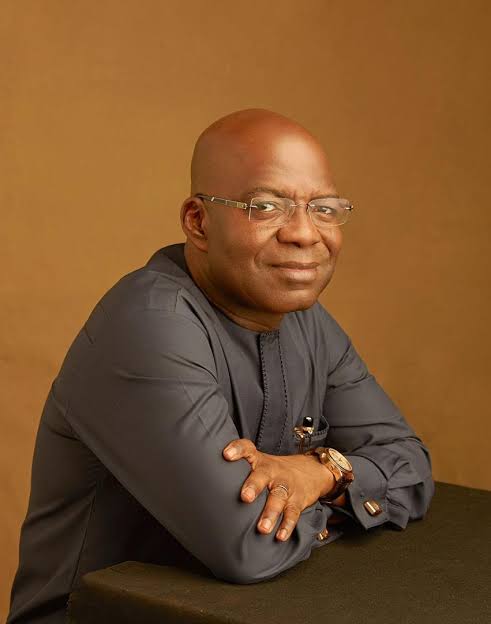
Abia State Governor Alex Otti has said he has no intention of becoming a political godfather or imposing a successor on the state after completing his second term in office.
Otti made the remarks on Thursday in Umuahia while receiving former Social Democratic Party (SDP) governorship candidate Ngozi Johnson-Chukwunenye and her supporters into the Labour Party (LP).
The governor said the process of choosing his eventual successor should focus on identifying the most suitable candidate, while the electorate would have the final say.
Otti: I Don’t Tolerate Godfathers
Otti said he would not seek to control Abia politics after leaving office, stressing that he does not support the practice of political godfatherism.
He said stakeholders would assess those interested in succeeding him, agree on the person they consider most suitable and support that candidate, but added that the people of Abia would ultimately decide through the electoral process.
The governor also said he expected whoever succeeds him to be better equipped to provide leadership for the state.
Governor Rules Out Senate Ambition
Otti also reiterated that he does not intend to seek another elective position after completing his second term as governor.
He said he was not interested in pursuing a Senate seat and planned to retire from elective politics after his tenure.
The governor said he wanted younger Nigerians to have greater opportunities to assume leadership responsibilities, describing the continuation of “sit-tight” politics as something that should be discouraged.
Otti Highlights Youth Leadership Development
According to the governor, his administration is already preparing younger people for future leadership through initiatives including the Abia Leadership Academy.the
Otti said more than 1,080 young people between the ages of 16 and 25 had recently graduated from the academy.
He said developing younger leaders was important because the next generation should be given opportunities to take responsibility for the country and the state.
Johnson-Chukwunenye Joins Labour Party
The event also marked the formal reception of Ngozi Johnson-Chukwunenye, who contested the 2023 Abia governorship election on the SDP platform, into the Labour Party.
Johnson-Chukwunenye said her decision followed her assessment of developments under Otti’s administration.
She cited the payment of salary arrears, regular payment of workers’ salaries, attention to pensioners and road rehabilitation in Aba and Umuahia among the developments that influenced her decision.
Otti Says Infrastructure Work Will Continue
The governor also defended his administration’s development efforts, saying work carried out in Aba and Umuahia would be extended to other parts of the state.
He said the administration was moving into the hinterlands and would continue its interventions across the state.
Otti also said his administration would not be distracted by criticism as it pursued its development programme.
2027 Politics Looms Over Abia
Otti is seeking re-election in the 2027 Abia governorship election, while his comments about succession focus on what he says should happen after his second tenure.
His position that he does not intend to become a political godfather comes as parties in the state begin preparations for the 2027 elections and debate succession, party structures and the future direction of Abia politics.
The Independent National Electoral Commission (INEC) has released the final list of candidates for Nigeria’s January 16, 2027 presidential and National Assembly elections, with a total of 4,878 candidates cleared to contest.
The final list contains 18 presidential candidates, while another 4,860 candidates are contesting the 109 Senate and 360 House of Representatives seats across the country.
Tinubu, Atiku and Obi Among Presidential Candidates
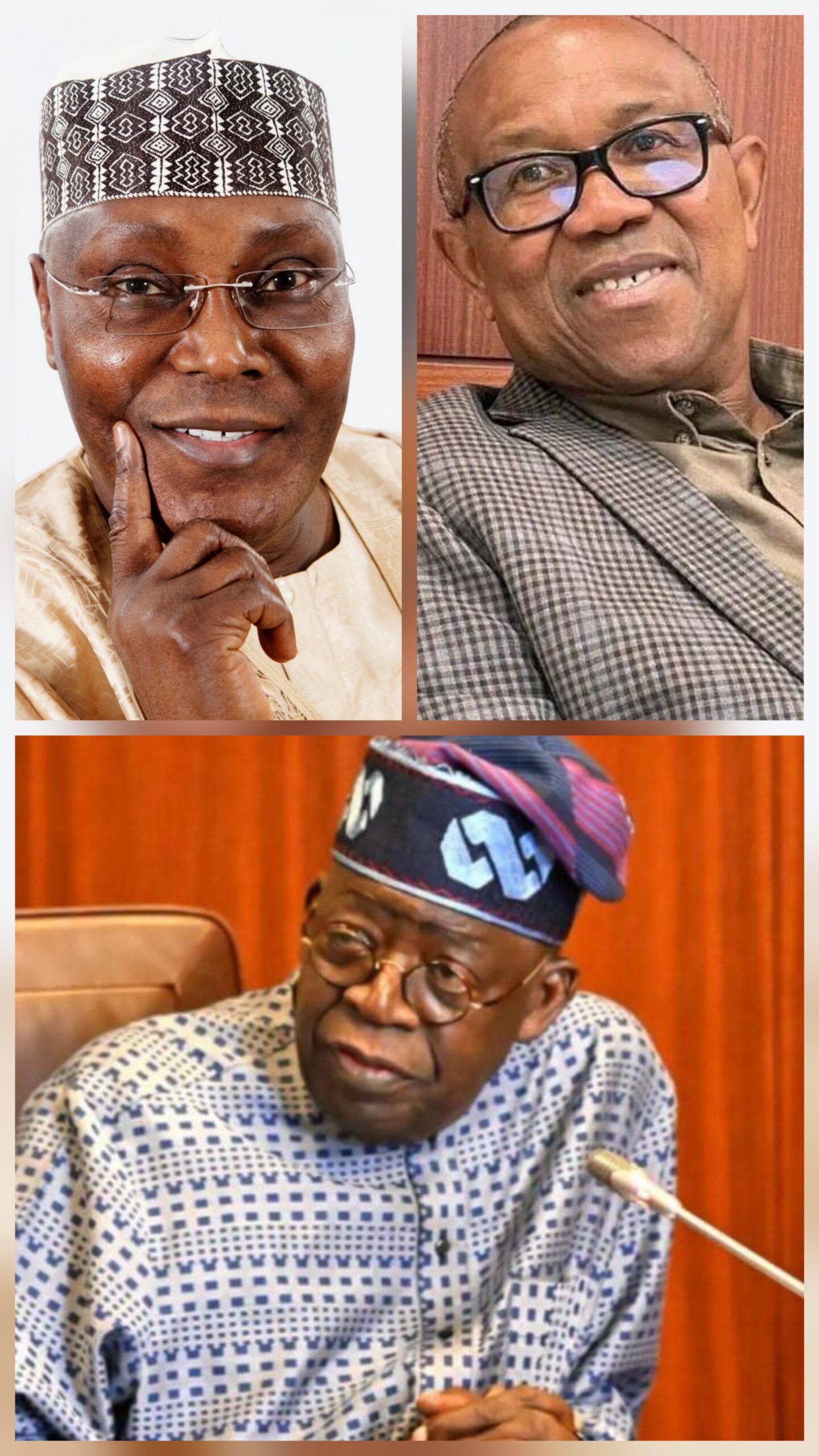
The presidential list includes incumbent President Bola Ahmed Tinubu, who is contesting on the platform of the All Progressives Congress (APC).
Also on the list are former Vice President Atiku Abubakar, representing the African Democratic Congress (ADC), and former Anambra State Governor Peter Obi, who is contesting under the Nigeria Democratic Congress (NDC).
The final list also contains two female presidential candidates: Ada Elizabeth Fredrick Okwori of the National Democratic Party (NDP) and Nkem Esther Okereke of the National Rescue Movement (NRM).
APC Fields Candidates Across All Positions
The ruling APC has the largest presence on the ballot, having submitted candidates for all the positions covered by the presidential and National Assembly elections.
The PDP is fielding 103 senatorial candidates and 302 candidates for the House of Representatives.
The ADC has 107 senatorial candidates and 220 House of Representatives candidates, while the NDC has 103 senatorial candidates and 327 House of Representatives candidates.
The Allied Peoples Movement (APM) is fielding 103 candidates for the Senate and 232 for the House of Representatives.
NNPP Presidential Candidate Missing From Final List
The final list does not contain the name of the presidential candidate of the New Nigeria Peoples Party (NNPP).
INEC’s publication also records changes involving some running mates.
The APM replaced Ibrahim Adamu Bala with Musa Lawal Daura as its running mate, while Sulaiman Nasir Mohammed replaced Abubakar Adamu Bala.
The Peoples Redemption Party (PRP) also replaced Baba Musa with Rabiu Kabiru as its running mate.
Four Parties Have Female Running Mates
The final list shows that four political parties have women as their vice-presidential candidates.
They are the Young Progressive Party (YPP), Labour Party (LP), Democratic Labour Alliance (DLA) and Action Peoples Party (APP).
The development adds a gender dimension to the presidential contest, although women remain a small minority among the overall presidential candidates.
2027 Presidential Election Holds January 16
INEC has scheduled the presidential and National Assembly elections for January 16, 2027.
The elections will determine Nigeria’s next president as well as members of the Senate and House of Representatives.
The release of the final candidate list marks another major milestone in the electoral process and gives voters a clearer picture of the politicians and political parties that will appear on the ballot.
With the final list now published, attention is expected to shift further towards campaigns, voter mobilisation and preparations for election day.
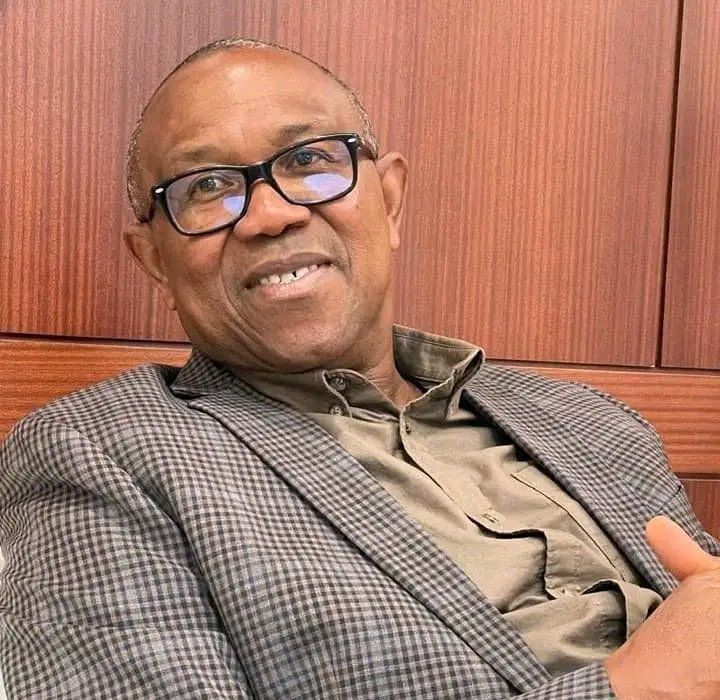
Presidential candidate of the Nigeria Democratic Congress (NDC), Peter Obi, has travelled to Germany and the United Kingdom for a series of high-level engagements as political activities intensify ahead of Nigeria’s 2027 general elections.
Obi disclosed his latest movement in a social media post on Thursday, September 10, following his return to Abuja from visits to Benue and Plateau states.
Obi Begins European Engagements
According to the former Anambra State governor, his engagements in Germany and the UK are focused on issues he considers critical to Nigeria’s future.
He listed democracy, electoral integrity, poverty, education, corruption and healthcare among the issues discussed during the engagements.
Obi said the meetings also explored practical measures that could improve the living conditions of Nigerians and protect their dignity.
The NDC candidate said he returned to Abuja on September 8 after his visits to Benue and Plateau before travelling to Europe, beginning with Germany and subsequently moving to the United Kingdom.
Education Takes Centre Stage
Obi said he was encouraged by the willingness of international partners to support Nigeria, particularly in the education sector.
He described education as the most important investment Nigeria can make in its citizens, arguing that sustainable development would remain difficult without building the knowledge, skills and capabilities of the population.
His emphasis on education comes as he continues to make human capital development a central part of his political messaging ahead of the 2027 election.
Obi Restates Economic Vision
The former Anambra governor also used the occasion to reiterate his call for a fundamental change in Nigeria’s economic direction.
He advocated a transition from consumption to production, dependence to productivity and wasteful practices to responsible resource management.
Obi said his broader objective was to build a country where children have access to quality education, democracy reflects the will of voters, healthcare is accessible and public resources are managed responsibly.
2027 Political Activities Gather Momentum
Obi’s European engagements come at a time when political activities surrounding the 2027 presidential election are intensifying.
The former Anambra governor has continued to position himself as a major opposition contender. On September 8, he described Oyo State Governor Seyi Makinde as qualified to become president while calling on opposition politicians to put their differences aside and focus on challenges including poverty, hunger and insecurity.
Obi has also recently made electoral integrity a major part of his campaign message, saying his primary concern is whether Nigerians will be able to protect their votes during the 2027 election rather than simply whether he personally wins.
Other Politicians Begin International Engagements
Obi is not the only presidential contender undertaking international engagements ahead of the election.
Politics Nigeria reported that African Action Congress presidential candidate Omoyele Sowore recently travelled to the United States and Canada as part of a North American tour involving engagements with Nigerians in the diaspora, supporters, activists and other stakeholders.
The movements come as the 2027 electoral calendar advances. According to the report, INEC’s official campaign period began on August 19, 2026, while the presidential and National Assembly elections are scheduled for January 16, 2027.

 News3 years ago
Hardship: We Plan To Establish A National Commodity Board To Crash Food Prices – VP Shettima
- News8 years ago
Blog Reader; Samson Osagiede Celebrates Fiancè Benedicta Daniels’s Birthday With Sweet Words
- Home10 years ago
News Channel claims Donald Trump is an orphan from Pakistan,share alleged childhood photo
- Home10 years ago
Another $175m Found in Patience Jonathan’s wife’s firm’s Bank Account
- Home10 years ago
Oil Spillage: House of Reps Member Shares Photos of the Water her Constituents Drink .
- Home10 years ago
Zara Buhari & Ahmed Indimi’s Wedding Access Card
 Sport8 years ago
Modric, Marta Wins 2018 FIFA Best Player Of The Year Awards ⚽️
- News8 years ago
The Best Video You’ve Seen Today?