News
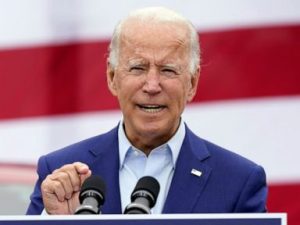
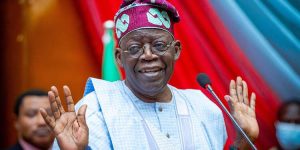
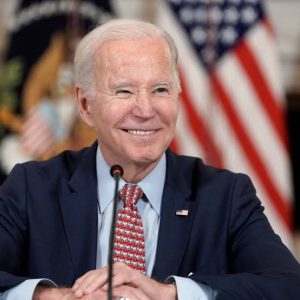
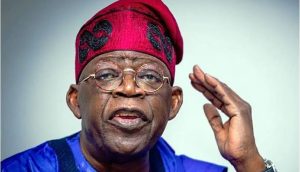
Nigeria’s Presidential Election Was Rigged, Don’t Congratulate Tinubu. – Chimamanda Adichie Tells Biden

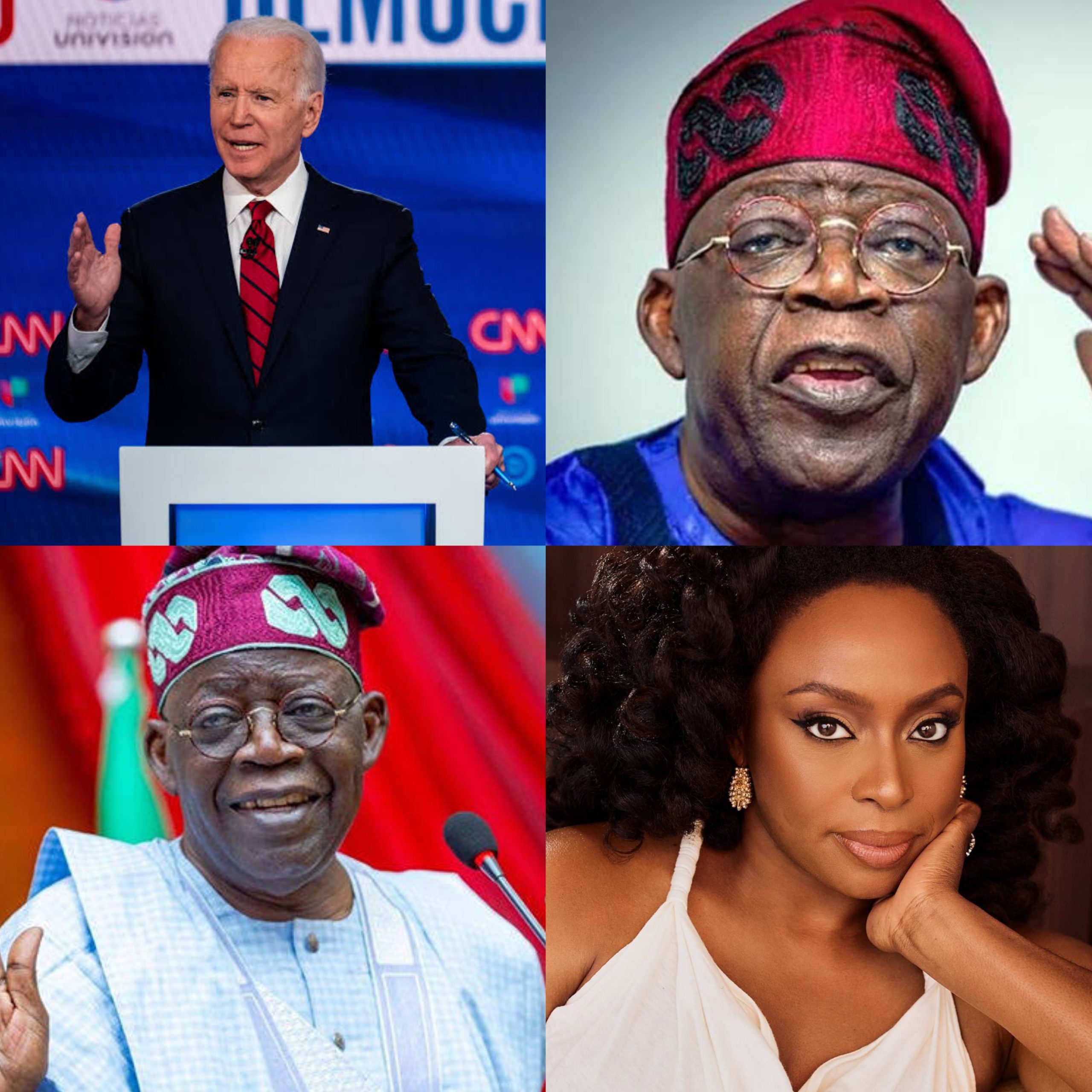
Dear president Biden,
Something remarkable happened on the morning of February 25, the day of the Nigerian presidential election. Many Nigerians went out to vote holding in their hearts a new sense of trust. Cautious trust, but still trust. Since the end of military rule in 1999, Nigerians have had little confidence in elections. To vote in a presidential election was to brace yourself for the inevitable aftermath: fraud.
Elections would be rigged because elections were always rigged; the question was how badly. Sometimes voting felt like an inconsequential gesture as predetermined “winners” were announced.
A law passed last year, the 2022 Electoral Act, changed everything. It gave legal backing to the electronic accreditation of voters and the electronic transmission of results, in a process determined by the Independent National Electoral Commission (INEC). The chair of the commission, Professor Mahmood Yakubu, assured Nigerians that votes would be counted in the presence of voters and recorded in a result sheet, and that a photo of the signed sheet would immediately be uploaded to a secure server. When rumors circulated about the commission not keeping its word, Yakubu firmly rebutted them. In a speech at Chatham House in London (a favorite influence-burnishing haunt of Nigerian politicians), he reiterated that the public would be able to view “polling-unit results as soon as they are finalized on election day.”
Nigerians applauded him. If results were uploaded right after voting was concluded, then the ruling party, the All Progressives Congress (APC), which has been in power since 2015, would have no opportunity for manipulation. Technology would redeem Nigerian democracy. Results would no longer feature more votes than voters. Nigerians would no longer have their leaders chosen for them. Elections would, finally, capture the true voice of the people. And so trust and hope were born.
By the evening of February 25, 2023, that trust had dissipated. Election workers had arrived hours late, or without basic election materials. There were reports of violence, of a shooting at a polling unit, and of political operatives stealing or destroying ballot boxes. Some law-enforcement officers seemed to have colluded in voter intimidation; in Lagos, a policeman stood idly by as an APC spokesperson threatened members of a particular ethnic group who he believed would vote for the opposition.
Most egregious of all, the electoral commission reneged on its assurance to Nigerians. The presidential results were not uploaded in real time. Voters, understandably suspicious, reacted; videos from polling stations show voters shouting that results be uploaded right away. Many took cellphone photos of the result sheets. Curiously, many polling units were able to upload the results of the House and Senate elections, but not the presidential election. A relative who voted in Lagos told me, “We refused to leave the polling unit until the INEC staff uploaded the presidential result. The poor guy kept trying and kept getting an ‘error’ message. There was no network problem. I had internet on my phone. My bank app was working. The Senate and House results were easily uploaded. So why couldn’t the presidential results be uploaded on the same system?” Some electoral workers in polling units claimed that they could not upload results because they didn’t have a password, an excuse that voters understood to be subterfuge. By the end of the day, it had become obvious that something was terribly amiss.
No one was surprised when, by the morning of the 26th, social media became flooded with evidence of irregularities. Result sheets were now slowly being uploaded on the INEC portal, and could be viewed by the public. Voters compared their cellphone photos with the uploaded photos and saw alterations: numbers crossed out and rewritten; some originally written in black ink had been rewritten in blue, some blunderingly whited-out with Tipp-Ex. The election had been not only rigged, but done in such a shoddy, shabby manner that it insulted the intelligence of Nigerians.
Nigerian democracy had long been a two-party structure—power alternating between the APC and the Peoples Democratic Party—until this year, when the Labour Party, led by Peter Obi, became a third force. Obi was different; he seemed honest and accessible, and his vision of anti-corruption and self-sufficiency gave rise to a movement of supporters who called themselves “Obi-dients.” Unusually large, enthusiastic crowds turned up for his rallies. The APC considered him an upstart who could not win, because his small party lacked traditional structures. It is ironic that many images of altered result sheets showed votes overwhelmingly being transferred from the Labour Party to the APC.
As vote counting began at INEC, representatives of different political parties—except for the APC—protested. The results being counted, they said, did not reflect what they had documented at the polling units. There were too many discrepancies.
“There is no point progressing in error, Mr. Chairman. We are racing to nowhere,” one party spokesperson said to Yakubu. “Let us get it right before we proceed with the collation.” But the INEC chair, opaque-faced and lordly, refused. The counting continued swiftly until, at 4:10 a.m. on March 1, the ruling party’s candidate, Bola Tinubu, was announced as president-elect.
A subterranean silence reigned across the country. Few people celebrated. Many Nigerians were in shock. “Why,” my young cousin asked me, “did INEC not do what it said it would do?”
It seemed truly perplexing that, in the context of a closely contested election in a low-trust society, the electoral commission would ignore so many glaring red flags in its rush to announce a winner. (It had the power to pause vote counting, to investigate irregularities—as it would do in the governorship elections two weeks later.)
Rage is brewing, especially among young people. The discontent, the despair, the tension in the air have not been this palpable in years.
How surprising then to see the U.S. State Department congratulate Tinubu on March 1. “We understand that many Nigerians and some of the parties have expressed frustration about the manner in which the process was conducted and the shortcomings of technical elements that were used for the first time in a presidential election cycle,” the spokesperson said. And yet the process was described as a “competitive election” that “represents a new period for Nigerian politics and democracy.”
American intelligence surely cannot be so inept. A little homework and they would know what is manifestly obvious to me and so many others: The process was imperiled not by technical shortcomings but by deliberate manipulation.
An editorial in The Washington Post echoed the State Department in intent if not in affect. In an oddly infantilizing tone, as though intended to mollify the simpleminded, we are told that “officials have asserted that technical glitches, not sabotage, were the issue,” that “much good” came from the Nigerian elections, which are worth celebrating because, among other things, “no one has blocked highways, as happened in Brazil after Jair Bolsonaro lost his reelection bid.” We are also told that “it is encouraging, first, that the losing candidates are pursuing their claims through the courts,” though any casual observer of Nigerian politics would know that courts are the usual recourse after any election.
The editorial has the imaginative poverty so characteristic of international coverage of African issues—no reading of the country’s mood, no nuance or texture. But its intellectual laziness, unusual in such a rigorous newspaper, is astonishing. Since when does a respected paper unequivocally ascribe to benign malfunction something that may very well be malignant—just because government officials say so? There is a kind of cordial condescension in both the State Department’s and The Washington Post’s responses to the election. That the bar for what is acceptable has been so lowered can only be read as contempt.
I hope, President Biden, that you do not personally share this cordial condescension. You have spoken of the importance of a “global community for democracy,” and the need to stand up for “justice and the rule of law.” A global community for democracy cannot thrive in the face of apathy from its most powerful member. Why would the United States, which prioritizes the rule of law, endorse a president-elect who has emerged from an unlawful process?
Presidential Poll Was Rigged, Don’t Congratulate Tinubu-Chimamanda Tells Biden
Compromised is a ubiquitous word in Nigeria’s political landscape—it is used to mean “bribed” but also “corrupted,” more generally. “They have been compromised,” Nigerians will say, to explain so much that is wrong, from infrastructure failures to unpaid pensions. Many believe that the INEC chair has been “compromised,” but there is no evidence of the astronomical U.S.-dollar amounts he is rumored to have received from the president-elect. The extremely wealthy Tinubu is himself known to be an enthusiastic participant in the art of “compromising”; some Nigerians call him a “drug baron” because, in 1993, he forfeited to the United States government $460,000 of his income that a Chicago court determined to be proceeds from heroin trafficking. Tinubu has strongly denied all charges of corruption.
I hope it will not surprise you, President Biden, if I argue that the American response to the Nigerian election also bears the faint taint of that word, compromised, because it is so removed from the actual situation in Nigeria as to be disingenuous. Has the United States once again decided that what matters in Africa is not democracy but stability? (Perhaps you could tell British Prime Minister Rishi Sunak, who quickly congratulated Tinubu, that an illegitimate government in a country full of frustrated young people does not portend stability.) Or is it about that ever-effulgent nemesis China, as so much of U.S. foreign policy now invariably seems to be? The battle for influence in Africa will not be won by supporting the same undemocratic processes for which China is criticized.
This Nigerian election was supposed to be different, and the U.S. response cannot—must not—be business as usual. The Nigerian youth, long politically quiescent, have awoken. About 70 percent of Nigerians are under 30 and many voted for the first time in this election. Nigerian politicians exhibit a stupefying ability to tell barefaced lies, so to participate in political life has long required a suspension of conscience. But young people have had enough. They want transparency and truth; they want basic necessities, minimal corruption, competent political leaders, and an environment that can foster their generation’s potential.
This election is also about the continent. Nigeria is a symbolic crucible of Africa’s future, and a transparent election will rouse millions of other young Africans who are watching, and who long, too, for the substance and not the hollow form of democracy. If people have confidence in the democratic process, it engenders hope, and nothing is more essential to the human spirit than hope.
Today, election results are still being uploaded on the INEC server. Bizarrely, many contradict the results announced by INEC. The opposition parties are challenging the election in court. But there is reason to worry about whether they will get a fair ruling. INEC has not fully complied with court orders to release election materials. The credibility of the Nigerian Supreme Court has been strained by its recent judgments in political cases, or so-called judicial coronations, such as one in which the court declared the winner of the election for governor of Imo State a candidate who had come in fourth place.
Lawlessness has consequences. Every day Nigerians are coming out into the streets to protest the election. APC, uneasy about its soiled “victory,” is sounding shrill and desperate, as though still in campaign mode. It has accused the opposition party of treason, an unintelligent smear easily disproved but disquieting nonetheless, because false accusations are often used to justify malicious state actions.
I supported Peter Obi, the Labour Party candidate, and hoped he would win, as polls predicted, but I was prepared to accept any result, because we had been assured that technology would guard the sanctity of votes. The smoldering disillusionment felt by many Nigerians is not so much because their candidate did not win as because the election they had dared to trust was, in the end, so unacceptably and unforgivably flawed.
Congratulating its outcome, President Biden, tarnishes America’s self-proclaimed commitment to democracy. Please do not give the sheen of legitimacy to an illegitimate process. The United States should be what it says it is.
Sincerely,
Chimamanda Adichie.


The Nigeria Customs Service (NCS) and the Republic of Benin Customs have launched a technology-driven system aimed at making cross-border trade between both countries faster, more transparent and easier for traders.
The initiative, known as the Customs Declaration Exchange System (CDES), is designed to connect the operations of the two customs administrations while improving coordinated enforcement and harmonising border procedures.
New Digital System Targets Border Delays
The Comptroller-General of Customs, Adewale Adeniyi, announced the initiative during the Joint Nigeria-Benin Customs meeting on the assessment of the One Stop Border Post at the Seme-Krake border in Lagos State.
The meeting was themed “Leveraging the Nigeria Customs Service Trade Modernisation Project to Advance Seamless Cross-Border Trade and Shared Responsibility.”
Adeniyi said the system is expected to improve interconnectivity between the two customs administrations and establish a framework for more accountable joint governance.
Focus on Women Traders
The Customs chief said the digital system would particularly benefit women who participate in informal cross-border trade.
According to Adeniyi, women account for more than 70 per cent of informal cross-border traders along the corridor. He said many women traders face challenges including harassment, extortion and delays while moving goods across the border.
The CDES is therefore expected to simplify procedures for small consignments and make information about customs requirements available in languages traders can understand.
A dedicated complaint channel is also expected to provide women traders with a way to report cases of poor treatment at the border.
System Could Reduce Repeated Customs Checks
Adeniyi said one of the major measures of the system’s success would be whether traders and transporters could avoid unnecessary duplication of customs procedures.
He gave the example of a truck carrying goods from Cotonou to Lagos, saying the objective was for it to clear the border once rather than undergo repeated processes on both sides.
He also said the system should eventually allow traders to cross the border within an hour rather than spending an entire day dealing with border procedures.
Nigeria, Benin Customs Plan System Interconnectivity
The technical team working on the project has presented processes for deploying the CDES across both countries.
The two administrations are also considering co-locating their customs administrations and systems at the border, which would allow officers on either side to access relevant information and coordinate decisions more effectively.
Adeniyi said connectivity between the systems would be critical to the success of the project.
He added that within about three months, the systems should begin working once the necessary technical connections and administrative cooperation are established.
Benin Customs Expresses Readiness
The Director-General of Customs in Benin Republic, Colonel Raouf Aboudou, expressed confidence in the initiative and pledged his administration’s cooperation.
Aboudou said the system was developed jointly by the two customs administrations and expressed optimism that it would improve trade between Nigeria and Benin.
He stressed that the success of the project would depend on joint commitment rather than policy declarations alone.
Potential Boost for Regional Trade
The initiative could also serve as a model for digital customs cooperation beyond the Nigeria-Benin corridor.
Adeniyi said that once the two countries achieve full interoperability, they would have created a possible template for online border crossings across ECOWAS and the wider African continent.
The move also aligns with broader efforts by West African customs administrations to harmonise procedures, strengthen digital interoperability and improve coordinated risk management.
For traders and transporters operating along the busy Nigeria-Benin corridor, the expected benefits include fewer delays, clearer customs requirements and more predictable border procedures.

The United States Federal Bureau of Investigation (FBI) has approached Nigeria’s Economic and Financial Crimes Commission (EFCC) for assistance in investigating the alleged mismanagement and diversion of funds released for US-backed health programmes in the country.
The investigation is expected to focus on organisations that received funding under programmes supported by the United States Agency for International Development (USAID), particularly projects targeting HIV/AIDS and tuberculosis interventions.
FBI Seeks EFCC’s Assistance
The request was reportedly made during a meeting between officials of the FBI and EFCC in Lagos as both countries seek to strengthen cooperation on financial crimes involving international funds.
According to EFCC spokesperson Dele Oyewale, the request was presented by Macus Maccain, Assistant Law Enforcement Attaché of the FBI, during a visit to the office of Bawa Kaltungo, the EFCC Acting Zonal Director in Lagos.
Maccain said the engagement was aimed at strengthening collaboration between the two agencies and supporting investigations into financial irregularities linked to organisations that implemented US-funded programmes in Nigeria.
Probe Focuses on Funds Left After Programme Terminations
The investigation is particularly concerned with funds that remained with implementing organisations after some USAID-supported programmes were discontinued.
According to the FBI official, investigators want to establish how such funds were managed and whether any financial misconduct occurred following the termination of the programmes.
The development follows major changes to US foreign assistance programmes under the Donald Trump administration, which resulted in the cancellation, suspension or termination of several USAID activities.
Nigeria was among the countries where USAID had supported major health interventions over the years, including HIV testing, treatment and care, as well as tuberculosis prevention, diagnosis and treatment.
US Audits Raise Further Questions
The investigation comes amid continuing financial scrutiny of organisations that managed USAID resources in Nigeria.
Recent audits listed by the USAID Office of Inspector General included programmes managed by the KNCV Tuberculosis Foundation Nigeria and Georgetown Global Health Nigeria.
These reviews have added to questions surrounding the administration and accounting of donor-funded programmes after money was released to implementing partners.
US Officials Raise Concerns Over Budgets
During the meeting with EFCC officials, Jeremy Kennon, a Special Agent with the Office of Inspector General of the US Department of State, said the United States and Nigeria had previously entered into agreements to fund HIV and tuberculosis interventions.
He explained that several organisations were involved in delivering healthcare services under the programmes, including the establishment of one-stop centres where people living with HIV could access treatment and related services.
Kennon said reviews of some programmes had raised concerns about inflated budgets and other financial irregularities in Kano State and other parts of Nigeria.
He added that the concerns were not limited to Nigeria but stressed that US authorities were interested in tracing how funds were handled by organisations connected to the affected programmes.
EFCC to Trace Movement of Funds
The EFCC has assured the US delegation that it will give the matter the necessary attention.
Kaltungo, who received the delegation on behalf of EFCC Chairman Ola Olukoyede, said the commission would investigate the allegations across the states where the affected organisations operated.
Investigators are expected to trace the movement of the funds and identify their ultimate beneficiaries where necessary. The agencies also expressed interest in developing a longer-term relationship focused on information sharing and access to financial records.
The investigation could therefore involve examining transactions from organisations that received USAID funds to other beneficiaries or accounts where investigators consider such tracing necessary.
No Finding of Diversion Yet
The investigation does not, at this stage, establish that USAID funds were unlawfully diverted.
Rather, US and Nigerian authorities are examining allegations and financial concerns surrounding how funds were administered, particularly after some programmes were terminated.
The outcome of the investigation will determine whether any individuals or organisations should face further action over suspected financial misconduct.
The Federal Government has begun moves to operationalise 112 as Nigeria’s single national emergency number, with the aim of giving citizens one toll-free line to access emergency assistance across the country.
The development follows the approval by the National Economic Council (NEC) of 112 as the unified emergency number across all levels of government and relevant response agencies.
FG Sets Roadmap for Nationwide Rollout
Vice President Kashim Shettima has directed relevant government agencies and stakeholders to develop a comprehensive operational roadmap for the nationwide implementation of the emergency number.
A committee comprising the Nigeria Police Force (NPF), Nigerian Communications Commission (NCC), National Emergency Management Agency (NEMA), Federal Road Safety Corps (FRSC) and other relevant agencies has been constituted to finalise the roadmap and standard operating procedures.
The plan will subsequently be presented to the NEC for formal endorsement.
One Number for Different Emergencies
Under the proposed unified system, Nigerians would no longer need to determine which emergency agency to contact before seeking help.
The 112 system is designed to provide access to the appropriate response for situations including security incidents, road accidents, fires, medical emergencies, natural disasters and other life-threatening situations.
Inspector-General of Police Olatunji Rilwan Disu said the adoption of a single emergency number would provide citizens with a simpler and more reliable way to seek urgent assistance.
FG Seeks Faster Emergency Response
The Federal Government said the initiative is intended to address fragmentation within Nigeria’s emergency response system, where different agencies and jurisdictions have historically operated through separate channels.
At the NEC meeting in April, Shettima said Nigerians facing emergencies needed a rapid response rather than bureaucratic delays. The council consequently approved 112 as part of efforts to create a more coordinated national emergency-response framework.
The government’s latest roadmap is expected to clarify responsibilities among participating agencies, establish operating standards and set milestones for implementation.
NCC Has Established Emergency Communication Centres
The NCC has already established about 35 Emergency Communications Centres (ECCs) across the country to support the national emergency response system.
NCC officials, however, have stressed that the success of the initiative will depend on stronger cooperation among state governments and emergency-response agencies.
The commission has also called for the maintenance of communications infrastructure already deployed and greater integration between the police, ambulance services, fire services and disaster-response agencies.
112 Already Exists, But FG Wants a Unified System
Although 112 is not a completely new emergency code in Nigeria, the current reform seeks to make it the single, coordinated national emergency lifeline.
Government officials have acknowledged that challenges including connectivity, management of Emergency Communication Centres and public awareness have affected the effectiveness of the existing system.
A government report earlier in 2026 found that about 80 per cent of states could access 112, while connectivity and awareness remained challenges.
The latest initiative is therefore focused not simply on assigning a number, but on ensuring that calls placed to 112 result in coordinated and timely responses.
Committee to Finalise Implementation
Stakeholders involved in the rollout include the police, NCC, NEMA, FRSC and other emergency-response institutions.
The government says the committee will develop the operational framework and standard operating procedures required to make 112 function as a reliable nationwide emergency service.
Once fully implemented, the system is expected to give Nigerians a single point of contact when they require urgent assistance.

 News3 years ago
Hardship: We Plan To Establish A National Commodity Board To Crash Food Prices – VP Shettima
- News8 years ago
Blog Reader; Samson Osagiede Celebrates Fiancè Benedicta Daniels’s Birthday With Sweet Words
- Home10 years ago
News Channel claims Donald Trump is an orphan from Pakistan,share alleged childhood photo
- Home10 years ago
Another $175m Found in Patience Jonathan’s wife’s firm’s Bank Account
- Home10 years ago
Oil Spillage: House of Reps Member Shares Photos of the Water her Constituents Drink .
- Home10 years ago
Zara Buhari & Ahmed Indimi’s Wedding Access Card
 Sport8 years ago
Modric, Marta Wins 2018 FIFA Best Player Of The Year Awards ⚽️
- News8 years ago
The Best Video You’ve Seen Today?