Politics
“Nigeria Keeps Getting Worse” — Nollywood’s Olumide Oworu Opens Up on Why He Swapped the Screen for the Campaign Trail

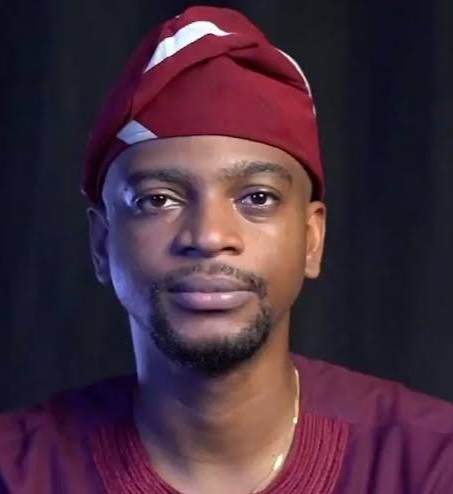
For most people, a comfortable acting career would be enough. For Olumide Oworu, it clearly is not.
The 31-year-old Nollywood actor, widely recognised for his beloved role as Tari in the long-running Africa Magic series The Johnsons, has opened up in a candid interview on Naija FM Lagos about the convictions that drove him away from the entertainment industry and toward the rough, unpredictable terrain of Nigerian politics — and his explanation is both refreshingly honest and deeply personal.
“I decided to join politics because of how the country is going. I know how Nigeria was when I was younger, but now, things keep getting worse. And I want to start a family and raise my kids here.” Those words, simple as they are, cut to the heart of a frustration shared by millions of young Nigerians who have watched the country they grew up in gradually become a place harder to love and harder to stay in.
But Oworu’s motivation goes beyond personal frustration. He said he entered politics specifically to become a policymaker, pointing out that the poor decisions being made by the current crop of Nigerian politicians are affecting him just as badly as they are affecting every other ordinary citizen. He did not frame it as a desire for power or personal advancement — he framed it as an act of self-preservation and collective responsibility. “So I have to make sure that I try my best to be among the policymakers, because whatever policy that is being enacted, it will ultimately affect me like every other common person. And also, most of the present crops of politicians are aging out. Whatever policy they are making today, it is me and my friends who will be at the receiving end tomorrow,” he said.
It is the kind of reasoning that has become increasingly common among Nigerian youth in the years since the 2020 #EndSARS protests jolted an entire generation awake to the relationship between governance and daily life — and Oworu is clearly one of those who took that awakening seriously enough to act on it.
He contested for the position of House of Assembly member representing Surulere 1 constituency in Lagos State under the Labour Party in the 2023 general elections, running against his own Nollywood colleague, veteran actor turned politician Desmond Elliott, who was seeking re-election on the APC platform. It was a contest that generated significant attention on social media and within entertainment circles — two familiar faces from the same industry, on opposite sides of a ballot paper in one of Lagos’ most closely watched constituencies. Elliott won the seat, and Oworu’s name famously did not appear on INEC’s result sheet, a development that sparked its own controversy online.
Despite the setback, Oworu has not stepped back from his convictions. He continues to stress that public policy decisions taken today will shape the social and economic realities of his generation for decades ahead, and insists that young Nigerians must move beyond commentary and step directly into governance.
It is a message that stands out precisely because of who is saying it. Oworu did not inherit a political surname. He is not the son of a senator or the nephew of a governor. He is a young man who began his acting career at six years old on the television series Everyday People, built a career through hard work and natural talent, and arrived at a point in his life where a comfortable industry was no longer enough to quiet the frustration he felt about the country around him.
Whether that frustration eventually translates into a seat in the Lagos House of Assembly or a higher office is a question only future elections can answer. But one thing is already clear — Olumide Oworu went into politics with his eyes open, his reasons genuine, and his resolve firmly intact. And for a political class that has long been criticised for attracting only the wrong people, that is perhaps more significant than any result sheet.

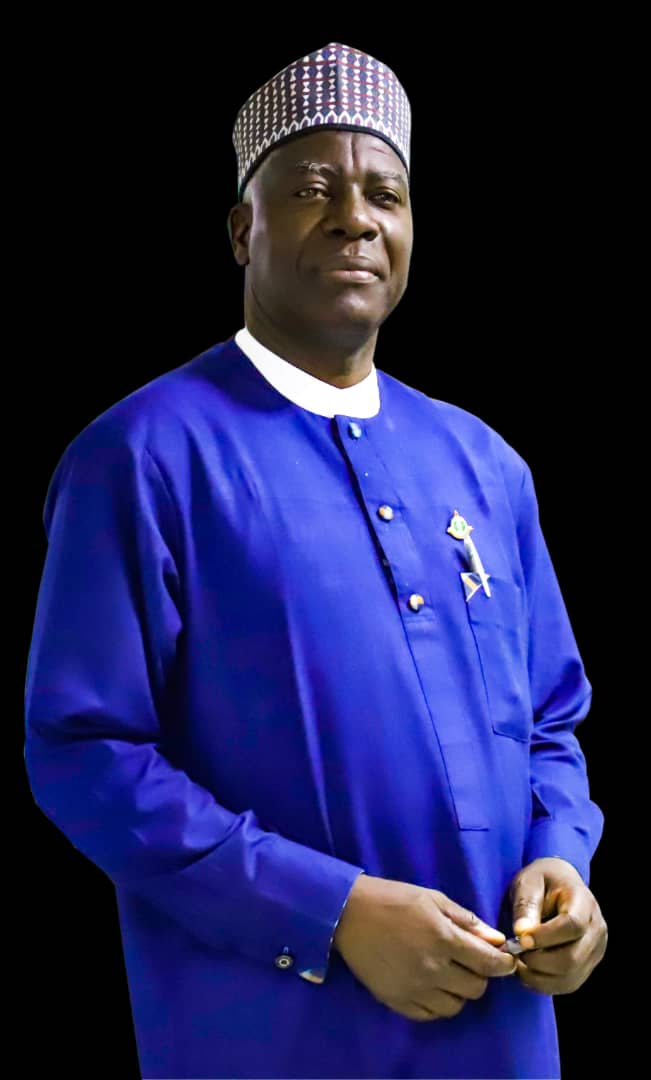
President Bola Tinubu has appointed former Director-General of the Department of State Services (DSS), Yusuf Magaji Bichi, as Chairman of the Governing Board of the National Institute for Security Studies (NISS), Abuja.
The appointment was announced on Thursday, October 22, 2026, by the institute’s Director of Coordination and Liaison, Lilian Omo-Odigwe.
According to the announcement, Tinubu approved the appointment following a recommendation by the incumbent DSS Director-General, Oluwatosin Adeola Ajayi.
Bichi’s appointment takes effect from October 22, 2026, for an initial four-year term in accordance with Section 4 of the National Institute for Security Studies (Establishment) Act, 2019.
He succeeds former DSS chief A.A. Gadzama as chairman of the institute’s governing board.
The NISS said Bichi’s experience in intelligence, security administration, operational leadership and institutional training would contribute to the institute’s strategic direction and governance.
The institute is responsible for strategic security training, research and capacity development for personnel within Nigeria’s security sector and allied institutions.
Bichi previously served as Director-General of the DSS from September 2018 until August 2024, when he left the position and was succeeded by Adeola Ajayi.
During his career, he held several positions within the intelligence agency, including State Director of Security in Jigawa, Niger, Sokoto and Abia states. He also served in different directorates at the DSS national headquarters and headed the State Services Academy in Lagos.
Before joining the DSS, Bichi began his career in the Security Division of the Kano State Cabinet Office and transferred his service in 1984. He later received specialised training in intelligence processing, analysis and security administration.
His appointment comes as the Federal Government continues efforts to strengthen Nigeria’s security institutions amid persistent challenges, including kidnapping, banditry and other forms of violent crime.
As chairman of the NISS Governing Board, Bichi is expected to provide oversight on the institute’s strategic direction and contribute to strengthening professional training and institutional capacity within the country’s security sector.
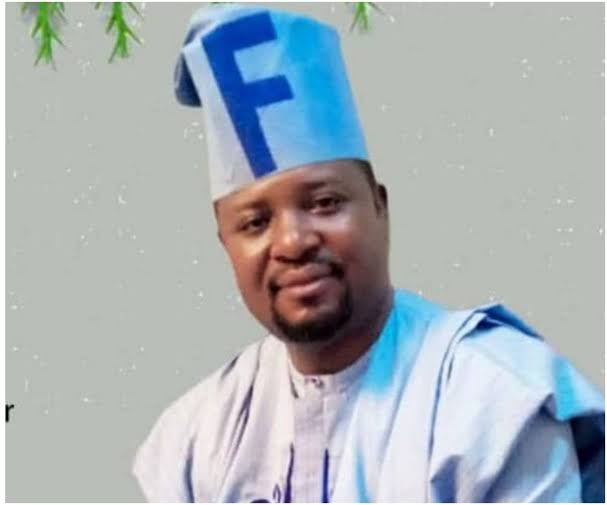
The Social Democratic Party (SDP) governorship candidate in Lagos State, Femi Olaniyi-Ferrari, has declared his intention to defeat the ruling All Progressives Congress (APC) in the 2027 governorship election.
Olaniyi-Ferrari made the declaration during an interview in Lagos on Monday, October 19, 2026, saying his party was prepared to offer residents an alternative leadership focused on public welfare, accountability and socioeconomic development.
According to the News Agency of Nigeria, the candidate argued that Lagos residents deserved a government that listens to their concerns and responds to their needs.
He also questioned the prolonged dominance of one political party in the state, maintaining that a change in leadership should be considered by voters.
Olaniyi-Ferrari said the SDP intended to reshape the state’s political landscape through policies and programmes designed to improve residents’ living standards.
SDP Promises People-Centred Governance
The governorship candidate said his party would prioritise transparency, economic opportunities, social welfare and sustainable development if given the mandate to govern Lagos.
He explained that the SDP would intensify grassroots mobilisation and engagement across the state to communicate its policy proposals and attract support ahead of the election.
Olaniyi-Ferrari also urged eligible voters to examine the manifestoes and policy commitments of political parties before deciding whom to support in 2027.
He emphasised that elections provide citizens with an opportunity to influence the direction of governance through their votes.
According to him, the SDP’s proposed approach would focus on responsible management of public resources, broader access to opportunities and government policies that reflect residents’ aspirations.
The candidate expressed confidence in his party’s ability to mobilise supporters across Lagos and compete for the governorship seat.
He further called on residents to participate actively in the electoral process, stressing the importance of credible elections and informed choices in strengthening democracy.
The SDP’s declaration comes as political parties and their candidates intensify preparations for the 2027 elections, with the APC facing challenges from opposition parties seeking to secure the support of Lagos voters.
However, the outcome of the contest will ultimately depend on the candidates’ campaigns, policy proposals and decisions made by voters at the polls.
The Nigeria Democratic Congress (NDC) has withdrawn recognition of its chapters operating outside Nigeria, citing a subsisting court judgment that reportedly restricts Nigerian political parties from establishing and supervising branches abroad.
The party announced the decision on Sunday through its National Publicity Secretary, Osa Director, who said the move followed a review of the party’s relationship with its foreign-based chapters.
According to Director, the decision was taken in deference to a judgment delivered by Justice Peter Kekemeke of the Federal Capital Territory High Court in Maitama in a case involving Professor Ali Alao, the All Progressives Congress (APC) and another party.
The suit, identified as No. CV/187/2025, reportedly addressed the legal status of diaspora chapters established by political parties registered in Nigeria.
The NDC spokesperson said the court held that Nigerian political parties lacked the legal authority to establish, operate or supervise chapters outside the country’s territorial boundaries.
Consequently, the party said it was halting recognition of its foreign chapters and withdrawing all previously granted recognition in compliance with the judgment.
Despite the decision, the NDC expressed appreciation to Nigerians living abroad for their support, loyalty and contributions to the party.
Director disclosed that the party had begun a harmonisation process in locations where multiple groups were operating, with the aim of bringing them together under a unified structure.
He added that the party was still reviewing the judgment and had referred the matter to its legal department for further advice and guidance.
The NDC also acknowledged the interest of Nigerians in the diaspora in its candidates ahead of the 2027 general elections, particularly its presidential candidate, Peter Obi.
The party encouraged its supporters abroad to remain engaged, continue interacting and maintain their political interests through appropriate and lawful channels.
The development comes as political parties prepare for the 2027 elections, with the NDC indicating that its withdrawal of formal recognition would not prevent continued engagement with supporters outside Nigeria.

 News3 years ago
Hardship: We Plan To Establish A National Commodity Board To Crash Food Prices – VP Shettima
- News8 years ago
Blog Reader; Samson Osagiede Celebrates Fiancè Benedicta Daniels’s Birthday With Sweet Words
- Home10 years ago
News Channel claims Donald Trump is an orphan from Pakistan,share alleged childhood photo
 Sport8 years ago
Modric, Marta Wins 2018 FIFA Best Player Of The Year Awards ⚽️
- Home10 years ago
Another $175m Found in Patience Jonathan’s wife’s firm’s Bank Account
- Home10 years ago
Oil Spillage: House of Reps Member Shares Photos of the Water her Constituents Drink .
- Home10 years ago
Zara Buhari & Ahmed Indimi’s Wedding Access Card
- News8 years ago
The Best Video You’ve Seen Today?