Politics
“The Glitch Is Eliminated” — INEC Chairman Amupitan Promises Nigeria’s Best Ever Election in 2027, Plans Nationwide Mock Vote

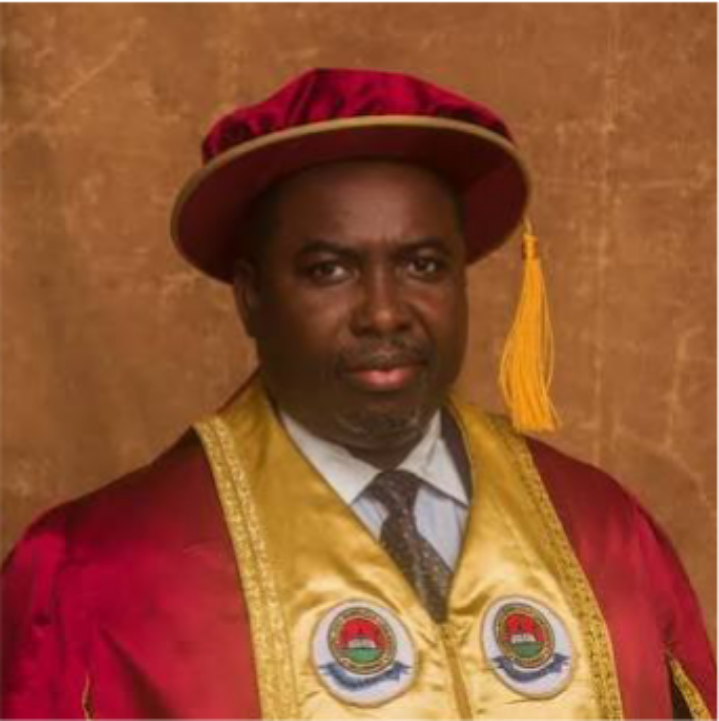
Professor Joash Amupitan has drawn a clear line between 2023 and 2027 — and he is asking Nigerians to trust him to deliver on the right side of it.
The Chairman of the Independent National Electoral Commission stepped before a Citizens’ Townhall on the Electoral Act 2026 in Abuja on Sunday with one central message — the era of technical excuses is over, and the next general election will be unlike anything Nigeria has experienced before. The event, organised by the Civil Society Network on Election Integrity and themed “Electoral Act 2026: What It Means for Your Vote and the 2027 Elections,” drew civil society groups, lawmakers, academics, election observers, security agencies, and members of the public to the Abuja Continental Hotel for a wide-ranging conversation on what the newly signed law means for the country’s democratic future.
“By the grace of God, the 2027 election will be the best Nigeria has ever had. The electorate of 2027 is more aware and understands the direct correlation between elections and national development. We want a process that guarantees the legitimacy and confidence people want to see in their system. When people trust INEC and their leaders, the country will move forward,” Amupitan said, in remarks that were both a promise and a challenge to his own institution.
On the specific wound that has refused to heal since 2023 — the infamous technical glitch that disrupted real-time electronic result transmission during the presidential election — Amupitan was direct and unambiguous. “Regarding the ‘glitch’ that was blamed for issues in 2023, let me be clear: the glitch is eliminated. It will not surface again,” he declared, explaining that his own audit of the 2023 polls had revealed a key oversight — the Bimodal Voter Accreditation System had been tested in off-cycle state elections like Osun and Ekiti but was never properly stress-tested for the enormous scale of a nationwide presidential election. “That will change in 2027,” he said plainly.
To make sure it does, INEC is planning something it has never done before. The commission will conduct a nationwide mock presidential election ahead of the 2027 polls — a full-scale rehearsal designed to test result transmission infrastructure across every state simultaneously, so that no system failure is discovered for the first time on election day. “Moving forward, we will conduct mock presidential elections to ensure that transmission across state lines is seamless before the actual vote,” Amupitan said, describing result management and logistics as the two operational pressure points the commission is most focused on getting right.
He was also careful to temper the confidence with candour. While expressing belief that 2027 would be the country’s best election yet, he acknowledged that 100 percent perfection may not yet be achievable, stressing that the commission “cannot guarantee a completely flawless election in 2027, particularly regarding the electronic transmission of results.” He cited ongoing challenges around network availability and terrain — pointing to delays in result transmission from Kabir Ward in Kuje Area Council during the FCT elections due to poor connectivity and difficult geography — but was quick to distinguish between delay and failure, insisting that the transmission infrastructure exists and will be significantly strengthened before 2027. “It is just a proviso, a safety. If it fails, results must still be transmitted. But our determination is that it will not fail,” he said.
The townhall also served as an opportunity for Amupitan to address the Electoral Act 2026 more broadly. He noted that the law emerged from a three-year consultative process involving the National Assembly, civil society organisations, and INEC itself, and commended advocacy groups for sensitising citizens on its provisions, adding that civic engagement is indispensable to democratic consolidation. He also spoke about the commission’s ongoing technical review of its Regulations and Guidelines for political parties, designed to align them with the new law — a process supported by the Westminster Foundation for Democracy, which the WFD’s Nigeria Country Director described as a reconstruction of the democratic foundation rather than a simple document review.
Not everyone left the townhall satisfied. ADC chieftain Sam Amadi argued that the INEC chairman’s assurances did not inspire sufficient confidence, while former ActionAid Country Director Ene Obi raised concerns over campaign spending limits in the Act, questioning how they would allow less financially endowed Nigerians to meaningfully contest elections.
But those concerns aside, the emerging consensus from the room was one Amupitan himself seemed to embrace — that the credibility of 2027 will depend not on technology and legislation alone, but on institutional integrity and active citizen vigilance working together. “Your election can only be as good as your logistics,” he said, summing up the practical reality behind the bold promise in a single sentence.
For millions of Nigerians who watched the 2023 results process with frustration and disbelief, Sunday’s assurances will mean very little until they are proved by what happens on January 16, 2027. But Amupitan is betting that by that date, INEC will have done the work to back up the words — and that Nigeria will finally have the election it has long deserved.

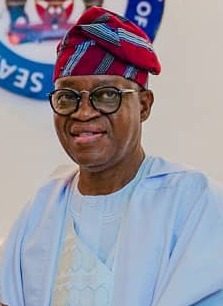
The Federal Government has inaugurated a committee to organise the Nigeria Marine and Blue Economy Expo (NIMBEX), an initiative aimed at attracting investment, creating jobs and unlocking the economic potential of Nigeria’s maritime sector.
The Minister of Marine and Blue Economy, Adegboyega Oyetola, announced the inauguration, describing the expo as a platform to position Nigeria as a major destination for maritime investment, innovation and trade in Africa.
Oyetola, who was represented by the ministry’s Permanent Secretary, Fatima Mahmood, said the event would bring together policymakers, international investors, industry leaders and technology innovators to explore opportunities in the country’s marine and blue economy.
According to the minister, NIMBEX is expected to help convert Nigeria’s maritime resources into investment opportunities, promote economic diversification and generate employment through partnerships and the mobilisation of capital and expertise.
Nigeria has an estimated 853-kilometre coastline and more than 10,000 kilometres of navigable inland waterways across 28 states. These resources offer opportunities to expand domestic and international maritime trade, improve logistics and support economic growth.
The organising committee is chaired by Husseini Shettima, Director of Marine Conservation, Innovation and Technology in the ministry. Kalthum Ibrahim, Director of Planning, Research and Statistics, and Professor Busayo Fakinlede, Senior Special Assistant to President Bola Tinubu on Marine and Blue Economy, will serve as co-chairpersons.
The minister’s Special Adviser, Bolaji Akinola, is also a member of the committee and will serve as the expo’s Chief Operating Officer.
Other members include representatives of key maritime institutions and agencies, including the Nigerian Ports Authority, Nigerian Maritime Administration and Safety Agency, Nigerian Ports Economic Regulatory Agency, National Inland Waterways Authority and the Council for the Regulation of Freight Forwarding in Nigeria.
Representatives of maritime training and research institutions, coastal states, terminal operators, shipowners, freight forwarders, barge operators and other industry stakeholders are also part of the committee.
The expo will showcase investment opportunities across several areas, including port development, shipping, inland waterways, logistics, offshore energy, maritime finance, fisheries, marine biotechnology, deep-sea mining, maritime security and environmental sustainability.
Emerging areas such as marine renewable energy, green shipbuilding, artificial intelligence-driven logistics, subsea robotics and coastal tourism are also expected to feature.
The Federal Government hopes the initiative will strengthen cooperation between public institutions, private businesses, financial organisations and technology providers while encouraging sustainable development of Nigeria’s marine resources.

President Bola Tinubu has appointed former Director-General of the Department of State Services (DSS), Yusuf Magaji Bichi, as Chairman of the Governing Board of the National Institute for Security Studies (NISS), Abuja.
The appointment was announced on Thursday, October 22, 2026, by the institute’s Director of Coordination and Liaison, Lilian Omo-Odigwe.
According to the announcement, Tinubu approved the appointment following a recommendation by the incumbent DSS Director-General, Oluwatosin Adeola Ajayi.
Bichi’s appointment takes effect from October 22, 2026, for an initial four-year term in accordance with Section 4 of the National Institute for Security Studies (Establishment) Act, 2019.
He succeeds former DSS chief A.A. Gadzama as chairman of the institute’s governing board.
The NISS said Bichi’s experience in intelligence, security administration, operational leadership and institutional training would contribute to the institute’s strategic direction and governance.
The institute is responsible for strategic security training, research and capacity development for personnel within Nigeria’s security sector and allied institutions.
Bichi previously served as Director-General of the DSS from September 2018 until August 2024, when he left the position and was succeeded by Adeola Ajayi.
During his career, he held several positions within the intelligence agency, including State Director of Security in Jigawa, Niger, Sokoto and Abia states. He also served in different directorates at the DSS national headquarters and headed the State Services Academy in Lagos.
Before joining the DSS, Bichi began his career in the Security Division of the Kano State Cabinet Office and transferred his service in 1984. He later received specialised training in intelligence processing, analysis and security administration.
His appointment comes as the Federal Government continues efforts to strengthen Nigeria’s security institutions amid persistent challenges, including kidnapping, banditry and other forms of violent crime.
As chairman of the NISS Governing Board, Bichi is expected to provide oversight on the institute’s strategic direction and contribute to strengthening professional training and institutional capacity within the country’s security sector.

The Social Democratic Party (SDP) governorship candidate in Lagos State, Femi Olaniyi-Ferrari, has declared his intention to defeat the ruling All Progressives Congress (APC) in the 2027 governorship election.
Olaniyi-Ferrari made the declaration during an interview in Lagos on Monday, October 19, 2026, saying his party was prepared to offer residents an alternative leadership focused on public welfare, accountability and socioeconomic development.
According to the News Agency of Nigeria, the candidate argued that Lagos residents deserved a government that listens to their concerns and responds to their needs.
He also questioned the prolonged dominance of one political party in the state, maintaining that a change in leadership should be considered by voters.
Olaniyi-Ferrari said the SDP intended to reshape the state’s political landscape through policies and programmes designed to improve residents’ living standards.
SDP Promises People-Centred Governance
The governorship candidate said his party would prioritise transparency, economic opportunities, social welfare and sustainable development if given the mandate to govern Lagos.
He explained that the SDP would intensify grassroots mobilisation and engagement across the state to communicate its policy proposals and attract support ahead of the election.
Olaniyi-Ferrari also urged eligible voters to examine the manifestoes and policy commitments of political parties before deciding whom to support in 2027.
He emphasised that elections provide citizens with an opportunity to influence the direction of governance through their votes.
According to him, the SDP’s proposed approach would focus on responsible management of public resources, broader access to opportunities and government policies that reflect residents’ aspirations.
The candidate expressed confidence in his party’s ability to mobilise supporters across Lagos and compete for the governorship seat.
He further called on residents to participate actively in the electoral process, stressing the importance of credible elections and informed choices in strengthening democracy.
The SDP’s declaration comes as political parties and their candidates intensify preparations for the 2027 elections, with the APC facing challenges from opposition parties seeking to secure the support of Lagos voters.
However, the outcome of the contest will ultimately depend on the candidates’ campaigns, policy proposals and decisions made by voters at the polls.

 News3 years ago
Hardship: We Plan To Establish A National Commodity Board To Crash Food Prices – VP Shettima
- News8 years ago
Blog Reader; Samson Osagiede Celebrates Fiancè Benedicta Daniels’s Birthday With Sweet Words
- Home10 years ago
News Channel claims Donald Trump is an orphan from Pakistan,share alleged childhood photo
 Sport8 years ago
Modric, Marta Wins 2018 FIFA Best Player Of The Year Awards ⚽️
- Home10 years ago
Another $175m Found in Patience Jonathan’s wife’s firm’s Bank Account
- Home10 years ago
Oil Spillage: House of Reps Member Shares Photos of the Water her Constituents Drink .
- Home10 years ago
Zara Buhari & Ahmed Indimi’s Wedding Access Card
- News8 years ago
The Best Video You’ve Seen Today?