Politics
Sowore Demands ₦500,000 Minimum Wage For Nigerian Workers, Calls Current Rate an Insult to Human Dignity


Omoyele Sowore has never been a man who measures his demands against what the political establishment considers convenient, and his latest declaration is entirely consistent with that reputation. The activist, journalist, and African Action Congress leader has called for a ₦500,000 minimum wage for Nigerian workers, a figure that sits dramatically above the current national minimum wage and that has, predictably, ignited a fierce debate about labour rights, economic realism, and the yawning gap between what Nigerian workers are paid and what it actually costs to survive in the country today. For Sowore, the number is not a negotiating position. It is a statement of principle about the value of human labour in a nation that has for too long treated its working class as an afterthought.
The context in which this demand lands is not incidental. It is everything. Nigeria is navigating one of the most bruising economic periods in its recent history, defined by fuel subsidy removal, a dramatically weakened naira, inflation that has compressed the purchasing power of ordinary workers to levels that were unimaginable just a few years ago, and a cost of living that has outpaced wages so comprehensively that millions of employed Nigerians are, by any honest assessment, living in poverty. The ₦70,000 minimum wage that was signed into law in 2024, celebrated at the time as a hard-won concession from the federal government, has already been overtaken by the economic realities it was meant to address, a cruel irony that labour unions, civil society, and workers themselves have not been slow to point out.
Sowore’s ₦500,000 figure will draw the familiar chorus of criticism from economists, government officials, and private sector representatives who will argue that such a wage floor is fiscally unsustainable, would trigger inflation, and is disconnected from the productive capacity of an economy still struggling to find its footing. These are arguments that deserve engagement, not dismissal. But Sowore and those who share his position would counter that the conversation about what is sustainable cannot be divorced from the conversation about who bears the cost of what is currently being sustained, and right now, the answer to that question is overwhelmingly the Nigerian worker, whose labour props up an economy whose gains flow disproportionately to those at the top of an already deeply unequal structure.
What Sowore is doing, whether one agrees with the specific figure or not, is forcing a recalibration of the baseline from which the minimum wage debate begins. When the starting point of the conversation is ₦70,000, the ceiling of ambition tends to stay embarrassingly low. By planting a flag at ₦500,000, he is insisting that the discussion take seriously what a living wage, not a survival wage, not a poverty-management wage, but a wage that allows a human being to live with dignity actually looks like in 2025 Nigeria. That reframing is itself a contribution to a conversation that the country urgently needs to have with greater honesty and greater urgency than it has managed so far.
For Nigerian workers grinding through twelve-hour days in markets, offices, factories, and farms for wages that do not cover their transport costs, let alone their rent, feeding, and school fees, Sowore’s demand will feel less like political theatre and more like the first time someone has said out loud what they have been feeling for years. Whether the political will exists to translate that feeling into policy is another matter entirely, but the demand is on the table, and it is not going away quietly.

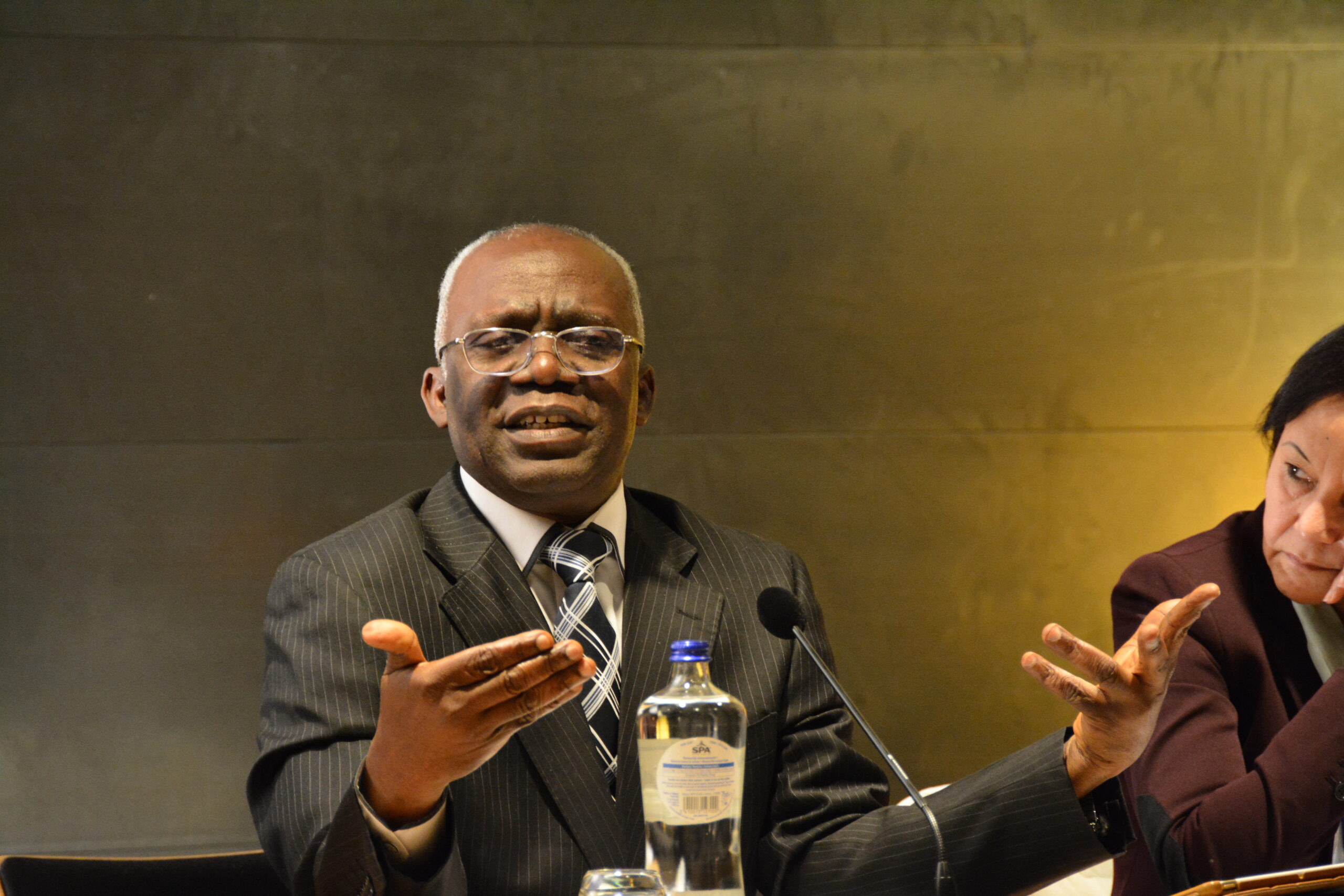
Human rights lawyer and Senior Advocate of Nigeria, Femi Falana, has warned politicians against sponsoring violence ahead of the 2027 general elections, urging authorities to prosecute those who finance or organise attacks.
Falana said political violence, voter intimidation and attacks on opponents threaten the credibility of the elections. He called on the government to ensure that those behind such incidents are held accountable, regardless of their political status or connections.
Speaking at the sixth Frontier Discourse Annual Public Lecture Series and Awards in Abuja, Falana argued that law enforcement must go beyond arresting suspected political thugs and investigate the people who recruit, fund and arm them.
He also urged the Independent National Electoral Commission (INEC) to establish a dedicated prosecution unit for electoral offences. The unit, he said, could obtain reports from security agencies, investigate alleged violations and take offenders to court.
Falana maintained that political competition should be driven by ideas and persuasion rather than intimidation or force. He also criticised the failure to establish an Electoral Offences Commission, arguing that weak enforcement has allowed perpetrators and sponsors of electoral violence to escape accountability.
He called on Nigerians to reject vote-selling and electoral manipulation, and urged political leaders to respect citizens’ right to participate freely in the electoral process.
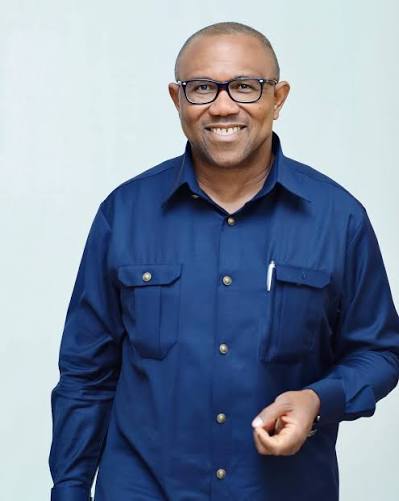
Presidential candidate of the Nigeria Democratic Congress (NDC), Peter Obi, has urged Nigerians to turn out in large numbers for the 2027 general elections, stressing that voters must not allow intimidation to keep them away from the polls.
Obi made the call during a visit to Niger State, where he met residents and supporters in Minna, the state capital. His visit drew crowds of people who lined the roads as his convoy moved through the city.
Addressing supporters, the former Anambra State governor raised concerns about insecurity, hunger and poor road infrastructure in the state. He questioned why Niger, which he described as a major food-producing state, continued to face hunger despite its agricultural potential.
Obi also criticised the state of basic services, alleging that residents lacked reliable electricity, water and security. He urged Nigerians not to be intimidated ahead of the elections and said the NDC would work to ensure that the 2027 outcome reflected the will of the people.
The visit forms part of Obi’s engagements with communities and supporters ahead of the 2027 polls. He has repeatedly called on eligible voters to participate in the election and protect their votes.
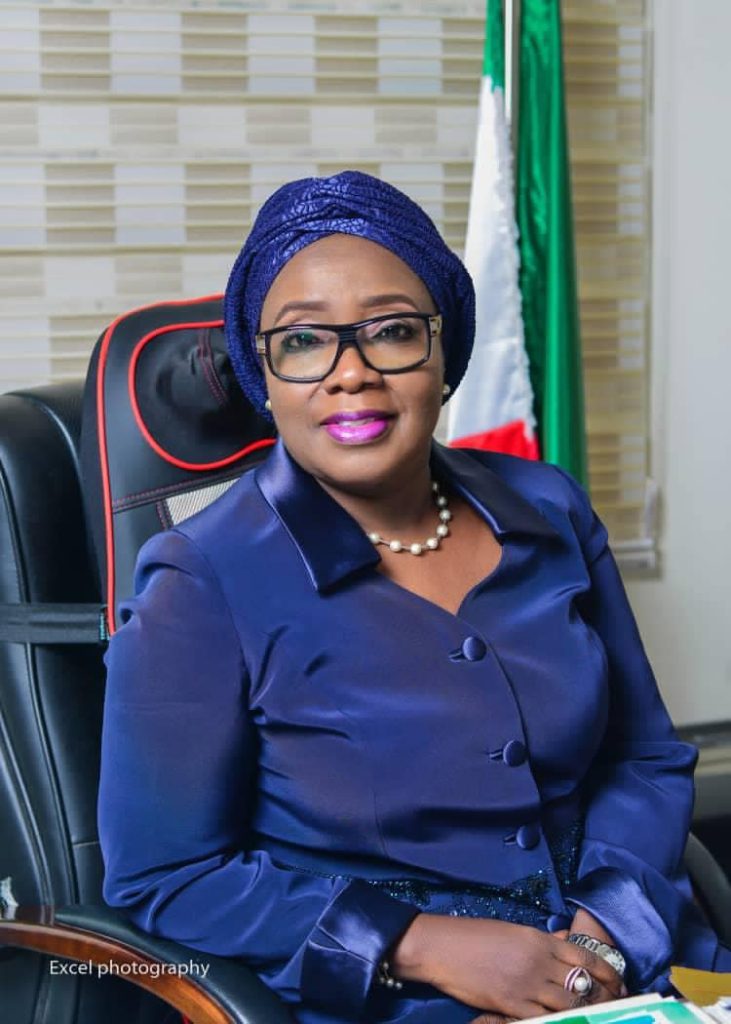
Oyo State Social Democratic Party (SDP) leader, Mulikat Akande-Adeola, has dismissed reports linking her to the Allied Peoples Movement (APM), insisting that she remains committed to the SDP ahead of the 2027 elections.
Akande-Adeola made the clarification on Monday at a press conference in Ibadan, where she addressed rumours about her political affiliation and possible opposition coalition arrangements.
The former House of Representatives member said she had not entered into an alliance with any individual or political party. She added, however, that the SDP remained open to constructive engagements and coalition arrangements that would genuinely serve the interests of the party, its members and Nigerians.
She said SDP stakeholders had reaffirmed their commitment to the party at a meeting in Ogbomoso on November 18, resolving to support its candidates across elective positions, including its presidential candidate, Prince Adewole Adebayo.
On the possibility of an opposition coalition ahead of 2027, Akande-Adeola said such an arrangement could work if it was based on the interests of Nigerians and supported by party members. She disclosed that she had not been invited to any coalition meeting and said any proposed deal involving the SDP should be communicated to its leadership and members.
The SDP leader also urged eligible voters to assess candidates based on their character, credibility and capacity rather than the financial strength of their political parties. She called on residents of Oyo State to study party manifestos and make informed choices ahead of the January 16, 2027 election.
Oyo SDP chairman, Michael Okunlade, said the press conference was held to address speculation about the party’s political direction. He said the party was not opposed to coalition talks but insisted that any partnership must be sincere and based on genuine commitments.
Akande-Adeola reaffirmed the SDP’s determination to strengthen its structures, promote its candidates and seek the people’s mandate through a credible democratic process.

 News3 years ago
Hardship: We Plan To Establish A National Commodity Board To Crash Food Prices – VP Shettima
- News9 years ago
Blog Reader; Samson Osagiede Celebrates Fiancè Benedicta Daniels’s Birthday With Sweet Words
- Home10 years ago
News Channel claims Donald Trump is an orphan from Pakistan,share alleged childhood photo
 Sport8 years ago
Modric, Marta Wins 2018 FIFA Best Player Of The Year Awards ⚽️
- Home10 years ago
Another $175m Found in Patience Jonathan’s wife’s firm’s Bank Account
- Home10 years ago
Zara Buhari & Ahmed Indimi’s Wedding Access Card
- Home10 years ago
Oil Spillage: House of Reps Member Shares Photos of the Water her Constituents Drink .
- Celebrities3 years ago
“Port Harcourt Has The Lousiest Men On Planet Earth” — Actress Sarah Martins Recounts How She Slapped A Married Man Who Asked Her For ‘H∞k Up’