News
Okpanachi Succeeds Father as Odoma Ochogwu Ogugua of Igala Kingdom

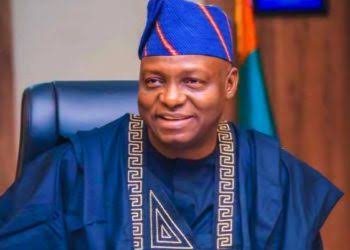
Okpanachi has assumed the traditional title of Odoma Ochogwu Ogugua of the Igala Kingdom, succeeding his late father and extending a family legacy within the Igala traditional institution.
The succession marks a significant moment for the family and the wider Igala community, as the new title holder takes on responsibilities associated with the traditional position and the preservation of Igala cultural heritage.
Okpanachi’s appointment follows the death of his father, who previously occupied the position. The transition allows the family to continue its longstanding connection with the traditional institution while entrusting the new holder with the responsibilities of the office.
The Odoma Ochogwu Ogugua title is associated with the Igala traditional system, which plays an important role in preserving the community’s customs, history and social values.
Following his emergence, attention is expected to focus on Okpanachi’s ability to build on his father’s contributions while responding to the expectations attached to the traditional office.
His succession also highlights the enduring role of traditional institutions in maintaining cultural identity and community cohesion, particularly at a time when younger generations are increasingly seeking ways to preserve indigenous heritage.
Members of the Igala community and well-wishers have continued to celebrate the transition, with expectations that the new title holder will uphold the values associated with the position and contribute positively to the development of the community.
The development represents not only a change in leadership within the traditional office but also the continuation of a family legacy that has been closely linked to the Igala institution.

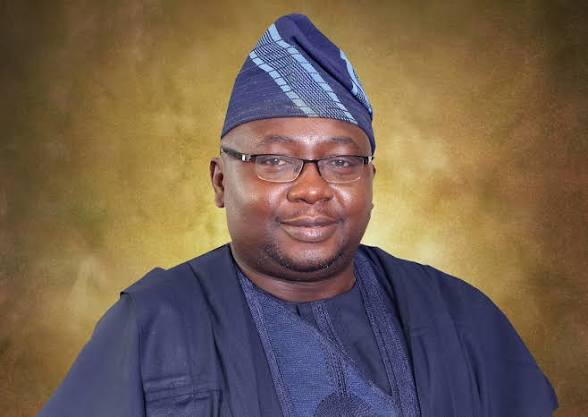
Nigeria’s Minister of Power, Joseph Tegbe, has attributed the recent decline in electricity supply across several parts of the country to maintenance work at power plants, gas supply constraints and damage to critical transmission infrastructure.
Tegbe explained that the challenges had reduced the amount of electricity available on the national grid, forcing operators to introduce load shedding in some areas to manage the shortfall.
In a statement shared on his social media platforms on Friday, November 6, the minister acknowledged the difficulties the outages had caused households and businesses in affected locations, including Lagos and the Federal Capital Territory.
He identified planned maintenance at Egbin Power Station in Lagos, one of Nigeria’s major thermal power plants, as a significant factor behind the reduction in electricity generation. Gas supply difficulties affecting other thermal power stations had further worsened the situation.
The minister also disclosed that the sabotage of key transmission lines had limited the use of alternative routes for delivering electricity to some locations, particularly Lagos.
According to him, the government is working with relevant power sector operators to restore affected generating units in phases, improve gas supply and accelerate repairs to damaged infrastructure.
Tegbe expressed optimism that the first affected generating units would return to service within 48 to 72 hours, adding that electricity supply was expected to improve gradually as the interventions progressed.
The outages have affected electricity consumers in several parts of the country, with residents and businesses facing prolonged periods without public power supply. The situation has increased reliance on generators, inverters and solar systems, adding to operating costs amid elevated fuel prices.
Meanwhile, the disruptions have triggered a disagreement between the Transmission Company of Nigeria (TCN) and Ikeja Electric over the causes of recent interruptions recorded on some electricity feeders.
While Ikeja Electric had attributed outages recorded on November 3 and 4 to grid instability, TCN disputed the explanation, blaming inadequate gas supply to thermal power stations and reduced hydroelectric generation for the decline in available electricity.
TCN also said most of the interruptions affecting Ikeja Electric’s feeders were linked to load shedding caused by low generation, while others resulted from distribution network issues, maintenance and transmission limitations.
The minister’s assurance comes amid renewed concerns over the reliability of Nigeria’s electricity supply and the persistent challenges facing the power sector.
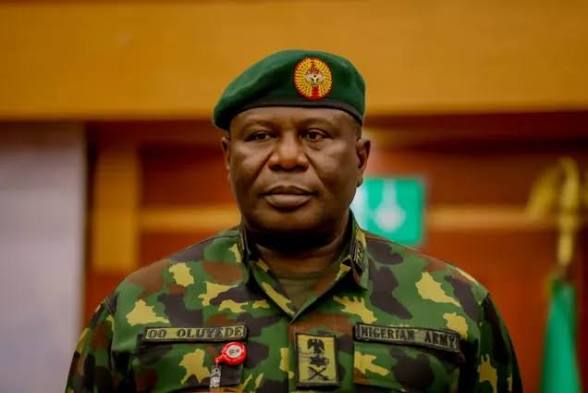
The Nigerian Navy has deployed newly trained Marine personnel to the Northeast to strengthen ongoing military operations against terrorist groups, particularly around the Baga axis of Borno State.
The Chief of Defence Staff (CDS), General Olufemi Oluyede, disclosed this while speaking with journalists on the sidelines of the Chief of Naval Staff’s Retreat at the Naval Headquarters in Abuja.
According to Oluyede, the specialised naval personnel received training with support from the United States and have already been integrated into operations in the region. He said the Marines were working alongside troops of the Nigerian Army and the Nigerian Air Force to contain terrorist activities.
The CDS expressed satisfaction with the performance of the newly deployed personnel, describing their collaboration with other military services as encouraging. He also praised their contribution to efforts aimed at disrupting insurgent activities around Baga.
Oluyede urged Nigerians to support the Armed Forces by providing credible and timely intelligence on suspicious activities in their communities. He stressed that public cooperation remained important to identifying threats and preventing attacks.
The deployment comes as the military intensifies joint operations across the Lake Chad Basin under Operation Hadin Kai, involving land, air and maritime forces. Recent operations in the area have targeted suspected terrorist positions and enclaves in parts of Borno State.
The Nigerian Navy established its Marine unit to strengthen its operational capacity across maritime and land environments. The pioneer group, known as the “Bushmen,” comprised 328 personnel who completed six months of intensive training supported by the US Special Forces before their induction in February 2026.
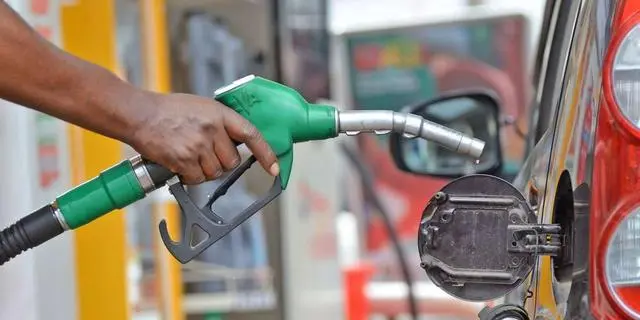
The price of petrol in Lagos could rise to N1,411 per litre in November 2026 if current freight charges, insurance premiums and other import-related costs remain unchanged, an energy analyst has projected.
Kelvin Emmanuel, Managing Partner of The Energy Consulting Practice, made the projection while analysing the factors influencing the cost of petrol deliveries into Nigeria.
According to him, the rising cost of transporting physical petroleum cargoes, alongside insurance premiums and the difference between dated Brent crude prices and futures contracts, has increased the actual cost of supplying petrol.
Emmanuel explained that physical cargo deliveries had become approximately $30 more expensive than futures contract prices, putting additional pressure on the domestic petroleum market.
Breaking down his November estimate, the analyst calculated the landing cost using a crude oil delivery cost of $145.60, alongside $1.21 in levies and tariffs payable to the Nigerian Maritime Administration and Safety Agency (NIMASA) and the Nigerian Ports Authority (NPA).
He arrived at a combined landing cost of $146.81 before applying the refinery premium of $80 per metric tonne.
After incorporating the exchange rate and other expenses, Emmanuel estimated the ex-gate refinery price at approximately N1,376 per litre. Adding N35 for trucking and related charges brought the projected Lagos pump price to N1,411 per litre.
He further explained that Dangote Petroleum Refinery’s pricing was influenced by import parity because approximately 40 per cent of its feedstock was sourced internationally.
The analyst also noted that domestic crude supplies under the Domestic Crude Supply Obligation attracted freight charges of between $9 and $12 per barrel, in addition to premiums paid to third-party traders.
However, some petroleum marketers have questioned the projection, describing the possibility of another increase as speculative.
The National Publicity Secretary of the Independent Petroleum Marketers Association of Nigeria (IPMAN), Chinedu Ukadike, dismissed the forecast, arguing that crude oil prices had not recorded a further increase and that marketers were not planning to adjust their pump prices at the time.
He added that petrol was already selling for around N1,400 per litre in some parts of the country.
Similarly, Joseph Obele, National Publicity Secretary of the Petroleum Products Retail Outlets Owners Association of Nigeria (PETROAN), expressed doubts about another increase, citing indications that tensions in the Middle East were easing and crude oil prices were declining.
Another independent petroleum marketer, Isa Alheri, however, acknowledged that petrol prices could exceed N1,400 per litre depending on developments in the international market, exchange rates, freight and insurance costs.
Nigeria operates a deregulated downstream petroleum market, where prices are influenced by international crude oil prices, foreign exchange rates, refining costs, transportation and other market-related expenses.
Although the N1,411 projection has raised concerns about possible additional pressure on consumers, it remains a forecast rather than an announced pump price adjustment.

 News3 years ago
Hardship: We Plan To Establish A National Commodity Board To Crash Food Prices – VP Shettima
- News9 years ago
Blog Reader; Samson Osagiede Celebrates Fiancè Benedicta Daniels’s Birthday With Sweet Words
- Home10 years ago
News Channel claims Donald Trump is an orphan from Pakistan,share alleged childhood photo
 Sport8 years ago
Modric, Marta Wins 2018 FIFA Best Player Of The Year Awards ⚽️
- Home10 years ago
Another $175m Found in Patience Jonathan’s wife’s firm’s Bank Account
- Home10 years ago
Oil Spillage: House of Reps Member Shares Photos of the Water her Constituents Drink .
- Home10 years ago
Zara Buhari & Ahmed Indimi’s Wedding Access Card
- News8 years ago
The Best Video You’ve Seen Today?