News
Ambode And The Street Traders Of Lagos By Reuben Abati

I am writing this piece after holding a series of conversations with Lagos street traders and hawkers who seem not be aware of or are just indifferent to, or may be they are intrigued by, the fact that the State Governor, Akinwunmi Ambode has declared on television that the state government is prepared to enforce an existing law banning street hawking.
The relevant law, the Lagos State Street Trading and Illegal Market Prohibition Law, 2003 prescribes a punishment of N90, 000 or a six-month jail term, for both the buyer and the seller of any goods or services on the streets. So I asked this vendor, who kept pushing copies of the day’s newspapers in my face, so close, you wouldn’t even be able to read the headline free of charge.
“My friend, are you aware that what you are doing is illegal? You never hear say Governor Ambode don ban street trading?”
“That one no concern vendor oh. Na these other people wey dey sell chewing gum and water dem dey talk about”
“No. Street trading is street trading. You are hawking your newspapers, why don’t you get a shop or a stand?”
“Make I open shop to sell newspaper? Na for inside traffic people dey buy newspaper, oga?’”
“I just hope they won’t arrest you. The fine is N90, 000 or six months in jail.”
“Oga, you wan buy paper? Which one you wan buy, I beg. See, the thing be say, for this Nigeria, anytime wey anybody reach power, dem go just dey do wetin dey like. Dey no dey pity we poor people at all.”
I laughed and drove off.
“Water! Water!”, I yelled at a young man carrying a small basket of drinks. He ran to the car from the other side of the road, side-stepping a Keke Marwa and almost colliding with a motorcycle.
“How much?”
“N100”
“Can I buy because I hear the Governor says they should arrest anybody that is hawking anything in Lagos. And this is Agidingbi oh, too close to Alausa. Please.”
“Oga buy wetin you wan buy. If we no sell water for traffic, you know how many people go don die for inside go-slow. When traffic start now, even Ambode go buy water for inside traffic drink.”
“Oya, bring it quickly. Don’t let those LASTMA people see you.”
“Which LASTMA people? Oga, relax. Na we-we. As we dey this street so, nobody fit remove us.“
As I listened to his attempt to share his knowledge of the streets, I heard the clanging of a bell. A bicyclist was approaching, a mini-cooler, hanging conspicuously in his front. Fan Ice! Fan Milk! A young girl passed, carrying a tray of groundnuts. The early morning traffic was beginning to build up, 24 hours after Governor Ambode huffed and puffed on television about street hawking.
I immediately remembered Olajumoke Orisaguna, the Nigerian Cinderella, who made it from street hawking to the runway. It occurred to me to ask one of the hawkers.
“Do you know Olajumoke?”
“Olajumoke, oni bread. Oga you sef, e ti jasi. Don Jazzy, Baba. If Olajumoke no sell bread for street, how dem for discover say him get talent. Oga, as you me so, I be student oh for Polytechnic. The money I make from the street, that ‘s what I use to maintain myself and one day, if I become Governor in this country, I‘ll remember and I will not ban street hawking.”
That was some sobering thought. The sociology of street trading is worth understanding. It is mostly a source of employment for many persons with low income and low education, and in its more structured format, a large part of the informal sector in many parts of the world. For the buyer who has been demonized along with the seller in the Lagos state law, street trading actually provides easy access to a lot of goods and services, and when you are trapped in the ubiquitous traffic hold-ups across the city, running into hours oftentimes, it helps to just look out the window and buy any food item ranging from fish, to fried meat and shrimps, loaves of bread, biscuits, gala, meat pie, water, beer and any other drink. If it is a rainy day and you need to step out of the vehicle, you can buy an umbrella while in the traffic. You can also get served hot milk, tea or coffee, or have a shoe-shiner give your shoes a new, clean, gleaming look.
On a sunny and humid day, and you are thirsty, you can have very cold fan milk, or any other drink to cool down your system. Pop-corn, roasted maize, walnuts, name it, everything is available by the roadside, as the traffic crawls. If you have issues with your phone, or your wrist-watch, or even your clothes, you can buy new ones on the streets. Books, musical CDs, electronics, even sex toys, and aphrodisiacs. There is a special connection between traffic and street trading. But there are also challenges for all parties involved: for the buyer, you could get sold fake or risky stuff, and your money could be stolen – always collect the goods and your change before you hand over any amount.
The sellers always have to contend with physical risk and sexual abuses, run-ins with extortionist law enforcement officials, nerve-wracking exposure to the elements, and competition for space. People sell on the streets because they cannot afford to rent shops or erect structures, and in any case, government is often part of this problem. Markets are taken over by the authorities with the intention to modernize them, but when the shops and stalls are built, the original traders can no longer afford them because they would have been taken over by the rich and prized beyond the reach of the poor who are then forced onto the streets, thus deepening the agony of the displaced and the marginalized. This is the story of Tejuoso market in Lagos, as is the story of others across the country. If street traders had a choice, they would also acquire permanent structures where they can display their wares in safety. If they could help it, they will also sit in the comfort of air-conditioned vehicles. Traffic and street trading further define an existential part of the urban social order, and in Lagos as elsewhere, the character, pulse and soul of the city.
The convenient tendency for government officials is to dismiss the street as the haunt of miscreants, criminals and the dubious and street trading as a nuisance to the social order. This is what Governor Ambode of Lagos has done. The trigger for his televised sanctimony is the recent clash in Lagos at Maryland and Ojota, involving the law, traffic and street traders with tragic consequences. We are told that Kick Against Indiscipline (KAI) officials had given a hawker the chase, that fateful day. As the young man ran across the busy expressway, he found himself in front of an on-coming state-government owned BRT bus, which crushed him instantly – his intestines gouged out. This resulted in mob action.
In the process, 49 BRT vehicles, belonging to the state government were torched, and according to the Governor, it will cost the state government “almost N139 million to put those buses back on the road.” The Governor sounds as if the loss of these buses is more painful than the death of Nnamdi, the street hawker who was chased to his death. Haba, Governor, se oro ni yen! The Governor needs to be reminded of the over-zealousness of KAI-LASTMA officials and the recklessness, also, of BRT bus drivers, and the fact that N139 million may replace buses, but it will not replace a life that has been lost. It is also hard to believe that the Governor’s position is based on the outcome of investigations, which try to distance the state officials from the accident, and even if this is so, the decision to exhume a law that is to all practical purposes, a dead law, only enforced opportunistically, does not fully address the issue. A law is dead as an instrument of social justice when it is openly defied, disregarded, resisted and attempts to enforce it are openly ridiculed, and the state itself finds its application difficult in the face of the people’s preferences and choices. The test and impact of any true law is in its application.
To get hawkers off the streets, government must provide alternative opportunities and invest more in social capital. The menace of traffic hold ups should be addressed and a proper transportation network must be in place. Shops and stalls must be affordable and accessible and markets should be located in user-friendly locations. Street hawkers are constrained by their social circumstances, most of all, by poverty. To check street trading, government must also address the rising threat of rural-urban migration. Lagos as a growing megalopolis is the destination of choice for all kinds of adventurers from Nigeria’s hinterlands, they arrive in the city, and having nothing to do, they manage to buy a basket, or a tray, which they fill with goods that may not be up to N5,000, and they jump onto the streets, struggling to earn a living as the traffic crawls.
To push them out is to destroy the only dream they have of remaining human. The state government should take a second look at the law: perhaps the most urgent thing is to insist that anyone of school age, must not be found hawking, during school hours. And no matter what, Governor Ambode should not rob us of the humour of the streets, a rich therapeutic part of life and living in Lagos. I remember as I say this, those young, nubile girls on the streets of Lagos who sell drugs and local herbs. They all have the same qualifications: their front-lamps are permanently in the North, staring directly into a man’s eyes. The girls are coy, friendly, optically tempting, and they only target men as customers. Even when you insist you don’t need what they sell, they won’t let you be.
“Oga, buy this tablet now. Or taste this drink. Madam will thank you for it.”
“Madam? She must not even know I spoke with you!”
“But she will thank you, I swear.”
“You have used it before?”
“Hen hen.”
“Okay. But before I buy anything, I must test it. And na me and you go test am. Enter moto, make we go.”
“Hen, go where? Oga, go test am with Madam for house.”
“No. I will test it on you first. Fine girl, you dey fear?”
Oftentimes, this is followed by much laughter with the girl scampering off…


The North-East Development Commission (NEDC) has distributed 1,330 electric vehicles across Nigeria’s North-East region as part of efforts to reduce transportation costs, create employment opportunities and promote environmentally friendly mobility.
The vehicles comprise 1,000 electric tricycles, 300 electric taxis and 30 electric buses, which are expected to improve transportation services across the region’s six states: Adamawa, Bauchi, Borno, Gombe, Taraba and Yobe.
The NEDC Adamawa State Coordinator, Khalifa Lawan, disclosed this during a stakeholders’ engagement and sensitisation workshop on electric mobility and seamless commuting held in Yola.
Initiative Targets Affordable Transportation
Lawan explained that the initiative was designed to make transportation more affordable while creating business opportunities, particularly for young people seeking sustainable sources of income.
According to him, the commission’s intervention forms part of its broader mandate to accelerate development in the North-East through investments in infrastructure, education, skills acquisition and other essential sectors.
He said Adamawa State was expected to benefit from the deployment of electric tricycles, taxis and buses, which could help improve mobility and support economic activities within communities.
The programme is also expected to generate employment opportunities across the electric mobility sector, including vehicle operations, repairs, maintenance and charging services.
Charging Stations Needed for Success
Lawan stressed that establishing adequate charging infrastructure would be critical to the success of the project.
He disclosed that the commission planned to provide at least two or three electric vehicle charging stations in each of the six states, with the possibility of expanding the facilities as demand increases.
The Adamawa State Commissioner for Transport, Rumpe Anthony, also emphasised the need for sufficient charging points, raising concerns about the state’s unreliable electricity supply.
She said proper planning and infrastructure would be necessary to ensure that the vehicles operate efficiently and deliver the expected benefits to commuters and operators.
Electric Vehicles Offer Environmental Benefits
The Chief Executive Officer of Attahir Enterprise Nigeria Limited, Umar Bunu Abacha, described the initiative as an effort to develop a more efficient and sustainable transportation system.
He said stakeholder engagement was important to ensure that beneficiaries and transport operators understood how the programme would work and the responsibilities involved in maintaining the vehicles.
Workshop facilitator Emmanuel Mwada Wapah highlighted the potential environmental benefits of electric vehicles, including reduced exhaust emissions and noise pollution.
He added that the vehicles could travel up to 300 kilometres on a full charge, while charging could take approximately one hour under specified conditions.
The NEDC urged beneficiaries to maintain the vehicles properly to ensure their durability and long-term usefulness.
The initiative comes amid broader efforts by the Federal Government and state governments to promote alternative-energy transportation as a means of easing the burden of rising transport costs.
Its success will depend partly on the availability of reliable charging infrastructure, effective vehicle maintenance and the extent to which operational savings translate into lower fares for commuters.
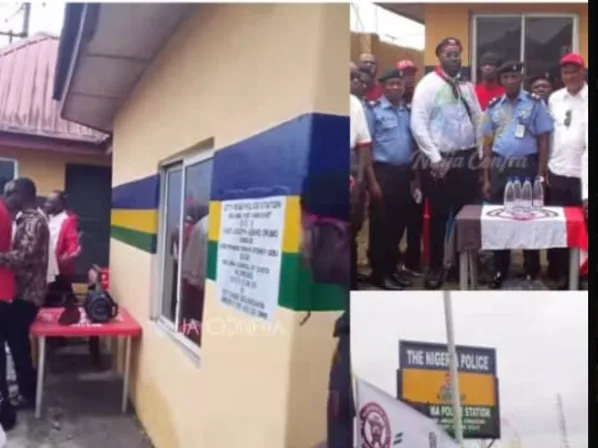
The Rivers State Police Command has removed the Divisional Police Officer (DPO) in charge of Abuloma Division and the officer overseeing the Abuloma Police Outpost following allegations that suspected cultists renovated the facility.
The command also ordered a full investigation to establish the circumstances surrounding the renovation, identify those who financed the project and determine whether any police personnel violated professional standards.
The development followed the circulation of a video on social media showing suspected cultists visiting the renovated outpost in Abuloma, Port Harcourt, on Thursday, October 15, 2026, to celebrate the completion of the project.
In a statement issued on Friday, the police said Commissioner of Police Olugbenga Adepoju had directed that both officers be queried and relieved of their duties pending the outcome of the investigation.
The statement was signed by the command’s spokesperson, ASP Agabe Kaborlo.
Police Investigate Funding and Approval of Renovation
According to the command, investigators will establish the identities and backgrounds of the individuals or groups that financed or facilitated the renovation.
The investigation will also determine which police officers authorised the project, whether the required procedures were followed and whether any personnel compromised the integrity of the Nigeria Police Force.
The police condemned any action or association capable of undermining the force’s discipline, professionalism and public confidence.
It warned that police facilities must not become platforms through which suspected criminal groups seek public recognition, influence or legitimacy.
Police Clarify Position on Community Donations
The command acknowledged that members of the public are permitted to support improvements to police facilities under Section 26(1)(d) of the Nigeria Police Act 2020, which provides for gifts and contributions to the Police General Fund.
However, it stressed that such contributions must follow established procedures and must not compromise police independence, security or professional standards.
The police added that accepting donations does not exempt anyone from investigation or prosecution where evidence of wrongdoing exists.
It also promised appropriate disciplinary and legal action against anyone found culpable after the investigation.
Viral Video Sparks Questions
The controversy emerged after videos circulated online showing a group of men at the renovated police outpost alongside some police officers.
The footage reportedly showed the individuals participating in what appeared to be a ceremony marking the completion of the renovation.
Some social media reports identified the group as members of a suspected cult organisation. However, the allegations surrounding their identity, involvement in the project and relationship with the police have yet to be conclusively established.
The police said the ongoing investigation would determine the facts of the incident and whether any laws or professional regulations were breached.
The command urged residents to remain calm and provide credible information to support efforts to tackle cultism and organised crime across Rivers State.
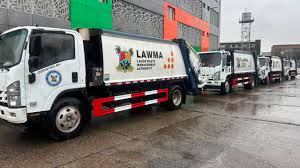
The Lagos Waste Management Authority (LAWMA) has announced plans to install surveillance cameras at strategic locations across Lagos State as part of efforts to curb indiscriminate waste disposal and strengthen environmental law enforcement.
The Managing Director and Chief Executive Officer of LAWMA, Dr Muyiwa Gbadegesin, disclosed the initiative during an interview on Lagos Talks 91.3 FM on Monday, October 12, 2026.
According to him, the planned deployment will complement an existing partnership with the Lagos State Command Centre to monitor environmental violations and identify individuals involved in illegal dumping.
Gbadegesin explained that the cameras would strengthen surveillance, discourage improper waste disposal and support the identification of offenders for appropriate sanctions under the law.
LAWMA to Strengthen Waste Collection
The LAWMA chief stressed that improving waste collection infrastructure alone would not guarantee a cleaner environment, noting that residents must also adopt responsible waste disposal habits.
He said the authority was combining technology, enforcement and public awareness campaigns to address persistent environmental sanitation challenges across the state.
Gbadegesin also disclosed that the arrival of 150 new waste trucks would improve waste collection and evacuation services in Lagos.
He added that LAWMA had introduced house-to-house waste collection interventions to address accumulated refuse following the disengagement of underperforming Private Sector Participants responsible for waste collection in some areas.
Residents Warned Against Illegal Dumping
The authority urged residents to patronise approved waste collection operators, package their refuse properly and report cases of indiscriminate dumping.
Gbadegesin emphasised that government investments in waste management equipment and infrastructure must be supported by public cooperation to achieve lasting improvements in environmental sanitation.
The authority is also pursuing improvements to waste transfer stations, material recovery facilities and recycling infrastructure as part of broader efforts to improve waste handling across Lagos.
LAWMA has further highlighted the potential of converting organic waste into useful energy, including electricity, through proposed waste-to-energy initiatives.
The planned surveillance camera deployment is expected to strengthen the authority’s monitoring and enforcement capacity as Lagos intensifies efforts to maintain cleaner communities and discourage environmental violations.

 News3 years ago
Hardship: We Plan To Establish A National Commodity Board To Crash Food Prices – VP Shettima
- News9 years ago
Blog Reader; Samson Osagiede Celebrates Fiancè Benedicta Daniels’s Birthday With Sweet Words
- Home10 years ago
News Channel claims Donald Trump is an orphan from Pakistan,share alleged childhood photo
 Sport8 years ago
Modric, Marta Wins 2018 FIFA Best Player Of The Year Awards ⚽️
- Home10 years ago
Another $175m Found in Patience Jonathan’s wife’s firm’s Bank Account
- Home10 years ago
Oil Spillage: House of Reps Member Shares Photos of the Water her Constituents Drink .
- Home10 years ago
Zara Buhari & Ahmed Indimi’s Wedding Access Card
- News8 years ago
The Best Video You’ve Seen Today?