News
Two Lives And Other Stories By Reuben Abati

Two lives lost recently in the creative industry convey useful messages in terms of the import of their careers and the circumstances of their departure: the elderly actress, simply known as Bukky Ajayi, and the music entrepreneur, multi-talented artiste, producer and musician, Babatunde Okungbowa, popularly known as OJB Jezreel. Bukky Ajayi died aged 82, and she has been well mourned by the artistic community especially members of Nollywood who have described her as a role model, an iconic figure and a motherly figure to younger actors and actresses.
Many mourners have added that her death is shocking: every death in Nigeria is considered shocking ironically, even when the dead is as old as 100, or has been known to be terminally ill. In March 2016, when Bukky Ajayi received the Industry Merit Award at the Africa Magic Viewers Choice Ceremony, she was already wheel-chair bound and terminally ill. But I guess we are always shocked by death, because we always expect our loved ones to live forever. And 82-year old Mama Ajayi was truly a lovable figure. In a rich career that spanned 50 years, she proved her mettle as a talented and committed artiste. She started out as a television assistant, and later became a presenter, a producer of programmes, a newscaster and an actress.
She would later attain fame as an actress when she began to feature in the well-known Village Headmaster. She also featured in Amaka Igwe’s television series, Checkmate. Home video lovers further enjoyed her artistry and creativity in such movies as Mother of George, Diamond Ring, Witches, Thunderbolt, Elastic Light and Critical Assignment. In the course of her public career, she always encouraged younger artistes, appearing in their various works, musical and dramatic, including the video of Jesse King Buga’s anthem-like effort on Motherhood: “Mummy oh, oh, wa pe laye, mummy oh, oh, wa jeun omo, e niba ni ko ni ri be, a fo loju, a fo loju, a ko si enu trailer, a ku tu e.” Bukky Ajayi lived long: hers was a fruitful life of achievement and as at the time of her death, she could indeed look back with joy.
Every young artiste would wish to be as durable and as continuously relevant as she was, but while the younger generation can certainly emulate her professionalism and commitment, there is one other lesson that many of those now mourning, especially the much younger female artistes can learn from her example: and it is a lesson about virtuous professionalism, humility and decency. I do not mean to be offensive, but I hasten to say that many of the younger actresses mourning Bukky Ajayi have missed out on one of her important achievements as a female public figure for about 50 years. Her life was completely without scandal.
I say this to draw attention to a growing concern in Nollywood about the persona of today’s female actresses. There is a widespread impression that to be a Nigerian actress is to live an open, unhindered life, without moral boundaries. Very few actresses of the younger generation have been able to survive so far without scandals. They seem to have acquired for themselves a curious reputation as party boosters, serial baby mamas, husband snatchers, fortune-seeking, fortune-hunting, occasional porn artistes, with the most notorious in this category better known for the manner in which they flaunt body parts rather than their talents.
There are at least three of such actresses who are truly the most notorious poster girls. They claim that they have just one life to explore and their chosen lifestyle is part of showbiz. In a movie that is scheduled to hit the screens very soon, nearly all the actresses are in fact, bare-chested in the promotional trailer. They would call it art of course, or dignify it with the word, acting. There is also the bleaching, chameleon crowd of Nollywood beauties. Bukky Ajayi was proud of her African colour and identity. But go round Nollywood: too many of the actresses have changed from being dark-skinned to tomato colour and shouting yellow within a space of 15 years, such that their old photographs seem like they were taken by different persons bearing the same name. The overall effect is that the more remarkable stories about many of these actresses is not their creativity, but the size or shape of their biological parts, the kind of men they are able to attract, or the endless scandals about their private lives.
Those who claim that this new trend is a result of a creeping Hollywood effect in Nigeria, especially now that globalization, and the success of Nollywood is fasting closing the gap between Nigerian and American artistes miss the point. Decent professionals who can serve as good role models may well still be in the majority in the industry but the part-artiste-part-hustler members of the community are promoting a stereotype of the Nigerian actress that does damage to the integrity of the profession. It should be possible to be a celebrity and a showbiz personality and not be a constant supplier of outrageous stuff. Bukky Ajayi belonged to a different generation of Nigerian female artistes: those who combined virtue with professionalism. Enough said: her legacy of integrity, modesty and decency should be the big take-away for younger artistes as they mourn her departure.
Babatunde Okungbowa (OJB Jezreel)’s death raises a different kind of concern. There has been very little talk about his achievements as an artiste; whereas he was without doubt a multi-talented and resourceful creative worker whose contributions set a high standard for members of his generation and those who collaborated with him to produce good music. Unfortunately, his travails with kidney disease dominated the last three years of his life. In 2013, he underwent a kidney transplant in India; last month he died due to complications arising from the same problem.
One of the notable messages from his passing has been the reported complaint by members of his family and close associates that many of his colleagues who trooped out to mourn him, following the announcement of his death, distanced themselves from him when he was ill, and in urgent need of friendship. Extremely few artistes, if at all, bothered to contribute to the fund raising for his kidney transplant, or the OJB Foundation, which he established to promote public awareness about kidney diseases and assist persons on dialysis. The creative community should take special notice of this complaint.
Artistes are very good at preaching to the community; they can sing about love, unity and solidarity and inspire the public, but among themselves, they often find it difficult to support one another. It is this obsession with the self, and with profit, that has perhaps turned nearly every professional group or association, in the Nigerian creative industry into a battle-field of egos and hate words. The morality of creative compositions edifies, but artists can also be good citizens while in pursuit of individual happiness.
One other fall-out of the OJB story is the spread of kidney disease in Nigeria. Too many people are succumbing to kidney disease, hypertension, and heart attacks. There is greater need for public enlightenment about the risk factors that make this possible. In the absence of efficient medical facilities, prevention through enlightenment and precaution may help to reduce the public health crisis that the country faces. Kidney failure has robbed Nigeria of the great promise of OJB’s talent, in the same manner in which hypertension, heart attack and the sudden death syndrome have cut many lives short.
In mourning OJB, we should remember his darling wife, Mabel or Mama J, who in 2013 donated one of her kidneys so her husband may live. OJB was married to three women, through whom he fathered eight children. When he needed a kidney transplant, it was his first wife who volunteered to make the sacrifice. It was a sacrifice, because in any major surgery, anything could go wrong, and to donate one’s kidney, according to medical doctors, is to take an absolute leap of faith, because indeed anything could go wrong in a matter of years either with the donor or the recipient. OJB survived for three years after the transplant. Since his passing, I have heard people express the view that if they were in Mabel Okungbowa’s shoes, they would not have taken such a risk to save the life of a man who betrayed her by marrying two additional wives. One lady even swore: “may God forbid, any man that leaves me for another woman, should even be prepared to die in the first place, not to talk of me risking my life to save his.”
But the story of Mabel Okungbowa is one of courage and love, and as artists and others pay tribute to her husband, the more compelling tribute that I remember is not the tribute to the departed, but the tribute paid to Mabel Okungbowa by OJB, after the kidney transplant three years ago. He said: “She is a wonderful person because it is one thing if God is telling you to do something but another to do it. It takes a lot of courage to actually do it. Even when the doctors came to tell her that they would have to cut her all the way to the back and would have to remove a rib so they could have access to the kidney, she still agreed to go through it. It takes courage to go through with it. So, I will say she is a courageous woman.”
Such love. Such dignity. And a great lesson about sacrifice. Mama J is the heroine of the OJB Okungbowa story: she gave him three more years to live despite the betrayal she had suffered. There are not too many persons like her out there. Take heart, Madam. Life is like that. May the Lord comfort you and other members of the family.


The North-East Development Commission (NEDC) has distributed 1,330 electric vehicles across Nigeria’s North-East region as part of efforts to reduce transportation costs, create employment opportunities and promote environmentally friendly mobility.
The vehicles comprise 1,000 electric tricycles, 300 electric taxis and 30 electric buses, which are expected to improve transportation services across the region’s six states: Adamawa, Bauchi, Borno, Gombe, Taraba and Yobe.
The NEDC Adamawa State Coordinator, Khalifa Lawan, disclosed this during a stakeholders’ engagement and sensitisation workshop on electric mobility and seamless commuting held in Yola.
Initiative Targets Affordable Transportation
Lawan explained that the initiative was designed to make transportation more affordable while creating business opportunities, particularly for young people seeking sustainable sources of income.
According to him, the commission’s intervention forms part of its broader mandate to accelerate development in the North-East through investments in infrastructure, education, skills acquisition and other essential sectors.
He said Adamawa State was expected to benefit from the deployment of electric tricycles, taxis and buses, which could help improve mobility and support economic activities within communities.
The programme is also expected to generate employment opportunities across the electric mobility sector, including vehicle operations, repairs, maintenance and charging services.
Charging Stations Needed for Success
Lawan stressed that establishing adequate charging infrastructure would be critical to the success of the project.
He disclosed that the commission planned to provide at least two or three electric vehicle charging stations in each of the six states, with the possibility of expanding the facilities as demand increases.
The Adamawa State Commissioner for Transport, Rumpe Anthony, also emphasised the need for sufficient charging points, raising concerns about the state’s unreliable electricity supply.
She said proper planning and infrastructure would be necessary to ensure that the vehicles operate efficiently and deliver the expected benefits to commuters and operators.
Electric Vehicles Offer Environmental Benefits
The Chief Executive Officer of Attahir Enterprise Nigeria Limited, Umar Bunu Abacha, described the initiative as an effort to develop a more efficient and sustainable transportation system.
He said stakeholder engagement was important to ensure that beneficiaries and transport operators understood how the programme would work and the responsibilities involved in maintaining the vehicles.
Workshop facilitator Emmanuel Mwada Wapah highlighted the potential environmental benefits of electric vehicles, including reduced exhaust emissions and noise pollution.
He added that the vehicles could travel up to 300 kilometres on a full charge, while charging could take approximately one hour under specified conditions.
The NEDC urged beneficiaries to maintain the vehicles properly to ensure their durability and long-term usefulness.
The initiative comes amid broader efforts by the Federal Government and state governments to promote alternative-energy transportation as a means of easing the burden of rising transport costs.
Its success will depend partly on the availability of reliable charging infrastructure, effective vehicle maintenance and the extent to which operational savings translate into lower fares for commuters.
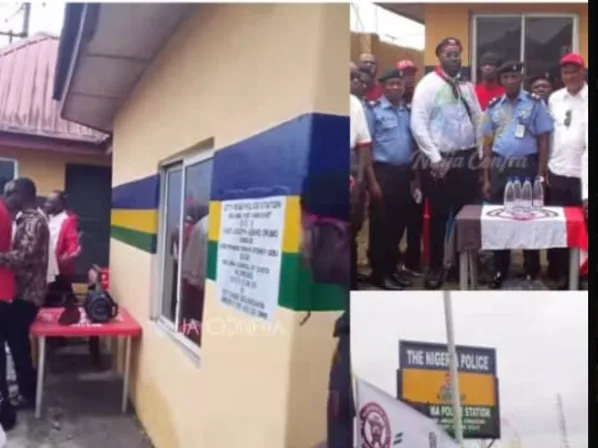
The Rivers State Police Command has removed the Divisional Police Officer (DPO) in charge of Abuloma Division and the officer overseeing the Abuloma Police Outpost following allegations that suspected cultists renovated the facility.
The command also ordered a full investigation to establish the circumstances surrounding the renovation, identify those who financed the project and determine whether any police personnel violated professional standards.
The development followed the circulation of a video on social media showing suspected cultists visiting the renovated outpost in Abuloma, Port Harcourt, on Thursday, October 15, 2026, to celebrate the completion of the project.
In a statement issued on Friday, the police said Commissioner of Police Olugbenga Adepoju had directed that both officers be queried and relieved of their duties pending the outcome of the investigation.
The statement was signed by the command’s spokesperson, ASP Agabe Kaborlo.
Police Investigate Funding and Approval of Renovation
According to the command, investigators will establish the identities and backgrounds of the individuals or groups that financed or facilitated the renovation.
The investigation will also determine which police officers authorised the project, whether the required procedures were followed and whether any personnel compromised the integrity of the Nigeria Police Force.
The police condemned any action or association capable of undermining the force’s discipline, professionalism and public confidence.
It warned that police facilities must not become platforms through which suspected criminal groups seek public recognition, influence or legitimacy.
Police Clarify Position on Community Donations
The command acknowledged that members of the public are permitted to support improvements to police facilities under Section 26(1)(d) of the Nigeria Police Act 2020, which provides for gifts and contributions to the Police General Fund.
However, it stressed that such contributions must follow established procedures and must not compromise police independence, security or professional standards.
The police added that accepting donations does not exempt anyone from investigation or prosecution where evidence of wrongdoing exists.
It also promised appropriate disciplinary and legal action against anyone found culpable after the investigation.
Viral Video Sparks Questions
The controversy emerged after videos circulated online showing a group of men at the renovated police outpost alongside some police officers.
The footage reportedly showed the individuals participating in what appeared to be a ceremony marking the completion of the renovation.
Some social media reports identified the group as members of a suspected cult organisation. However, the allegations surrounding their identity, involvement in the project and relationship with the police have yet to be conclusively established.
The police said the ongoing investigation would determine the facts of the incident and whether any laws or professional regulations were breached.
The command urged residents to remain calm and provide credible information to support efforts to tackle cultism and organised crime across Rivers State.
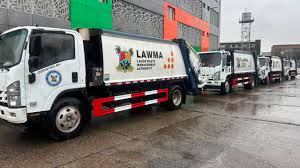
The Lagos Waste Management Authority (LAWMA) has announced plans to install surveillance cameras at strategic locations across Lagos State as part of efforts to curb indiscriminate waste disposal and strengthen environmental law enforcement.
The Managing Director and Chief Executive Officer of LAWMA, Dr Muyiwa Gbadegesin, disclosed the initiative during an interview on Lagos Talks 91.3 FM on Monday, October 12, 2026.
According to him, the planned deployment will complement an existing partnership with the Lagos State Command Centre to monitor environmental violations and identify individuals involved in illegal dumping.
Gbadegesin explained that the cameras would strengthen surveillance, discourage improper waste disposal and support the identification of offenders for appropriate sanctions under the law.
LAWMA to Strengthen Waste Collection
The LAWMA chief stressed that improving waste collection infrastructure alone would not guarantee a cleaner environment, noting that residents must also adopt responsible waste disposal habits.
He said the authority was combining technology, enforcement and public awareness campaigns to address persistent environmental sanitation challenges across the state.
Gbadegesin also disclosed that the arrival of 150 new waste trucks would improve waste collection and evacuation services in Lagos.
He added that LAWMA had introduced house-to-house waste collection interventions to address accumulated refuse following the disengagement of underperforming Private Sector Participants responsible for waste collection in some areas.
Residents Warned Against Illegal Dumping
The authority urged residents to patronise approved waste collection operators, package their refuse properly and report cases of indiscriminate dumping.
Gbadegesin emphasised that government investments in waste management equipment and infrastructure must be supported by public cooperation to achieve lasting improvements in environmental sanitation.
The authority is also pursuing improvements to waste transfer stations, material recovery facilities and recycling infrastructure as part of broader efforts to improve waste handling across Lagos.
LAWMA has further highlighted the potential of converting organic waste into useful energy, including electricity, through proposed waste-to-energy initiatives.
The planned surveillance camera deployment is expected to strengthen the authority’s monitoring and enforcement capacity as Lagos intensifies efforts to maintain cleaner communities and discourage environmental violations.

 News3 years ago
Hardship: We Plan To Establish A National Commodity Board To Crash Food Prices – VP Shettima
- News8 years ago
Blog Reader; Samson Osagiede Celebrates Fiancè Benedicta Daniels’s Birthday With Sweet Words
- Home10 years ago
News Channel claims Donald Trump is an orphan from Pakistan,share alleged childhood photo
 Sport8 years ago
Modric, Marta Wins 2018 FIFA Best Player Of The Year Awards ⚽️
- Home10 years ago
Another $175m Found in Patience Jonathan’s wife’s firm’s Bank Account
- Home10 years ago
Oil Spillage: House of Reps Member Shares Photos of the Water her Constituents Drink .
- Home10 years ago
Zara Buhari & Ahmed Indimi’s Wedding Access Card
- News8 years ago
The Best Video You’ve Seen Today?