News
Nigerians And The Failed Coup In Turkey By Reuben Abati

Nigerians know what it means to have a constitutional order derailed by military intervention. Between 1960 and 1999, Nigeria moved from one form of military rule to another, characterized by obstinacy, and absolutism, experiencing only short spells of civilian rule. Similarly, the military in Turkey have since 1960 intervened directly at least four times (1970, 1971, 1980, 1997). And in all instances, the Turkish coup plotters always claimed that their role was to restore order and stabilize the country. This is a rhetoric that is quite familiar to Nigerians. Every military coup is justified on messianic grounds. In the latest onslaught in Turkey, the plotters claim they want to establish a “Peace Council.”
Between 1993 and 1999, Nigerians fought the military to a standstill, insisting on a definite return to civilian rule and the institutionalization of democracy. Sixteen years later, the democratic spirit is well established among the people, if not the Nigerian leadership elite. The people have seen what a demonstration of people power can achieve: they used it to get the military out of power, they relied on it to insist that the Constitution be respected and obeyed when a President died in office and certain forces did not want his successor to get into office, and again, they have seen people-power at work in removing a sitting government from power. Right now in Nigeria, to toy with this power of the people in any form is to sow the seeds of organized mass rebellion.
Not surprisingly, in the past few years, every display of the people’s supremacy in other parts of the world has attracted either interest or a copy-cat instinct among Nigerians. First, there was the Arab Spring, which resulted in calls for the Nigerian Spring, which later found expression in the politically motivated Occupy Nigeria protests of January 2012. And now from Turkey, the major point of interest for Nigeria has been in my estimation, how the people took to the streets to confront soldiers. The coup failed in Turkey because it lacked popular support. Turkey has for long been considered an embarrassment in Europe. A successful coup in 2016 would have put the country in a worse shape and done further damage to the country’s reputation. The people stood up for their country, not President Recep Tayyip Erdogan. They stood up for an idea: The idea of democracy. The three major political parties disowned the coup. Mosques called on the people to go to the streets and fight for democracy. Even Erdogan’s critics, including the Kemalists and the Glulenists, denounced the coup plotters. The images that came across were images of the police confronting the soldiers and disarming them (This was intriguing- can anyone ever imagine the Nigeria police protecting democracy: they would have since collected bribe from the coup plotters, there is massive corruption in Turkey too but their police fought for the nation). Ordinary citizens lay down in front of the coup plotters’ tanks and asked to be crushed; brave citizens disarmed the soldiers and took over the city squares.
It is the kind of bravery that Nigerians find surreal. The coup attempt in Turkey comes at a time when the civil society in Nigeria is beginning to lose the spirit to stand in front of tanks, and guns: the people have been battered to a point where their strongest protection is their power of the ballot and so the average Nigerian endures suffering, convinced that when again it is time to vote, no one can rob him or her of his power to choose. But the situation in Turkey reminds us of the kind of danger that any democracy, with troubled foundations can face, hence Nigerians ask if they too can be as courageous as the Turkish have been, with both Turks and the much abused Kurds, and other divided groups, uniting, momentarily, on one issue.
Not that Mr. Recep Tayyip Erdogan deserves the victory over the coup plotters, though. Outsiders, including Nigerians, consider him a bad guy; and even if he is still popular and blindly followed by the majority of his people, his 13-year record in office falls far short of standards. He came to office on the wave-crest of popular appeal. In Istanbul where he was a city mayor at a time, he remains immensely popular, and he is also probably the most popular leader, not in Europe, but the Arab world. Thrice, he and his party, the AKP, won nationally organized elections. But success soon got into Erdogan’s head, as he descended into the lower depths of arrogance and dictatorship. He started having issues with neighbours and allies.
He became undemocratic, shamelessly alienating civil society, the press and the judiciary. He is so temperamental and intolerant of criticism and alternative views, he is now surrounded mainly by sycophants and relatives. In his attempt to dominate everything and everyone, he became known as the “buyuk usta”, that is “the big master”, and of course, he now lives in a $615 million Presidential palace with 1, 150 rooms! In addition, he wants to acquire US-style executive Presidential powers and he is busy battling, real and imaginary enemies. He may have been saved by the people’s rejection of the coup attempt, but perhaps Erdogan has been saved more by his own cleverness. The coup attempt against his government was an amateur, unorganized effort. It lacked the support of the military command, which Erdogan had cleverly subjected to civilian control, and among whom he had built centres of personal loyalty. Over the years, he weakened the military and strengthened the police and the intelligence services. The coup plotters over-estimated their capacity and misread the people’s mood.
Their failure may embolden Erdogan and even make him more authoritarian: he is already sounding off about being in charge and dealing with the coup plotters (over 2,000 of whom have already been rounded up and arrested, even judges have been fired). But Turkey is in a very bad shape. Resentments run deep. There are deep fears about threats to the country’s secularism, and attempts to Islamicise the country. A paranoid Erdogan could worsen the situation. Both the United States and the European Union should take a keen interest in what happens in Turkey after the coup attempt, to ensure that rather than dig deeper into authoritarianism, Erdogan would see the need to run a more open, inclusive and democratic government.
The coup may have failed, and democracy may have won, but whatever issues led to a group of ill-prepared soldiers taking the law into their hands cannot be wished away. To tell the truth, Recep Erdogan acts very much, in all respects, like an African leader in Europe – that probably explains the keen Nigerian interest. The key lesson, all told, is that the importance and survival of democracy relates to the importance of civic virtue, this is why leaders must rely not just on the people’s commitment to an idea, but must seek to make democracy work for all the people.


President Bola Ahmed Tinubu has directed the Economic and Financial Crimes Commission (EFCC) to channel funds recovered from financial crimes into Nigeria’s student loan scheme.
The directive is part of the Federal Government’s efforts to strengthen financing for students and expand access to higher education across the country.
The President gave the directive during a meeting with senior officials involved in the administration of the student loan programme, according to a report by THISDAY.
Recovered Funds to Support Students
Under the directive, funds recovered by the EFCC through its financial-crime investigations are expected to be transferred into the student loan scheme.
The move is intended to provide additional resources for the financing of eligible Nigerian students who require financial assistance to pursue tertiary education.
The student loan programme was introduced by the Federal Government as part of efforts to reduce financial barriers to higher education.
Tinubu Pushes Wider Access to Education
The President has repeatedly identified education and human capital development as important components of his administration’s agenda.
The student loan scheme is designed to enable students to access funding for tuition and other approved educational expenses, with repayment structured after beneficiaries complete their studies and begin earning income.
By directing recovered proceeds into the programme, the administration hopes to create an additional funding stream without relying solely on annual budgetary allocations.
EFCC’s Role in the Programme
The EFCC is responsible for investigating and recovering proceeds linked to economic and financial crimes.
The President’s directive effectively links some of those recovered resources to a social investment programme focused on education.
The move could also strengthen public confidence in the recovery of illicit funds by demonstrating how recovered assets can be redirected towards programmes that directly benefit citizens.
Student Loan Scheme Remains Government Priority
The Federal Government has continued to expand the student loan programme as part of its broader education reforms.
The initiative is expected to support students from financially disadvantaged backgrounds and reduce the number of young Nigerians unable to pursue tertiary education because of financial constraints.
Tinubu’s latest directive signals an intention to use recovered public resources to support the sustainability of the programme.
The administration is expected to provide further details on the amount to be transferred, the implementation process and how the recovered funds will be deployed to beneficiaries.
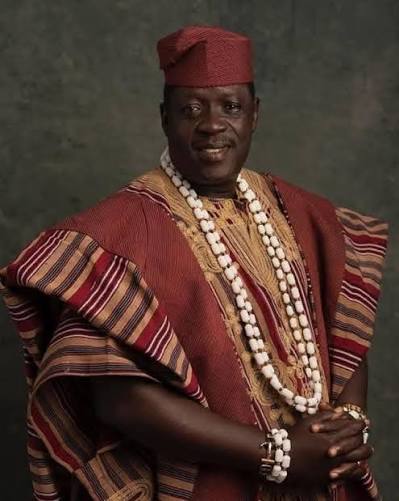
The remains of veteran Nollywood actor Taiwo Hassan, popularly known as Ogogo, will be laid to rest on Monday, August 24, 2026, in his hometown of Ilaro, Ogun State.
The burial arrangements were announced following the actor’s death on Sunday at the age of 66. His death was confirmed by his daughter, Kira Taiwo, and a family friend.
According to the burial arrangements, Ogogo’s remains will be taken to Ilaro, where a lying-in-state ceremony is scheduled to take place before his burial on Monday.
A separate announcement by the Ilaro Muslim Community indicated that the burial prayer for the late actor will take place at the Asade Agunloye Pavilion Ground in Ilaro at 10 a.m. on Monday.
The development follows an emotional outpouring of tributes from colleagues, friends, fans and members of the Yoruba film industry following the news of his death.
Ogogo had been battling stage-four cancer in the weeks preceding his death.
Earlier in August, his daughters, Lima and Kira Taiwo, publicly appealed for medical assistance, revealing the severity of his condition and seeking help from hospitals and cancer specialists.
The family had initially dismissed reports of his death when rumours circulated online on August 18, urging the public to disregard the unverified reports.
He was later confirmed dead on Sunday, August 23.
Ogogo was one of the prominent figures in Yoruba-language cinema, with a career spanning more than four decades.
He worked as an actor, filmmaker, producer and screenwriter and became widely recognised for his performances in indigenous Nigerian productions.
His career included appearances in films such as Omo Ghetto, Anikulapo and Anikulapo: Rise of the Spectre, among numerous other productions.
His contribution to Yoruba theatre and Nollywood earned him respect from colleagues across different generations of the Nigerian entertainment industry.
News of Ogogo’s death has triggered tributes from prominent members of the Nigerian film industry, who have described his passing as a major loss to Nollywood.
His long-time colleagues and friends, including veteran actors who worked alongside him for decades, have continued to mourn his contribution to the industry.
As the entertainment community prepares to accompany him on his final journey, attention will turn to Ilaro on Monday for the burial rites of one of Yoruba cinema’s most recognisable veterans.
Taiwo Hassan ‘Ogogo’ was 66.
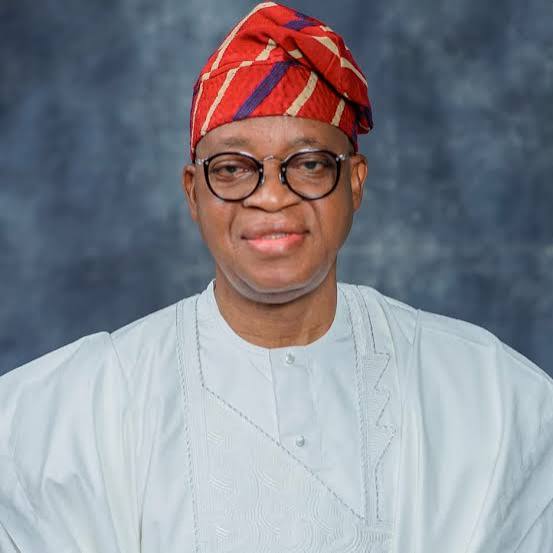
The United States Coast Guard (USCG) has lifted a 12-year-old Condition of Entry (CoE) imposed on vessels arriving in the United States after calling at Nigerian ports, Minister of Marine and Blue Economy Adegboyega Oyetola has announced.
The development ends a regime of additional security requirements that had affected vessels operating between Nigeria and the United States since June 25, 2014.
Under the former arrangement, vessels heading to the US that had visited designated Nigerian ports within their previous five port calls were subjected to additional security measures and enhanced scrutiny before being allowed into American waters.
Oyetola said the decision followed significant improvements in Nigeria’s maritime security system and its implementation of the International Ship and Port Facility Security (ISPS) Code.
The minister credited the achievement to collaboration between the Federal Ministry of Marine and Blue Economy, Nigerian Maritime Administration and Safety Agency (NIMASA), government agencies, port and terminal operators, shipping companies and other stakeholders.
According to Oyetola, the US Coast Guard conducted four comprehensive assessments of Nigeria’s maritime security framework and port facilities between 2024 and 2026.
The assessments took place in March and April 2024, March 2025 and April 2026, with the findings showing improvements in Nigeria’s compliance with international maritime security standards.
The lifting of the restriction is expected to have implications beyond security compliance.
According to the minister, Nigerian ports could benefit from faster vessel turnaround times, improved shipping schedules and lower operational costs, as vessels will no longer face the additional requirements imposed specifically under the CoE.
The development could also make Nigerian ports more attractive to international shipping operators and potentially encourage greater shipping activity, trade and investment.
For more than a decade, the additional requirements had contributed to increased security and operational expenses for shipping companies, as well as extra inspections, documentation and delays.
Oyetola described the lifting of the restriction as an important milestone for Nigeria’s maritime sector and an indication that the country’s efforts to improve port security are yielding results.
He also commended NIMASA Director-General Dayo Mobereola and his team for their contribution to the process.
The minister said the Federal Government would continue working to maintain the progress made and position Nigeria as a safe, secure and competitive destination for international shipping.
The removal of the US restriction is therefore being seen as a significant development for Nigeria’s maritime industry, particularly as the country seeks to improve port efficiency and strengthen its role in international trade.

 News3 years ago
Hardship: We Plan To Establish A National Commodity Board To Crash Food Prices – VP Shettima
- News8 years ago
Blog Reader; Samson Osagiede Celebrates Fiancè Benedicta Daniels’s Birthday With Sweet Words
- Home10 years ago
News Channel claims Donald Trump is an orphan from Pakistan,share alleged childhood photo
- Home10 years ago
Another $175m Found in Patience Jonathan’s wife’s firm’s Bank Account
- Home10 years ago
Oil Spillage: House of Reps Member Shares Photos of the Water her Constituents Drink .
- Home10 years ago
Zara Buhari & Ahmed Indimi’s Wedding Access Card
 Sport8 years ago
Modric, Marta Wins 2018 FIFA Best Player Of The Year Awards ⚽️
- News8 years ago
The Best Video You’ve Seen Today?