News
Nigerians And The Failed Coup In Turkey By Reuben Abati

Nigerians know what it means to have a constitutional order derailed by military intervention. Between 1960 and 1999, Nigeria moved from one form of military rule to another, characterized by obstinacy, and absolutism, experiencing only short spells of civilian rule. Similarly, the military in Turkey have since 1960 intervened directly at least four times (1970, 1971, 1980, 1997). And in all instances, the Turkish coup plotters always claimed that their role was to restore order and stabilize the country. This is a rhetoric that is quite familiar to Nigerians. Every military coup is justified on messianic grounds. In the latest onslaught in Turkey, the plotters claim they want to establish a “Peace Council.”
Between 1993 and 1999, Nigerians fought the military to a standstill, insisting on a definite return to civilian rule and the institutionalization of democracy. Sixteen years later, the democratic spirit is well established among the people, if not the Nigerian leadership elite. The people have seen what a demonstration of people power can achieve: they used it to get the military out of power, they relied on it to insist that the Constitution be respected and obeyed when a President died in office and certain forces did not want his successor to get into office, and again, they have seen people-power at work in removing a sitting government from power. Right now in Nigeria, to toy with this power of the people in any form is to sow the seeds of organized mass rebellion.
Not surprisingly, in the past few years, every display of the people’s supremacy in other parts of the world has attracted either interest or a copy-cat instinct among Nigerians. First, there was the Arab Spring, which resulted in calls for the Nigerian Spring, which later found expression in the politically motivated Occupy Nigeria protests of January 2012. And now from Turkey, the major point of interest for Nigeria has been in my estimation, how the people took to the streets to confront soldiers. The coup failed in Turkey because it lacked popular support. Turkey has for long been considered an embarrassment in Europe. A successful coup in 2016 would have put the country in a worse shape and done further damage to the country’s reputation. The people stood up for their country, not President Recep Tayyip Erdogan. They stood up for an idea: The idea of democracy. The three major political parties disowned the coup. Mosques called on the people to go to the streets and fight for democracy. Even Erdogan’s critics, including the Kemalists and the Glulenists, denounced the coup plotters. The images that came across were images of the police confronting the soldiers and disarming them (This was intriguing- can anyone ever imagine the Nigeria police protecting democracy: they would have since collected bribe from the coup plotters, there is massive corruption in Turkey too but their police fought for the nation). Ordinary citizens lay down in front of the coup plotters’ tanks and asked to be crushed; brave citizens disarmed the soldiers and took over the city squares.
It is the kind of bravery that Nigerians find surreal. The coup attempt in Turkey comes at a time when the civil society in Nigeria is beginning to lose the spirit to stand in front of tanks, and guns: the people have been battered to a point where their strongest protection is their power of the ballot and so the average Nigerian endures suffering, convinced that when again it is time to vote, no one can rob him or her of his power to choose. But the situation in Turkey reminds us of the kind of danger that any democracy, with troubled foundations can face, hence Nigerians ask if they too can be as courageous as the Turkish have been, with both Turks and the much abused Kurds, and other divided groups, uniting, momentarily, on one issue.
Not that Mr. Recep Tayyip Erdogan deserves the victory over the coup plotters, though. Outsiders, including Nigerians, consider him a bad guy; and even if he is still popular and blindly followed by the majority of his people, his 13-year record in office falls far short of standards. He came to office on the wave-crest of popular appeal. In Istanbul where he was a city mayor at a time, he remains immensely popular, and he is also probably the most popular leader, not in Europe, but the Arab world. Thrice, he and his party, the AKP, won nationally organized elections. But success soon got into Erdogan’s head, as he descended into the lower depths of arrogance and dictatorship. He started having issues with neighbours and allies.
He became undemocratic, shamelessly alienating civil society, the press and the judiciary. He is so temperamental and intolerant of criticism and alternative views, he is now surrounded mainly by sycophants and relatives. In his attempt to dominate everything and everyone, he became known as the “buyuk usta”, that is “the big master”, and of course, he now lives in a $615 million Presidential palace with 1, 150 rooms! In addition, he wants to acquire US-style executive Presidential powers and he is busy battling, real and imaginary enemies. He may have been saved by the people’s rejection of the coup attempt, but perhaps Erdogan has been saved more by his own cleverness. The coup attempt against his government was an amateur, unorganized effort. It lacked the support of the military command, which Erdogan had cleverly subjected to civilian control, and among whom he had built centres of personal loyalty. Over the years, he weakened the military and strengthened the police and the intelligence services. The coup plotters over-estimated their capacity and misread the people’s mood.
Their failure may embolden Erdogan and even make him more authoritarian: he is already sounding off about being in charge and dealing with the coup plotters (over 2,000 of whom have already been rounded up and arrested, even judges have been fired). But Turkey is in a very bad shape. Resentments run deep. There are deep fears about threats to the country’s secularism, and attempts to Islamicise the country. A paranoid Erdogan could worsen the situation. Both the United States and the European Union should take a keen interest in what happens in Turkey after the coup attempt, to ensure that rather than dig deeper into authoritarianism, Erdogan would see the need to run a more open, inclusive and democratic government.
The coup may have failed, and democracy may have won, but whatever issues led to a group of ill-prepared soldiers taking the law into their hands cannot be wished away. To tell the truth, Recep Erdogan acts very much, in all respects, like an African leader in Europe – that probably explains the keen Nigerian interest. The key lesson, all told, is that the importance and survival of democracy relates to the importance of civic virtue, this is why leaders must rely not just on the people’s commitment to an idea, but must seek to make democracy work for all the people.


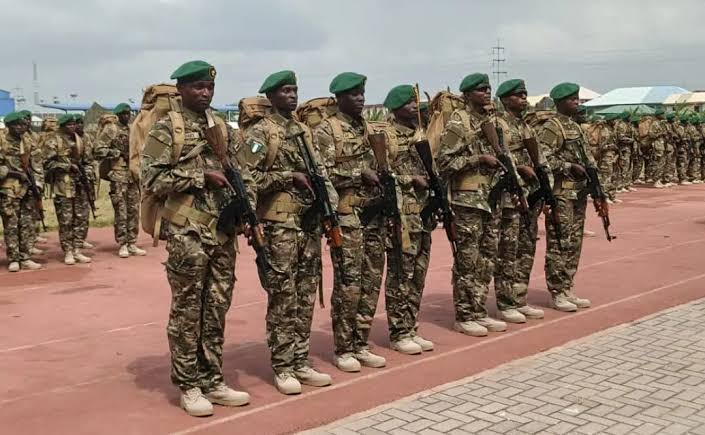
The Nigerian Navy has rescued two kidnapped victims and recovered several stolen outboard engines during an operation against suspected sea robbers and kidnappers in Ibeno, Akwa Ibom State.
The operation was carried out on September 30 by the Maritime Quick Response Team of Nigerian Navy Ship (NNS) JUBILEE in Ibeno, following intelligence reports about criminal activities targeting fishermen in the area.
The Director of Naval Information, Navy Captain Abiodun Folorunsho, disclosed the development in a statement, explaining that the suspected criminals had been attacking fishermen, taking away their boats and stealing their outboard engines”
Suspects Flee as Navy Launches Pursuit
According to the Navy, its personnel encountered two boats believed to have been operated by the suspected criminals during the operation.
The occupants reportedly fled into nearby creeks after sighting the naval team, prompting the personnel to pursue them.
During the chase, the suspects abandoned one of their boats, which contained several stolen outboard engines and the two kidnapped victims.
The naval team subsequently rescued the victims and escorted them to safety, while the recovered engines were secured for verification and further necessary action.
Navy Intensifies Efforts to Track Suspects
The Navy said efforts were ongoing to locate and apprehend the fleeing suspects, adding that the operation reflected its commitment to protecting lives and securing legitimate maritime activities across the country’s waterways.
Folorunsho also emphasised the importance of intelligence sharing and cooperation with coastal communities in tackling maritime crimes.
He urged fishermen, residents of coastal communities and other maritime stakeholders to report suspicious activities and provide timely information that could help security agencies respond to threats.
The Navy reaffirmed its commitment to sustained patrols, search-and-rescue operations and intelligence-driven interventions to protect lives and property along Nigeria’s waterways.
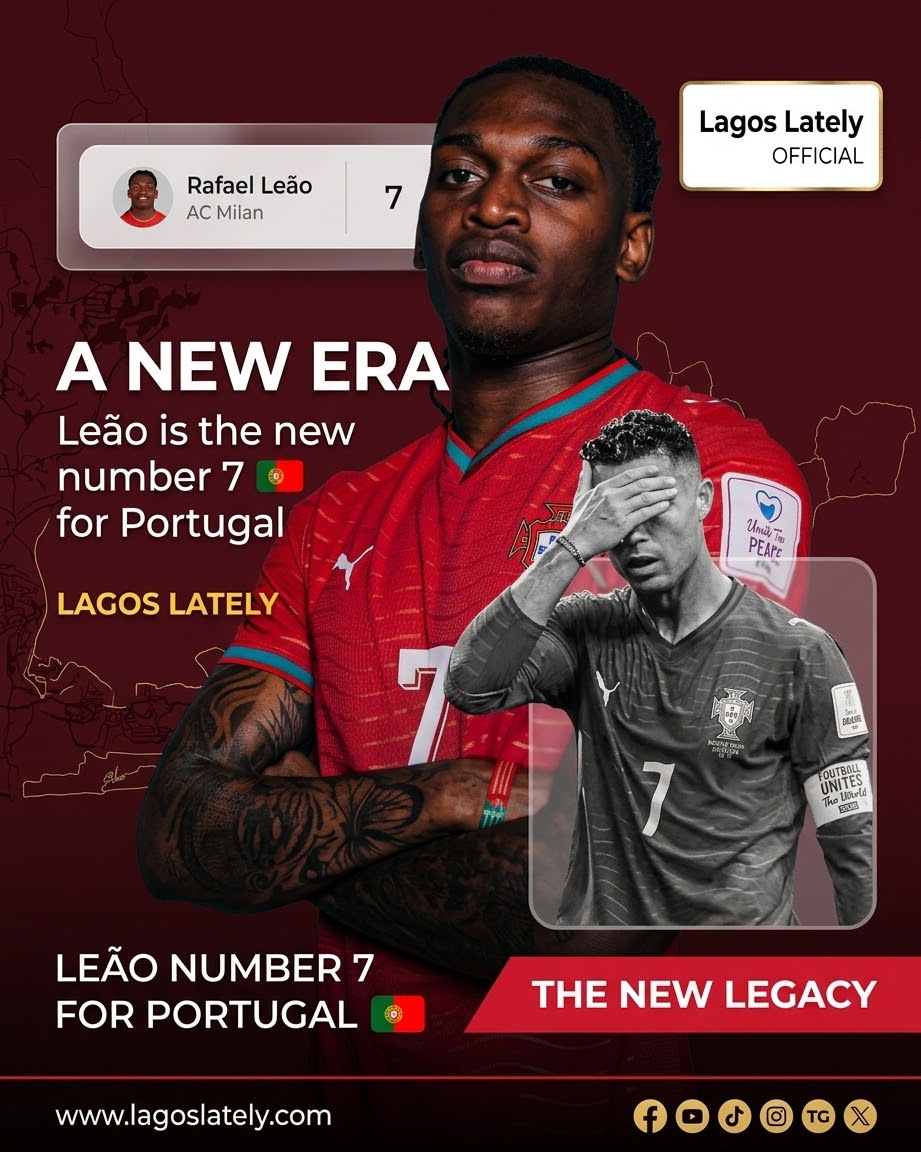
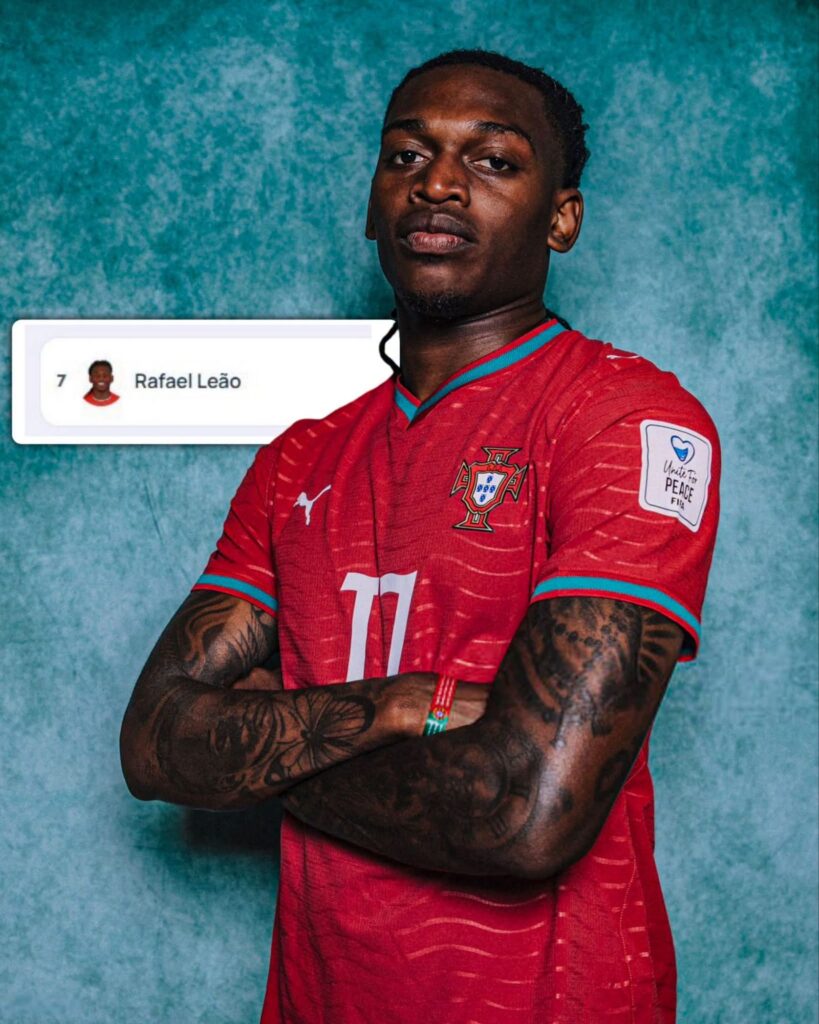
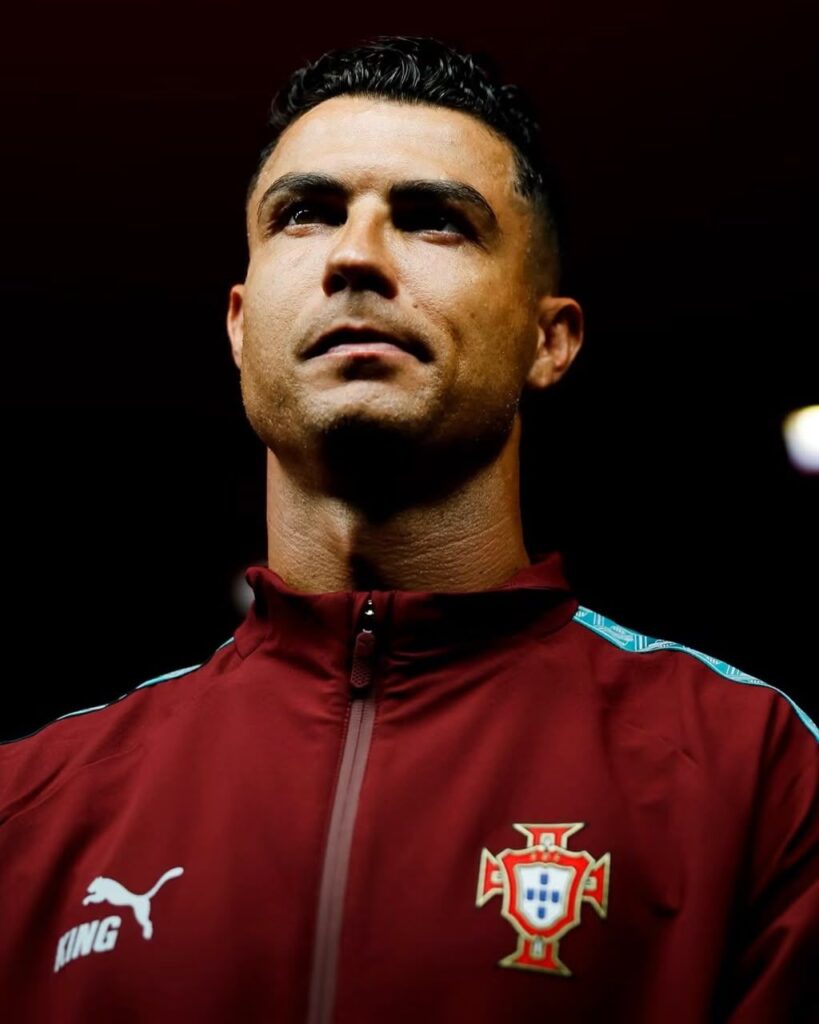
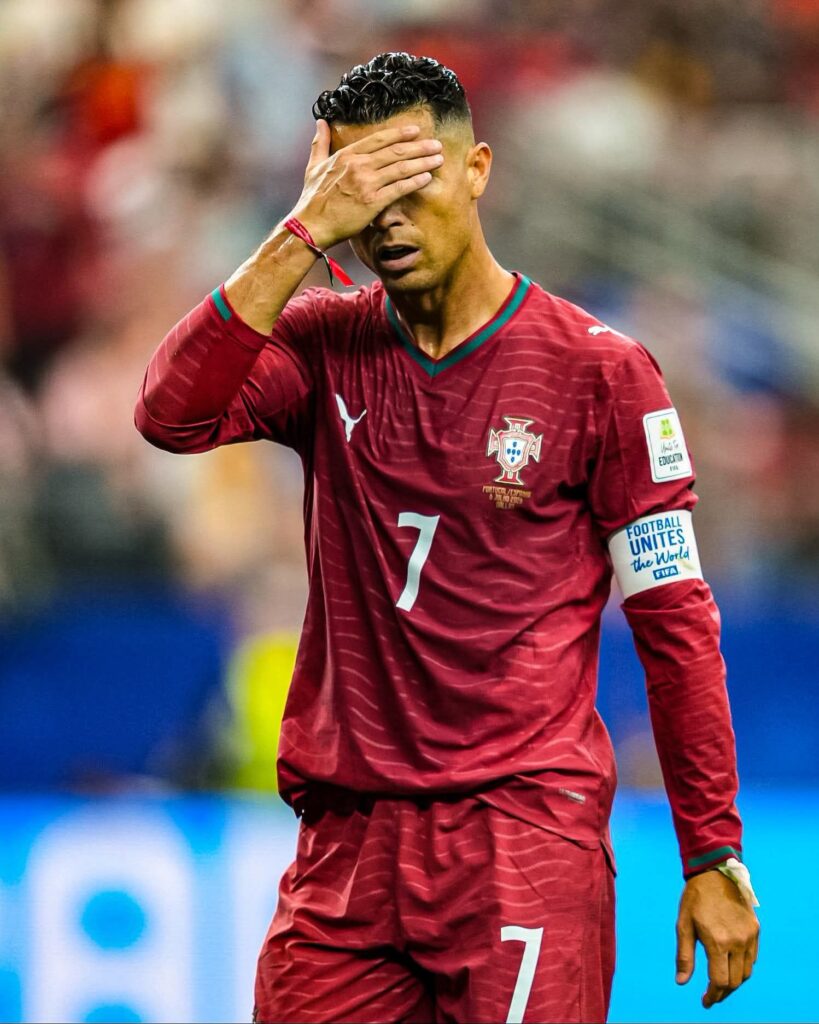
Barely hours after football legend; Cristiano Ronaldo announced his departure from the national team camp, his iconic number 7 shirt has officially been given to Rafael Leão in a move that has set social media alive.
The No. 7 is among the most closely watched shirts in world football, and the speed of the handover is what has fans talking. There was no long gap between one chapter ending and the next beginning, and Leão is now the face of that change.
Leão, a left winger who plays his club football in Europe, has been a regular in the national setup in recent years. Taking over the shirt places him at the centre of Portugal’s attacking plans and gives him one of the biggest responsibilities in the squad.
Supporters are already debating whether he can carry the weight of the number.
Reactions online are split between excitement and nostalgia. Some see the announcement as a bold statement that Portugal is ready to move forward with a new generation. Others say it will take time to accept anyone else in the shirt. Either way, all eyes will be on Leão the next time he steps onto the pitch wearing it. 👀
Neither the Portuguese football federation’s full statement nor any comment from Leão himself had been widely reported at the time of writing, and further details are expected.
Is Leão the right man to inherit the No. 7 shirt? Tell us in the comments.
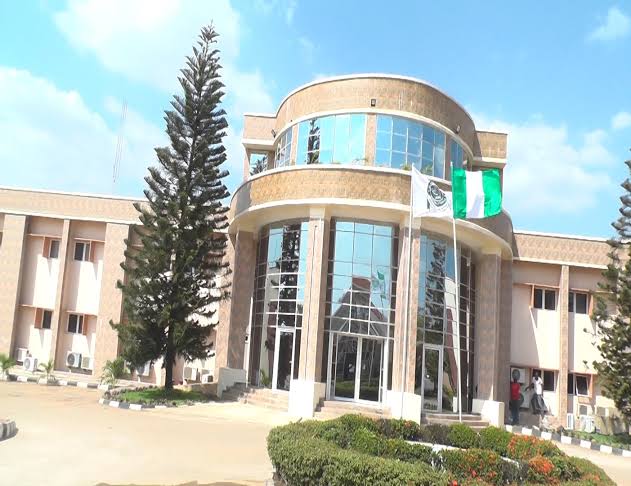
The Joint Admissions and Matriculation Board (JAMB) has extended the deadline for candidates with outstanding admission offers from the 2021 to 2025 admission exercises to accept or reject the offers.
The new deadline is November 30, 2026, giving affected candidates an additional two months to update their admission status on the Central Admissions Processing System (CAPS).
JAMB had previously fixed September 30 as the deadline for candidates to take action on outstanding offers. The latest extension followed a temporary disruption of the CAPS platform, which was reportedly unavailable for about 96 hours.
JAMB Warns Candidates Against Missing New Deadline
The board described November 30 as the final deadline for candidates affected by the outstanding admission offers.
Candidates who wish to retain their previous admission offers are expected to log into their CAPS accounts and accept them. Those who no longer want the offers can reject them so that JAMB can update its records.
According to JAMB, candidates who accept their offers will be able to proceed with printing their admission letters.
The board also explained that candidates who are no longer studying at the institutions where they were previously offered admission, or who have changed programmes, may accept the outstanding admission and subsequently apply for the appropriate correction or deletion where necessary.
What Happens After November 30?
JAMB warned that candidates who fail to either accept or reject their outstanding offers by the new deadline will have the admissions reverted to “Not Admitted” on the board’s records.
Any subsequent request to update an admission record from the affected years will also attract the applicable penalty fee, according to the board.
JAMB further assured candidates who have already secured admission for the 2026 academic session that rejecting an outstanding admission offer from an earlier year will not affect their current admission.
The board urged all affected candidates to check their CAPS accounts and take the necessary action before the November 30 deadline.

 News3 years ago
Hardship: We Plan To Establish A National Commodity Board To Crash Food Prices – VP Shettima
- News8 years ago
Blog Reader; Samson Osagiede Celebrates Fiancè Benedicta Daniels’s Birthday With Sweet Words
- Home10 years ago
News Channel claims Donald Trump is an orphan from Pakistan,share alleged childhood photo
 Sport8 years ago
Modric, Marta Wins 2018 FIFA Best Player Of The Year Awards ⚽️
- Home10 years ago
Another $175m Found in Patience Jonathan’s wife’s firm’s Bank Account
- Home10 years ago
Oil Spillage: House of Reps Member Shares Photos of the Water her Constituents Drink .
- Home10 years ago
Zara Buhari & Ahmed Indimi’s Wedding Access Card
- News8 years ago
The Best Video You’ve Seen Today?