
News
The Brexit Nightmare ByReuben Abati

What has the United Kingdom just done to itself, its people and the future of its self? It is difficult to fully understand why a country in taking a decision about its future will decide on a false option that seems to negate long-term interests.
And this, just because a total of 17.4 million people out of over 61 million chose to vote against the United Kingdom’s continued membership of the EU. More than 50% of these pro-Brexit voters are actually between the age bracket: 50-70, thus an ageing class of voters has taken a decision to undermine the future of the younger generation.
Pro-EU Prime Minister David Cameron said he was “courageous and optimistic ” when in January 2014, he tried to justify the need for a referendum.
His words then: “ I think the overwhelming majority of the British people say they want to be in Europe but they want some changes to the relationship and they would like to be given a say. It is not something that we should be frightened of. It’s something we should embrace.” Cameron is now a study in political miscalculation and how over- confidence can make a political leader misread the people’s moods and expectations. He has been praised for his “courage” in quickly accepting the people’s verdict and for tendering his resignation, but I guess he won’t possibly be talking about courage. He must be full of regrets for presiding over the United Kingdom’s exit into a nightmare. Britain is better off remaining in the EU. But on June 23, 2016, the people of Great Britain spoke and their verdict has been accepted as the status quo, except a miracle happens and the current petition by the pro-EU protesters results in a second referendum. As things stand, the people have rejected continued membership of the European Union. The implication is that the majority of the people believe that the United Kingdom is better off on its own. What is quite clear is that this British exit (Brexit) is more about the rise of xenophobia, bigotry and isolationism. It is not new. Britain has always looked backward and in-out in the course of its membership of the EU, oscillating between its commitment to a greater Europe and the need to preserve British identity and sovereignty.
The British public mind has been driven in recent years by loud, perpetual carping about too much control from Brussels, and the
need to project Britain first. The ultra nationalists nursed fears about their great country becoming a colony within a EU empire. They are uncomfortable with the apparent globalization of British demographics, turning Britain into a country of many racial colours, with the influx of so many immigrants who are empowered by EU laws to be free citizens of a united Europe. The call for a referendum on this matter has now given the Brexiteers, who jus want their country to be left alone by outsiders, the opportunity they have always wanted. PM Cameron apparently underestimated their resolve. The Leave EU activists campaigned more vigorously, and deployed every possible means including blackmail and sentiments. They had the vibrant support of many political leaders including former London Mayor Borns Johnson, Michael Gove, and fire-eating UKIP leader, Nigel Farage. In the event of an intense campaign that divided the country right down the middle, we witnessed the mainstreaming of xenophobia and bigotry. Labour MP Jo Cox who was murdered by an irate Eurosceptic for her pro-EU stance will be remembered as the symbol of how a straightforward, for or against, political debate turned into hate campaign and a national referendum became an act of terror. There are many lessons to be learnt from this instructively low moment in Britain. What has happened is actually a referendum on the British establishment and the EU. The EU faces a crisis requiring urgent introspection and reform of its processes, if it must continue to serve its purpose. Britain is not the first country to avoid membership of the EU but whereas countries like Switzerland and Norway can hold out on their own, Brexit comes at great cost to the British. At hand is the triumph of emotions over reason, and the triumph of right wing populism. In many countries of Europe and even at the moment in the United States, the ultra-conservative political bloc seems to be in the ascendancy. Questions are being asked about regional integration and globalization. The basis for this is largely the manner in which regional groupings such as the EU disappoint the people. This is made worse by the failure of the leadership elite and sitting governments. When people are not happy with their governments or their circumstances,
they are ready to make any choice that looks like an alternative. Opposition and anti-establishment politicians understand this game too well.
All they need to do is to demonize the establishment, tear the government of the day into pieces, call names and tell the people that the time has come for change. Those who claim that they best know how to save a nation, armed with populist rhetoric in an election time, and have the best support of the people, in the long run stand a better chance of winning. Democracy in that fashion is a play-field of emotions, not facts. It is the same scenario that made Bernie Sanders so popular in the recent Presidential nomination process in the United States, and also led to the emergence of Donald Trump as the presumptive Republican Presidential candidate. Political leaders who don’t want sad outcomes only have to provide good leadership and meet the people’s
expectations. It is also clear that democracy may not produce rational outcomes in so far as it awards triumph on the basis of percentages: in Brexit, the difference is just 4%, 58-42, but the rule of the game is that majority carries the day, and as in most cases, the winner takes it all. But should the economic and political destiny of a people be determined in such formulaic manner?
Brexit has left the United Kingdom in a more divided shape that it was before the referendum. The entire country is in turmoil.
The taste of change doesn’t quite seem so sweet anymore, less than 72 hours after the vote. Young Britons may no longer be able to
move freely across Europe and the experts have predicted rising costs and expectations and greater economic hardship. If Brexit
stands, more than half of the population will be thrown into a winter of discontent, wondering why just about 1.3 million voters
(17.4 million (for), 16.1million (against) should have been allowed to mislead a country. Many Britons will no longer be able to find jobs so easily across Europe. Hyperdemocracy has resulted in British discombobulation. But that is democracy: it includes the people’s right to make mistakes, that is – the right of the simple majority to make mistakes at the expense of the minority, who may have lost the vote due to poor turn out or other matters of logistics. Leadership counts. The truth is that the leadership elite in Britain has also not always being too clear about where Britain should stand in relation to the rest of Europe. Even the pro-EU political leaders do not really object to Britain holding on to its national currency, the Pound, as opposed to the Euro, and Britain opting out of the idea of being a Schengen border. Britain also did not join the European Economic Community until 1973, 16 years late. Two years later, there was an exit referendum similar to this one, won by the pro-Europe campaigners. Nothing forecloses the possibility of another referendum in the not too distant future to reverse the present decision. What has happened isperhaps all correctly British, in the final analysis: a nation yet to come to terms with certain odern realities, caught between nostalgia and the future. This is precisely what the copycat plebiscites should understand, particularly in Africa where some commentators have been saying that some African countries on account of Brexit may begin to raise question about the relevance of the African Union. The AU is modeled after the EU and it receives substantial funding support from it, but it has not been as remotely relevant in addressing the people’s expectations. In my opinion, there is nothing to fear in terms of a copycat effect in Africa; most Africans are
indifferent about the AU anyway, they are not even aware of its existence. But as most development aid received by African countries come from the EU, this may be negatively affected with the exit of a major country like Britain, and a post- EU Britain may also be compelled to adjust its trade relations, immigration rules, and development support for countries in Africa. This, I think, is all there is to it at this end. Closer home, the more strident call is for a referendum on the Nigerian union. In the last few days, I have for example, seen a strange Nigerian invention called “Biafrexit”. This must be a joke, symbolically thrown up by those who must know that no Nigerian government will allow such a vote. The Brexit vote was not about disintegration, even if Scotland is now insisting on its independent right to be part of the EU; rather the vote was more about national and economic identity. Nigeria is
still at the level of debates: we can hold as many conferences as we like, adjust the Constitution at mutually agreed terms, but a
referendum that could lead to the dissolution of this country is not what we need, and it is certainly not the lesson from Brexit.


News
Wole Olanipekun, Taiwo Oyedele Urge South-West Governors to Maximise Tinubu Presidency for Regional Growth

Senior Advocate of Nigeria (SAN), Wole Olanipekun, and Chairman of the Presidential Fiscal Policy and Tax Reforms Committee, Taiwo Oyedele, have called on South-West governors and political leaders to fully leverage President Bola Tinubu’s administration to drive accelerated development across the region.
The duo made the call on Monday in Akure, Ondo State capital, while speaking at a public lecture organised as part of activities marking the 50th anniversary of Ondo State’s creation.
They stressed that the South-West must prioritise massive investments in infrastructure, industrialisation, and economic reforms during Tinubu’s tenure to secure long-term regional prosperity.
Olanipekun cautioned that the political advantage of having a South-West president is temporary, noting that President Tinubu’s tenure will come to an end after his second term in 2031.
According to him, the region must act decisively within this window to strengthen its economic base and ensure sustainable development beyond the current administration.

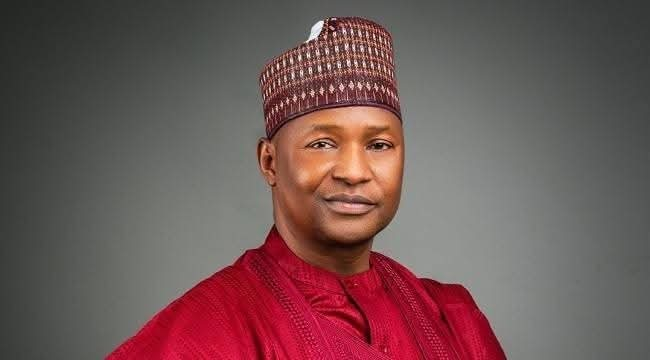
Former Attorney-General of the Federation, Abubakar Malami (SAN), has disclosed details of his earnings while asking a Federal High Court in Abuja to set aside an interim order authorising the seizure of 57 properties allegedly linked to him.
Malami made the disclosure through his counsel, Joseph Daudu (SAN), in a motion on notice filed before the court. The application seeks to vacate an interim forfeiture order affecting three of the 57 properties currently under investigation by the Economic and Financial Crimes Commission (EFCC).
According to the court filing, Malami stated that he had fully and transparently declared his sources of income in his asset declaration submitted to the Code of Conduct Bureau (CCB).
The document outlined multiple income streams, including:
₦374.63 million earned from salaries, estacodes, severance allowances, and related entitlements.
₦574.07 million generated from the disposal of personal assets.
₦10.01 billion recorded as turnover from private business ventures.
₦2.52 billion issued as loans to various businesses.
₦958 million received as traditional gifts from personal friends.
₦509.88 million realised from the launch and public presentation of his book titled “Contemporary Issues on Nigerian Law and Practice: Thorny Terrains in Traversing the Nigerian Justice Sector – My Travails and Triumphs.”
Malami’s legal team argued that the declared earnings sufficiently explain the source of funds used to acquire the properties in question, urging the court to lift the interim seizure order.
The matter remains pending before the Federal High Court as the EFCC continues its forfeiture proceedings.

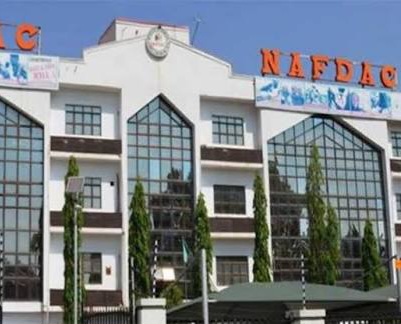
The Manufacturers Association of Nigeria has appealed to the Federal Government to restrain the National Agency for Food and Drug Administration and Control from proceeding with its ban on alcoholic beverages packaged in sachets and small PET bottles, warning of catastrophic economic consequences.
In a statement issued by Director-General Segun Ajayi-Kadir, MAN described NAFDAC’s renewed enforcement action as detrimental to indigenous industrial operators and fundamentally inconsistent with earlier government directives.
The manufacturers’ body emphasized that NAFDAC’s recent move directly contradicts the House of Representatives resolution dated March 14, 2024, which specifically restrained the agency from implementing the punitive ban following comprehensive stakeholder consultations through a public hearing.
“Rather than abiding by the generally agreed resolution, NAFDAC bided its time and chose to rely on a resolution of the Senate that was devoid of the usual stakeholders’ engagement,” Ajayi-Kadir stated, noting that operators now face confusion over conflicting directives from different arms of government.
MAN warned that enforcing the ban would devastate Nigeria’s manufacturing sector, threatening over ₦1.9 trillion in existing investments and triggering the retrenchment of more than 500,000 direct employees alongside approximately five million workers in the indirect value chain.
The association cautioned that the restriction would paradoxically undermine public health by creating market opportunities for illicit, substandard and unregulated products beyond the control of regulatory authorities.
“This is counterproductive as it will open up the market for illicit, sub-standard, and unregulated products. It will lead to an influx of imported alternatives, mostly smuggled. It will deny the government of revenues collectable from the companies,” Ajayi-Kadir declared.
The manufacturers’ group emphasized that alcohol served in sachets by local producers is manufactured under hygienic conditions and certified by regulatory agencies including NAFDAC itself, making the ban particularly contradictory.
MAN also challenged the untested assertion that sachet alcohol drives underage consumption, citing credible and empirical research that contradicts this claim. The industry has independently invested over ₦1 billion in nationwide media campaigns promoting responsible alcohol consumption and discouraging underage abuse.
The association stressed that banning certified products would deny adult consumers with limited budgets access to regulated alcoholic beverages while simultaneously depriving the government of substantial tax revenues.
Food, Beverages and Tobacco Senior Staff Association and National Union of Food, Beverages and Tobacco Employees have joined MAN in opposing the ban, demanding that NAFDAC provide empirical evidence that sachet alcoholic beverages are being consumed by children.
Labor unions have called for the suspension of NAFDAC Director-General Professor Mojisola Adeyeye, accusing her of siding with multinational companies to undermine local manufacturers.
However, NAFDAC has maintained its position, with Adeyeye insisting that enforcement is backed by law following the Senate’s unanimous resolution setting a December 2025 deadline that has now passed.
The NAFDAC chief argued that the proliferation of high-alcohol-content beverages in sachets has made such products easily accessible, affordable and concealable, contributing to widespread misuse and addiction among minors and commercial drivers.
“This public health menace has been linked to increased incidences of domestic violence, road accidents, school dropouts, and social vices across communities,” Adeyeye stated, describing the ban as protective rather than punitive.
In contrast, civil society organization Socio-Economic Rights and Accountability Project has approached the Federal High Court in Lagos seeking injunctive orders to prevent the Federal Government from interfering with NAFDAC’s statutory powers to enforce the ban.
SERAP argues that continued circulation of sachet alcohol violates the National Health Act 2014, the NAFDAC Act and international commitments under the World Health Organization’s Global Strategy to Reduce Harmful Use of Alcohol.
The legal and economic battle over sachet alcohol highlights deeper tensions between public health regulation, economic survival and stakeholder consultation in Nigeria’s policymaking process, with no clear resolution in sight as multiple court cases and regulatory actions unfold simultaneously.
-
 News2 years ago
Hardship: We Plan To Establish A National Commodity Board To Crash Food Prices – VP Shettima
-
News8 years ago
Blog Reader; Samson Osagiede Celebrates Fiancè Benedicta Daniels’s Birthday With Sweet Words
-
Home9 years ago
News Channel claims Donald Trump is an orphan from Pakistan,share alleged childhood photo
-
Home9 years ago
Another $175m Found in Patience Jonathan’s wife’s firm’s Bank Account
-
Home9 years ago
Oil Spillage: House of Reps Member Shares Photos of the Water her Constituents Drink .
-
Home9 years ago
Zara Buhari & Ahmed Indimi’s Wedding Access Card
-
 Sport7 years ago
Modric, Marta Wins 2018 FIFA Best Player Of The Year Awards ⚽️
-
News8 years ago
The Best Video You’ve Seen Today?