Celebrities
Women Sold to Money Slave Camp; A Case Study Of Chioma, Davido’s Girlfriend

Its No Longer News that davido bought his girlfriend of 5 years Chioma, a porshe car worth 45 million Naira.The news broke the internet and has continued to do so ,but a Nigerian man by name olakunle alison has this to say about the whole scenario.
Very Important: Davido’s Girlfriend Chioma like A prostitute, As Shared On His Facebook Page;
A generation of women sold to money slave camps.
Sticking with a man to whom you are not married and who cheated on you with several women, impregnating two of them in the process (baby mamas) whilst dating you, and then became an accidental ‘baby-daddy’ is NOT LOVE just because he bought you a #45million car.
You are a needy, opportunistic, parasitic, gold-digging, low self-esteem sufferer. A Stockholm syndrome patient. You are not loyal. You are a liar. A prostitute and you share some moral equivalence.
The only reason any woman would endure contemptible treatments from a man is because of what she looks to gain materially and financially. Let’s stop ridiculing the word ‘Love’ for the sake of posterity so that they’d be able to distinguish between virtue and vice.
There is simply no virtue in staying with a man who openly disrespects you over a period of years. None. And buying you the moon and stars will not make up for him treating you like human fecal matter. Money cannot buy moral worth. Rather money distorts moral worth. And that’s what is happening these days.
Permit me to digress a bit whilst I elucidate on point of ethics.
Humans are created with a deep sense of moral worth. This simply means that every human being loves to be treated like a rare and precious stone. It’s just the way our Maker made us. The desire to be loved, admired, desired, respected, treated fairly and kindly is part of our teleology. So when anybody willingly and voluntarily subjects himself or herself to vile and inhumane treatments for other considerations it basically reduces that person to an object rather than a subject. The person has objectified himself or herself.
Its No Longer News that davido bought his girlfriend,chioma of 5 years a porshe car worth 45 million Naira.The news broke the internet and has continued to do so ,but a Nigerian man by name olakunle alison has this to say about the whole scenario.
Very Important: Davido’s Girlfriend Chioma like A prostitute ,Nigerian Man Says
As Shared On His Facebook ;
A generation of women sold to money slave camps.
Sticking with a man to whom you are not married and who cheated on you with several women, impregnating two of them in the process (baby mamas) whilst dating you, and then became an accidental ‘baby-daddy’ is NOT LOVE just because he bought you a #45million car.
You are a needy, opportunistic, parasitic, gold-digging, low self-esteem sufferer. A Stockholm syndrome patient. You are not loyal. You are a liar. A prostitute and you share some moral equivalence.
The only reason any woman would endure contemptible treatments from a man is because of what she looks to gain materially and financially. Let’s stop ridiculing the word ‘Love’ for the sake of posterity so that they’d be able to distinguish between virtue and vice.
There is simply no virtue in staying with a man who openly disrespects you over a period of years. None. And buying you the moon and stars will not make up for him treating you like human fecal matter. Money cannot buy moral worth. Rather money distorts moral worth. And that’s what is happening these days.
Permit me to digress a bit whilst I elucidate on point of ethics.
Believe it or not, what we are witnessing today is one of the unintended fallouts of the extreme faction of feminism: The Moral Self-Depreciation of Womenfolk. After all, the cardinal philosophy of modern feminism is CHOICE and SELF AUTONOMY. So who are we to question a woman who CHOOSES to stay in an abusive but profitable relationship? If she has a right to choose who stays in her body and a right to choose her role in a marriage, why not this?
I once wrote a piece on the tyranny of freewill (choice). Generally, humans don’t have the tool box necessary to make good choices. A man’s choice will only be consistent with his true nature. And man is deeply flawed by nature, hence his choices must necessarily be flawed. A greedy man will always choose money above morals, yet he needs morals more. A dog by nature must bark and a cat moan.
Knowing this, it is therefore suicidal to build an ideology on human choices and self autonomy. Nobody (man or woman) should be self autonomous. In reality, nobody is. Everyone needs a governing and regulatory authority that sets boundaries; both moral and spatial boundaries. This is necessary for the survival of humanity because our natural appetite is self destructive. We need to be delivered from ourselves.
Feminism is toxic not because of its intended consequences but because of its unintended ones, and we are already seeing them play out. If consistency matters, no hardline feminist should be able to condemn any woman who chooses abuse and disrespect over self dignity. IT IS HER CHOICE!
We should not teach our daughters that CHOICE is the best power they have. Knowledge is. With knowledge they’d understand that they don’t just make choices but that their choices make them.
The young lady’s choice makes her a disgrace.
#truthissacred


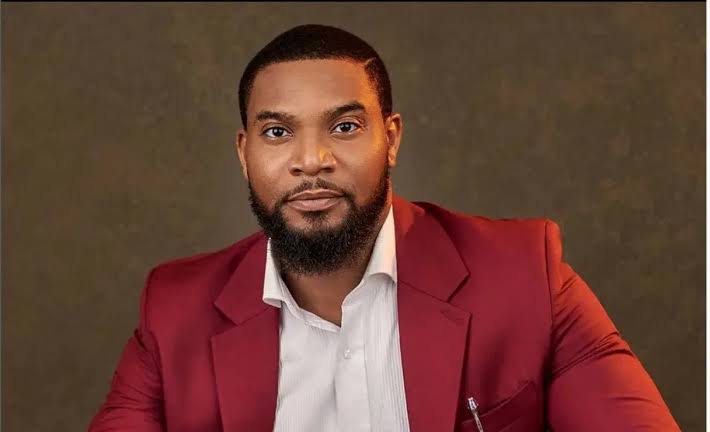
Nollywood actor Kunle Remi has opened up about how becoming a father has changed his outlook on life, saying the experience has influenced the way he approaches his career and personal decisions.
The actor shared the reflection while discussing the realities of fatherhood and how becoming a parent has changed his priorities.
According to Remi, fatherhood has made him more conscious of the risks he takes, particularly while working on film projects that involve dangerous stunts.
Fatherhood Changed His Approach to Stunts
Remi explained that becoming a father has made him think differently about performing risky scenes.
The actor, who has taken on physically demanding roles during his career, said the responsibility of being a parent has made him more cautious about putting himself in situations that could threaten his safety.
He noted that his perspective has shifted because he now has someone who depends on him beyond his professional responsibilities.
‘You Start Thinking Differently’
For Remi, fatherhood has brought a greater sense of responsibility and changed the way he evaluates certain decisions.
The actor’s comments reflect the broader adjustment that can come with becoming a parent, particularly when balancing professional demands with family responsibilities.
Rather than approaching every role purely from the perspective of performance, Remi said his responsibilities as a father now form part of the considerations he makes.
Kunle Remi’s Fatherhood Journey
Remi and his wife, Tiwi, welcomed their first child in 2025. The actor has since occasionally shared glimpses of his experience as a first-time father, including humorous moments about adjusting to life with a young child.
The actor has previously spoken about the unexpected realities of fatherhood, including the challenges of trying to balance parenting responsibilities with everyday activities.
His latest reflection shows another side of that experience, focusing on how becoming a father has influenced his decisions and outlook.
Career and Family Life
Remi remains active in Nollywood, having built a career across film and television and taking on roles in productions including Aníkúlápó, Muri & Ko and A Naija Christmas.
His experience in physically demanding productions has also made the issue of safety particularly relevant as he balances his career with his responsibilities as a father.
For the actor, fatherhood appears to have introduced a new perspective on the choices he makes both on and off the screen.
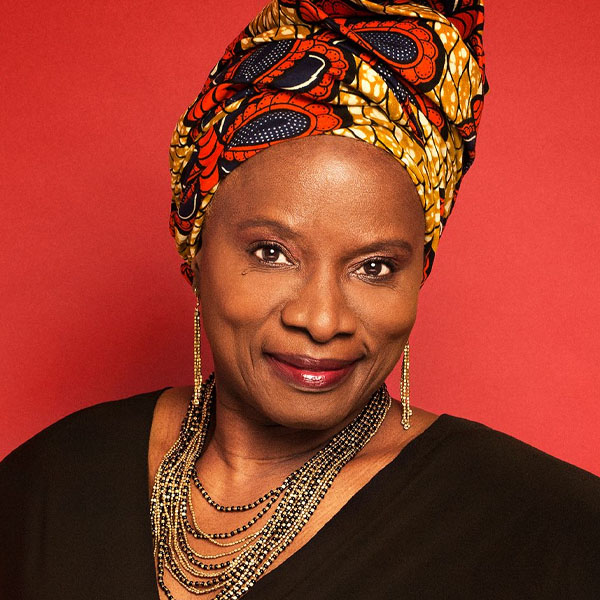
Beninese music icon Angélique Kidjo has made history after becoming the first Black African performer to receive a star on the Hollywood Walk of Fame.
The five-time Grammy Award winner was honoured during a ceremony in Los Angeles on Tuesday, August 18, 2026, where she unveiled the 2,854th star in the Recording category.
The landmark recognition adds another major achievement to a career that has seen Kidjo take African music to audiences around the world for more than four decades.
During the ceremony, Kidjo described the recognition as more than a personal achievement, presenting it as a celebration of Africa and its contribution to global music.
The singer said Africans have made a profound contribution to music worldwide and expressed hope that her achievement would create opportunities for other African artists.
She also thanked her family, team and supporters before breaking into song during the ceremony.
Born in Ouidah, Benin, in 1960, Kidjo began performing at a young age before moving to France in the 1980s.
Her music has combined West African musical traditions with influences from jazz, funk, R&B, gospel, reggae and Latin music, helping establish her as one of Africa’s most internationally recognised performers.
She has released 18 albums and collaborated with major international artists including Burna Boy, Alicia Keys, Bono, Carlos Santana, Peter Gabriel and Yo-Yo Ma.
Kidjo has also won five Grammy Awards and received numerous other international honours during her career.
The Hollywood ceremony attracted prominent figures from the entertainment industry.
Actor Willem Dafoe and Recording Academy CEO Harvey Mason Jr. were among the speakers who celebrated Kidjo’s contribution to music and culture.
Benin-born actor Djimon Hounsou and Nigerian singer Adekunle Gold were also among those present at the ceremony.
Dafoe praised Kidjo’s energy, artistry and commitment, while Mason highlighted her ability to connect cultures and audiences through music.
Kidjo’s influence extends beyond her music career. She has been involved in humanitarian and advocacy work and serves as a UNICEF and Oxfam goodwill ambassador.
She is also a co-founder of the Batonga Foundation, which supports vulnerable girls and women in Benin.
Her latest recognition therefore represents both a personal career milestone and a significant moment for African representation in one of the world’s most famous entertainment landmarks.
With her name now permanently displayed on Hollywood Boulevard, Kidjo joins a select group of global entertainment figures whose contributions have been recognised on the Walk of Fame.
For the celebrated singer, however, the achievement carries a broader meaning: it is a celebration of African music, culture and influence on the world stage.

He has sat across from presidents, celebrities, and survivors. He has coaxed the most vulnerable stories out of some of Nigeria’s most guarded names. And all along, quietly, privately, he was living with a story of his own — one that his own doctor had told him to keep hidden.
That story is now fully in the open.
Nigerian media entrepreneur and television host Chude Jideonwo has opened up about living with Tourette syndrome, describing the condition as one that can make the body feel “out of control” while also highlighting the stigma surrounding it in Africa. He disclosed this during a recent interview with BBC News Africa, where he reflected on his diagnosis and the challenges of speaking publicly about the neurological disorder.
The honesty with which he speaks about it is striking — and deliberate.
“When I was diagnosed, my doctor warned me not to talk about it in public, that people were going to judge me, especially in Africa, which made me sad. But it also shows why people are not speaking out about it,” he said.
That silence, he explains, has a cost. For years, Nigerians living with conditions like Tourette’s had nowhere to turn, no public figure to point to, no language to describe what they were experiencing as anything other than spiritual failure.
“If you watch Nigerian movies, the representations of people with Tourette’s are usually that they are demon-possessed or there’s something wrong with them,” Jideonwo said, placing a cultural mirror in front of a society that has long struggled to create space for neurological difference.
He was not spared that confusion himself. For years, Jideonwo struggled with unexplained twitching, vocal tics and compulsive behaviours that doctors repeatedly dismissed as being “in his head.” It was only after a neurologist carefully examined his symptoms that he received clarity. “What I had was Tourette’s Syndrome,” he says.
A friend had apparently told him it could be Tourette’s a while before his diagnosis, but though the symptoms fit, he didn’t take it seriously — it sounded too “foreign.”
The description he gives of living with the condition is visceral. “I began to notice Tourette’s syndrome in my late 20s consciously. Tourette syndrome is a neurological condition where it feels like your body misfires, where it feels like your body is out of your control in physical ways. The movement ticks, the vocal ticks. Corporeal, I had it very mild. So what it is that I repeat words constantly,” he explained.
Managing it in public, he says, requires an enormous amount of mental effort that most people around him never see. “Previously, I used to say the F word a lot, F, F, F, F, F, F. I was doing it compulsively. I manage it by just being under pressure. So if I’m in public and not speaking, it’s because I’m holding myself back. I’m using my entire mind to hold myself. The second way to cope is just to say it out loud. Once I say it out, people understand the embarrassment, and the awkwardness goes down,” he said.
“I remember telling the doctor that I don’t feel comfortable in my own body, and that I feel like my body is not my own,” Jideonwo revealed.
The BAFTA controversy earlier this year made the conversation even more urgent for him personally. Jideonwo linked the issue of public misunderstanding to the controversy at the BAFTA Film Awards 2026, where an activist, John Davidson, involuntarily shouted a racial slur during the ceremony — an incident later attributed to Tourette’s syndrome. “It broke my heart deeply to see what happened at the BAFTAs. It just showed me how much work still needs to be done. When someone nominated for a BAFTA award was judged so harshly, I just thought, ah God, we need a world with more empathy and where we suspend judgement until we know what people are really going through,” he said.
In his memoir How Depression Saved My Life, Jideonwo reflects on the relief that came with understanding what he was facing. The diagnosis helped him see that many of the behaviours he had battled privately — involuntary twitching, sudden words or sounds, obsessive repetitions and intense anxiety — were not character flaws but symptoms of a neurological condition. Understanding the condition helped reduce the emotional tension around it and allowed him to begin managing it through therapy, self-awareness and compassion for himself.
His message to anyone going through something similar — diagnosed or not, understood or dismissed — is characteristically direct. “My advice is: If you feel it, then it’s valid, you no dey craze and even if you dey craze, it’s still valid. If it doesn’t feel right then it probably isn’t right because you’re the one in your body.”
By sharing his story publicly, he hopes to challenge stigma around neurological and mental health conditions and remind people that difference should never be a cause for shame. “Normal is a loaded word,” he writes. “Instead of shaming those who are different, we should create a world where difference is accepted with the same ease as sameness.”
Chude Jideonwo has spent his career giving other people a platform to tell their most difficult truths. Now, at last, he has taken the seat himself. And Nigeria is listening.

 News3 years ago
Hardship: We Plan To Establish A National Commodity Board To Crash Food Prices – VP Shettima
- News8 years ago
Blog Reader; Samson Osagiede Celebrates Fiancè Benedicta Daniels’s Birthday With Sweet Words
- Home10 years ago
News Channel claims Donald Trump is an orphan from Pakistan,share alleged childhood photo
- Home10 years ago
Another $175m Found in Patience Jonathan’s wife’s firm’s Bank Account
- Home10 years ago
Oil Spillage: House of Reps Member Shares Photos of the Water her Constituents Drink .
- Home10 years ago
Zara Buhari & Ahmed Indimi’s Wedding Access Card
 Sport8 years ago
Modric, Marta Wins 2018 FIFA Best Player Of The Year Awards ⚽️
- News8 years ago
The Best Video You’ve Seen Today?