Connect with us

Politics

2019: Abdulrazaq Emerges Most Popular Politician In Kwara

Published

on

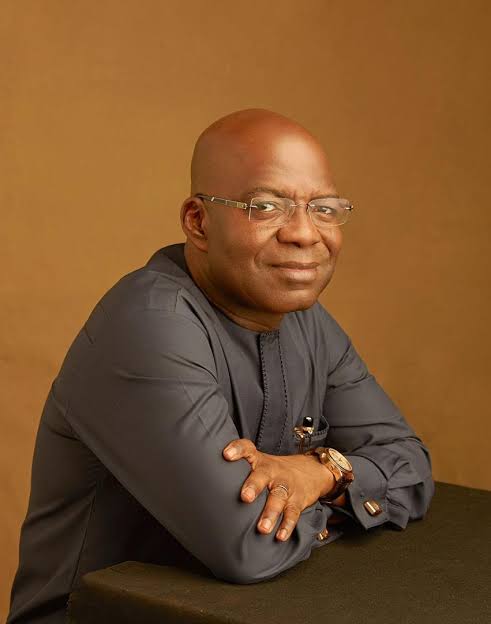
Kwara APC gober candidate, Abdulrahman Abdulrazaq has dethroned the Senate President, Bukola Saraki to become the most popular politician in Kwara State.
This revelation was contained in a survey conducted by Kwara Must Change (KMC), the leading pro-Democracy group in Kwara State.

Kwara Must Change (KMC) in a statement signed by its State Coordinator, Comrade Yusuf Olatunji, made public over the weekend announced that the Governorship candidate of All Progressive Congress (APC), Alhaji Abdulrahman Abdulrazaq is now the most popular politician in Kwara State, dethroning the Senate President, Bukola Saraki who used to enjoy such status.

This development, the group said is an indication of is to be expected in the 2019 general election in the state.

Comrade Yusuf Olatunji noted that, the result of its survey conducted in the 16 local government areas of Kwara shows that, Abdulrahman Abdulrazaq is the most popular politician in Kwara State not just among the elites, but also among the masses of the state, ranging from market women, taxi drivers, okada riders as well as artisans.

Popularity, according to the Kwara Must Change is not based on reports on the pages of newspapers, but on the street and among the common people, which explains why KMC went on the street to sample the opinion of those that really matters.

‘’Kwara Must Change conducted this research among taxi drivers, okada and keke napep riders, market women, artisans and students of tertiary institutions and the result of the survey shows that Abdulrahman has a staggering 61% popularity rate, compared to his closest rival, Bukola Saraki, who has only 27%’’.

According to the group, other politicians who enjoyed considerable popularity include Chairman of Sobi F.M, Alhaji Lukman Mustapha, former Federal Character boss, Prof Abdulraheem Oba, PDP governorship candidate, Razak Atunwa, former APC governorship aspirant, Alhaji Shuaibu Yaman, AMB. Yahaya Seriki, APC senatorial aspirant, Comrade Musbau Esinrogunjo, Kwara State governor, Abdulfatah Ahmed among others.

Kwara Must Change explained that, out of the 500 taxi drivers interviewed, more than 50% spoke highly positive of Abdulrahman Abdulrazaq. A taxi driver was quoted as saying, ‘’there is no day the name Abdulrahman Abdulrazaq is not mentioned and discussed inside his taxi by passengers and also at their park’’

Another taxi driver maintained that for him, he believes very strongly that Abdulrahman will easily emerge victorious in 2019 governorship election as his presence is felt in every home and in the heart of majority of the people.

Furthermore, Kwara Must Change also stated that, out of the 1000 okada and keke napep riders interviewed, more than 70% spoke highly favorable of Abdulrahman Abdulrazaq.

Similarly in the markets, over 55% of the respondents believe Abdulrahman will become governor in 2019. The market women, while giving the assurances, most of the market women will also accompany their assurance with an arabic prayer ‘’insha Allah’’, which literally means ‘’by the grace of God’’.

While more than 65% of artisans gave Abdulrahman positive rating, only about 35% of students of tertiary institutions in the state are also positive.
END

Continue Reading
Click to comment

Leave a Reply

Your email address will not be published. Required fields are marked *

Politics

Ekiti Guber 2026: Oluyede Declares Ballot Revolution the Only Path to True Good Governance

Published

on

There is a phrase being deployed with increasing urgency in the build-up to the Ekiti State governorship election, and it is carrying more weight than political sloganeering typically warrants. “Ballot revolution.” It is the language of Oluyede and in the mouth of a man who has clearly thought carefully about what ails governance in Ekiti and what, precisely, it would take to fix it, the phrase is not hyperbole. It is a diagnosis and a prescription delivered in the same breath, aimed squarely at a citizenry that Oluyede appears to believe is ready to be spoken to seriously rather than managed quietly.

Oluyede’s central argument is as straightforward as it is demanding that the quality of governance a people receive is inseparable from the quality of choices they make at the ballot box. It is a position that sounds obvious until you sit with the full implications of what it requires, not just the act of voting, but voting with intention, with information, with resistance to the inducements and intimidations that have historically shaped electoral outcomes in Ekiti and across Nigeria more broadly. A ballot revolution, in this framing, is not about violence or rupture. It is about consciousness, a collective awakening to the idea that the power to determine who governs, and therefore how life is lived in Ekiti, resides not in Abuja or in the offices of political godfathers but in the hands of ordinary Ekiti people standing in a queue on election day.

The timing of this message matters. Ekiti State has a political history that is simultaneously rich with civic energy and scarred by the kind of electoral manipulation that has repeatedly produced a gap between what voters intended and what governance ultimately delivered. The state has punched above its weight in producing educated, articulate, and politically engaged citizens, and yet the translation of that civic energy into consistently accountable governance has remained an unfinished project. Oluyede’s invocation of a ballot revolution speaks directly to that frustration, naming it without euphemism and challenging the electorate to respond to it differently this time.

Good governance, as Oluyede frames it, is not a gift that falls from the sky or filters down from the goodwill of powerful men. It is extracted, demanded, insisted upon, voted into existence by people who refuse to accept the alternative. In Ekiti, where the 2026 governorship race is shaping up as one of the more consequential electoral contests in the South-West, that extraction will require exactly the kind of collective civic discipline that the ballot revolution concept demands. Candidates will make promises. Party structures will deploy resources. And voters will, as they always do, face the moment of truth in the polling booth where everything that has been said publicly must be weighed against everything that has been felt personally.

What Oluyede is betting on, and what his ballot revolution message implicitly trusts, is that Ekiti voters are capable of making that moment count. It is a bet on the electorate’s intelligence, dignity, and appetite for change that many in Nigerian politics are reluctant to make. Whether the people of Ekiti vindicate that bet when it matters most will be the real story of this election, and it is a story that no political strategist, no party machine, and no amount of campaign spending can fully script in advance.

Continue Reading

Politics

Sowore Demands ₦500,000 Minimum Wage For Nigerian Workers, Calls Current Rate an Insult to Human Dignity

Published

on


Omoyele Sowore has never been a man who measures his demands against what the political establishment considers convenient, and his latest declaration is entirely consistent with that reputation. The activist, journalist, and African Action Congress leader has called for a ₦500,000 minimum wage for Nigerian workers, a figure that sits dramatically above the current national minimum wage and that has, predictably, ignited a fierce debate about labour rights, economic realism, and the yawning gap between what Nigerian workers are paid and what it actually costs to survive in the country today. For Sowore, the number is not a negotiating position. It is a statement of principle about the value of human labour in a nation that has for too long treated its working class as an afterthought.

The context in which this demand lands is not incidental. It is everything. Nigeria is navigating one of the most bruising economic periods in its recent history, defined by fuel subsidy removal, a dramatically weakened naira, inflation that has compressed the purchasing power of ordinary workers to levels that were unimaginable just a few years ago, and a cost of living that has outpaced wages so comprehensively that millions of employed Nigerians are, by any honest assessment, living in poverty. The ₦70,000 minimum wage that was signed into law in 2024, celebrated at the time as a hard-won concession from the federal government, has already been overtaken by the economic realities it was meant to address, a cruel irony that labour unions, civil society, and workers themselves have not been slow to point out.

Sowore’s ₦500,000 figure will draw the familiar chorus of criticism from economists, government officials, and private sector representatives who will argue that such a wage floor is fiscally unsustainable, would trigger inflation, and is disconnected from the productive capacity of an economy still struggling to find its footing. These are arguments that deserve engagement, not dismissal. But Sowore and those who share his position would counter that the conversation about what is sustainable cannot be divorced from the conversation about who bears the cost of what is currently being sustained, and right now, the answer to that question is overwhelmingly the Nigerian worker, whose labour props up an economy whose gains flow disproportionately to those at the top of an already deeply unequal structure.

What Sowore is doing, whether one agrees with the specific figure or not, is forcing a recalibration of the baseline from which the minimum wage debate begins. When the starting point of the conversation is ₦70,000, the ceiling of ambition tends to stay embarrassingly low. By planting a flag at ₦500,000, he is insisting that the discussion take seriously what a living wage, not a survival wage, not a poverty-management wage, but a wage that allows a human being to live with dignity actually looks like in 2025 Nigeria. That reframing is itself a contribution to a conversation that the country urgently needs to have with greater honesty and greater urgency than it has managed so far.

For Nigerian workers grinding through twelve-hour days in markets, offices, factories, and farms for wages that do not cover their transport costs, let alone their rent, feeding, and school fees, Sowore’s demand will feel less like political theatre and more like the first time someone has said out loud what they have been feeling for years. Whether the political will exists to translate that feeling into policy is another matter entirely, but the demand is on the table, and it is not going away quietly.

Continue Reading

Politics

Breaking: AAC Names Presidential Candidate Ahead of 2027 Election in Fresh Challenge to Nigeria’s Political Establishment

Published

on

The 2027 electoral season just got more interesting. The African Action Congress, the opposition political platform founded by activist, journalist, and perennial thorn in the side of Nigeria’s political establishment Omoyele Sowore, has emerged from its internal processes with a presidential candidate ahead of the next general elections — a development that confirms the party’s determination to show up at the polls not as a footnote but as a credible voice for the millions of Nigerians who feel fundamentally unrepresented by the country’s dominant political structures. The emergence of a flagbearer at this stage, well ahead of the 2027 cycle, is a calculated move that puts the AAC in the conversation earlier than most and gives the party a face around which to begin building its campaign architecture.

The AAC has always been a party that occupies a unique and deliberately uncomfortable space in Nigerian politics. Built on the foundations of Sowore’s “Revolution Now” movement and shaped by a philosophy of radical accountability, youth-centred governance, and uncompromising opposition to what it describes as the recycling of failed leadership across the PDP and APC divide, the party speaks to a constituency that is real, growing, and increasingly impatient. These are Nigerians — many of them young, educated, and digitally connected — who turned out in force during the 2020 EndSARS protests, who have watched the cost of living spiral beyond reason under the current administration’s economic reforms, and who have grown deeply sceptical of the idea that meaningful change can come from within the existing political elite.

Whether the AAC’s newly emerged presidential candidate carries the profile, the reach, and the resources to translate that constituency into electoral outcomes is the central question that will define the next phase of the party’s journey. Nigerian presidential campaigns are enormously expensive, logistically gruelling, and require a national spread of structure and support that smaller parties have historically struggled to assemble in time. The AAC is aware of these challenges and has, in various public communications, argued that its path to relevance is built less on traditional political machinery and more on mass mobilisation, media presence, and the kind of principled consistency that it believes will ultimately outlast the transactional politics of its larger rivals.

Sowore’s own shadow looms large over this development, as it inevitably must. As the most visible face of the AAC and one of Nigeria’s most recognisable opposition voices — a man who has been arrested, detained, and persistently harassed by state actors without being silenced — his continued involvement in the party’s direction gives the candidacy announcement a weight that purely institutional announcements rarely carry. His brand is inseparable from the party’s identity, and that brand means something to a section of the Nigerian electorate that is hungry for authenticity in a political landscape where it is in desperately short supply.

The road to 2027 is long, the obstacles are many, and the odds, as they always are for third-party candidacies in Nigeria’s first-past-the-post system, are formidable. But the AAC has never appeared to be a party that measures success purely in electoral outcomes — it measures it in the pressure it applies, the conversations it forces, and the standard it holds up against which the ruling class must inevitably be judged. A presidential candidate is now in place. The campaign, in every sense of the word, has begun.

Continue Reading

Trending