Politics
“40% of Nigeria Has No Internet” — Speaker Abbas Defends Electoral Act’s Hybrid Transmission System, Slams Opposition for Playing Dumb


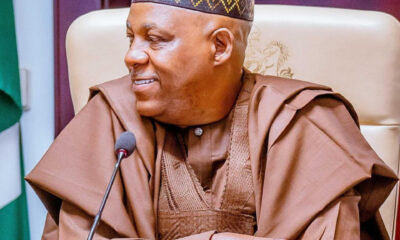
Speaker Tajudeen Abbas has had enough of the noise — and he is explaining himself clearly, one more time, for those who are still pretending not to understand.
The Speaker of the House of Representatives addressed the controversy surrounding the Electoral Act 2026’s hybrid result transmission system during a courtesy visit by the Ambassador of Spain to Nigeria, Ambassador Felix Costales, at his office in Abuja over the weekend. The meeting was intended to explore deepening parliamentary diplomacy between both countries, but it was Abbas’ frank explanation of the National Assembly’s decision on result transmission that quickly became the most talked-about part of the exchange.
Abbas said the National Assembly included both electronic and manual transmissions of results in the amended Electoral Act to avoid disenfranchising the Nigerian electorate and prevent voter apathy during the 2027 elections. His reasoning was grounded in numbers. He explained that Nigeria’s limited internet penetration and unstable power supply made it impractical to rely solely on real-time electronic transmission across the country. Based on the NCC report, Nigeria is still underserved by almost 40 per cent, meaning 40 per cent of territories across the country are not covered by the internet. Forcing a fully electronic transmission system on an electorate spread across a country where nearly half the territory lacks internet coverage, he argued, would not strengthen elections — it would shrink them.
He was equally candid about Nigeria’s electricity problem. “How do you power the entire country on the day of election to have phones that are working and internet that is working, backed by adequate electricity? All those are challenges that, for now, will not be able to provide us the opportunity to do transmission real time online,” he said, asking the Spanish Ambassador — whose own country faces no such infrastructure challenges — to judge the decision within the context of Nigerian realities.
The solution the National Assembly arrived at is what Abbas described as a hybrid framework. “Where it is feasible to use the electronic, use the electronic transmission; where it is not possible, use the manual, because there is no way one form, particularly the electronic, can be used entirely in all parts of the country for the elections,” he said. It was a position that Spain’s envoy, somewhat pointedly, did not push back on — confirming that Spain itself still transmits election results manually in certain circumstances, a detail that Abbas clearly appreciated having on the record.
Then came the moment the opposition will not enjoy reading. Abbas turned his attention directly to the critics who have spent weeks denouncing the hybrid system as an attempt to rig the 2027 elections, and he was blunt about what he thinks of their objections. “The opposition, even though they know the truth — they are Nigerians, they live in Nigeria, they travel all over Nigeria — they know that the level of internet penetration in Nigeria is inadequate. There is no way you will be able to have transparent elections using an inadequate system,” he said, accusing opposition figures of performing outrage over a decision that every Nigerian who has ever tried to load a webpage outside of Lagos or Abuja understands to be grounded in basic common sense.
He also gave Nigerians something to look forward to. Based on his personal engagement with INEC Chairman Prof. Joash Amupitan, Abbas assured that the 2027 general elections would be more transparent, accommodating, and inclusive than any previous election in the country’s history — a commitment he described not as political spin, but as a reflection of the plans he heard directly from the commission’s leadership.
He described democracy as a gradual process that improves over time, noting that no nation — including the United States — arrived at its current democratic standards overnight, and that Nigeria’s journey, while imperfect, is moving in the right direction.
In a separate but related development, the African Democratic Congress — which had been among the loudest critics of the Electoral Act’s digital membership registration requirement — quietly began a free online membership registration drive over the weekend, bowing to the law’s provision mandating all parties to submit digitalised membership registers to INEC. The party maintained its objections to what it described as provisions giving the APC an unfair head start, but its decision to comply rather than collapse speaks to the reality that the 2027 electoral train has left the station — whether the opposition was ready or not.
For Abbas, the message is simple — the National Assembly made a practical decision for a country with real constraints, and the people arguing otherwise know exactly why they are arguing it.

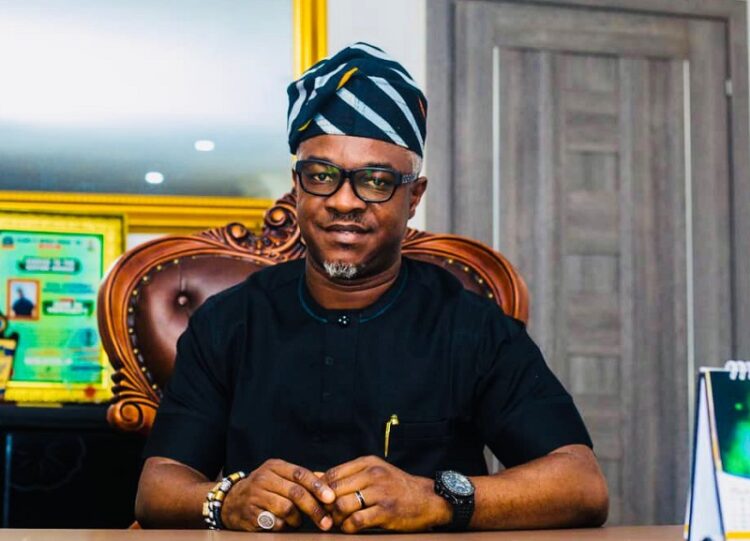
Oyo State Governor, Seyi Makinde, has appointed Bashorun Akinwale Akinwole, popularly known as Wolekanle, as his new Chief of Staff following the resignation of his predecessor, Segun Ogunwuyi.
The appointment was announced on Monday, October 12, 2026, in a statement signed by the Secretary to the State Government, Professor Musibau Babatunde. The new appointment takes immediate effect.
Akinwole previously served as chairman of the Oyo State Local Government Service Commission. He is a grassroots politician from Ogbomoso, the same hometown as Ogunwuyi.
Alongside the appointment, Makinde named Mrs Aderonke Adedayo as Director-General of the state’s Due Process Office. Adedayo, who currently serves as Special Adviser on General Intervention and Donor Agencies, will retain her existing position while taking on the additional responsibility.
The appointments followed Ogunwuyi’s resignation earlier on Monday. In his resignation letter, dated October 12, he said his decision took immediate effect and expressed gratitude to Makinde for the opportunity to serve the government and people of Oyo State.
Ogunwuyi, a former member of the Oyo State House of Assembly and the House of Representatives, did not publicly state any political disagreement as the reason for his resignation.
The departure comes amid the recent exits of several political appointees from the Makinde administration. However, no official reason linking Ogunwuyi’s resignation to the wider political developments has been established.
Governor Makinde congratulated the new appointees and urged them to discharge their responsibilities with loyalty, commitment and dedication to public service.
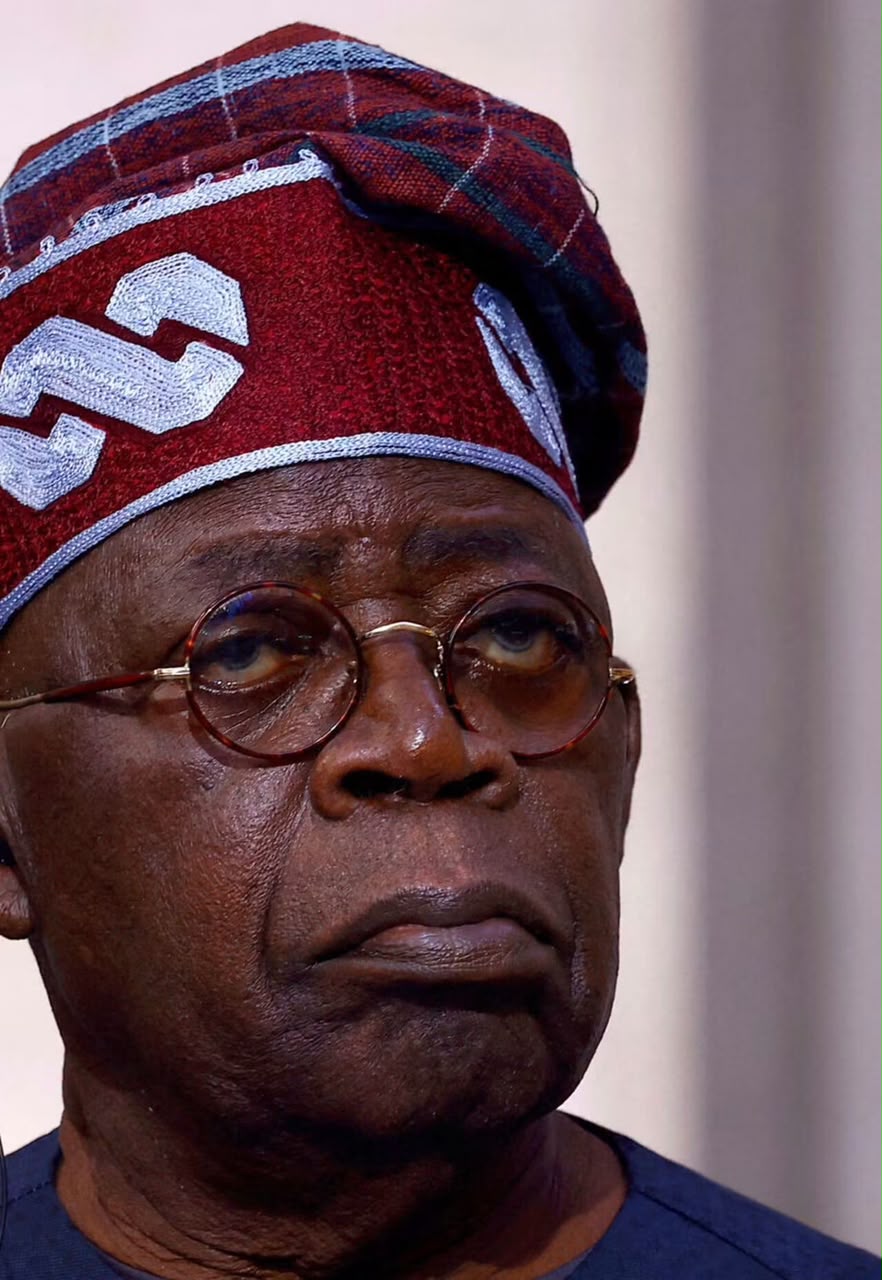
President Bola Ahmed Tinubu is scheduled to inaugurate the All Progressives Congress (APC) Presidential Campaign Council on Wednesday, October 14, 2026, ahead of the 2027 general elections.
The inauguration will take place at the Banquet Hall of the Presidential Villa in Abuja, bringing together party leaders and other stakeholders to coordinate the ruling party’s campaign activities.
Former Zamfara State Governor, Senator Abdulaziz Yari, who serves as Director-General of the campaign council, disclosed the development on Friday after meeting with Tinubu at the Presidential Villa. He said the President had approved the proposed campaign timetable.
Imo State Governor Hope Uzodimma is the council’s secretary, while former Minister of Humanitarian Affairs, Dr Betta Edu, is expected to play a key role in its women mobilisation directorate.
The campaign council is expected to coordinate the APC’s preparations for Tinubu’s re-election bid, including grassroots mobilisation, communication and engagement with voters across the country.
According to Yari, the campaign is scheduled to begin with a rally in Kaduna on October 24, before moving to Port Harcourt, Rivers State, and Maiduguri, Borno State.
Ahead of the formal inauguration, First Lady Oluremi Tinubu and members of the women mobilisation team have reportedly begun grassroots engagement across the country.
The team has set a target of mobilising 40 million women’s votes for the Tinubu-Shettima ticket through outreach across communities and polling-unit structures in the 36 states and the Federal Capital Territory.
The October 14 event is expected to formally activate the campaign council’s operations as the APC begins preparations for the 2027 presidential election.
Nigeria’s National Register of Voters has surpassed 103 million ahead of the 2027 general elections, the Independent National Electoral Commission (INEC) has announced.
INEC Chairman, Professor Joash Amupitan, disclosed the latest figure on Monday in Abuja while delivering a keynote address at a strategic workshop for media executives organised by the Nigerian Guild of Editors in collaboration with the commission.
According to Amupitan, the increase followed the completion of the three-phase Continuous Voter Registration (CVR) exercise and the final clean-up of the register using the Automated Biometric Identification System (ABIS).
The three phases of the CVR exercise produced a combined 10,772,421 new registrations.
The first phase, conducted between August 25 and December 10, 2025, recorded 2,611,266 registrations. The second phase, held from January 5 to April 17, 2026, produced 4,121,835 registrations, while the third phase, conducted from May 11 to July 26, recorded 3,867,997 registrations.
Amupitan said the newly registered voters were subjected to biometric verification, while the commission also completed the public display of the Preliminary Register to allow citizens to raise claims and objections.
Following the final ABIS clean-up, INEC said the national voter register had moved beyond the 103 million mark.
PVC Collection to Begin October 9
The INEC chairman also announced that nationwide collection of Permanent Voter Cards (PVCs) will commence on Friday, October 9, 2026.
Newly produced PVCs are expected to be distributed to Local Government Area collection centres for eligible voters to collect.
The commission has also introduced printable PVC technology, which it says is designed to reduce the waiting period for voters who need new or replacement cards.
INEC said the technology was introduced in accordance with Section 18(1) of the Electoral Act 2026.
The commission has completed eight of the 14 major statutory activities on its timetable for the 2027 elections, according to Amupitan.
The latest voter register figure marks a significant increase from the 93,469,008 registered voters recorded for the 2023 general elections.

 News3 years ago
Hardship: We Plan To Establish A National Commodity Board To Crash Food Prices – VP Shettima
- News8 years ago
Blog Reader; Samson Osagiede Celebrates Fiancè Benedicta Daniels’s Birthday With Sweet Words
- Home10 years ago
News Channel claims Donald Trump is an orphan from Pakistan,share alleged childhood photo
 Sport8 years ago
Modric, Marta Wins 2018 FIFA Best Player Of The Year Awards ⚽️
- Home10 years ago
Another $175m Found in Patience Jonathan’s wife’s firm’s Bank Account
- Home10 years ago
Oil Spillage: House of Reps Member Shares Photos of the Water her Constituents Drink .
- Home10 years ago
Zara Buhari & Ahmed Indimi’s Wedding Access Card
- News8 years ago
The Best Video You’ve Seen Today?