Politics
PDP’s Ememobong Insists Party Will Field Candidates at Every Level in 2027, Calls Reconciliation Non-Negotiable

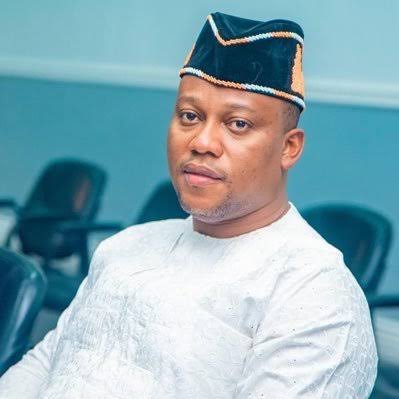
PDP factional National Publicity Secretary Ini Ememobong has drawn a firm red line in the ongoing reconciliation talks between the party’s warring factions, insisting that the Turaki-led camp will not accept any peace deal that compromises the PDP’s identity as a functioning opposition party capable of contesting every election from the presidential race down to the local government level in 2027.
Ememobong made the declaration during an appearance on Arise News’ Morning Show, expressing cautious optimism that dialogue could still produce a resolution despite sharp disagreements between the two camps. He was direct about the central flashpoint: while the Wike-aligned faction has reportedly signalled a preference for supporting President Tinubu’s re-election rather than fielding a presidential candidate of the PDP’s own, the Turaki camp has drawn an unmovable line — the party must produce a viable presidential candidate for 2027.
On the terms for reconciliation, Ememobong was precise. He acknowledged that both sides would come to the negotiating table with their own zones of possible agreement and irreducible minimums, but stressed that presenting candidates at every level of the 2027 elections was non-negotiable for his faction. He went further, insisting that any peace arrangement must preserve the PDP as a genuine opposition party — not repackage it as an extension of the APC.
Ememobong also addressed the postponement of internal party meetings by opposing figures, describing it as a gesture of good faith rather than a sign of retreat. He explained that de-escalating certain actions was necessary to provide a solid foundation for the Board of Trustees reconciliation committee to carry out its work, adding that it was counterproductive to weaponise some issues while simultaneously trying to reduce political temperatures elsewhere.
The broader party structure has aligned with this position. The PDP Board of Trustees, in a communiqué from its emergency meeting, described itself as conscious of the aspirations of members seeking to contest positions in 2027 and resolved to take immediate steps to reconcile all stakeholders and restore the party to good political health — specifically to enable it to field candidates in the 2027 general elections.
The urgency is real and the clock is unforgiving. Under the INEC timetable released following the enactment of the Electoral Act 2026, party primaries are scheduled between May 22 and June 20, 2026, with campaign activities expected to commence in September — placing political parties under enormous pressure to resolve internal disputes and complete digital membership registration almost immediately. For the PDP, the message from Ememobong is unambiguous: reconciliation is welcome, but not at the price of political surrender.

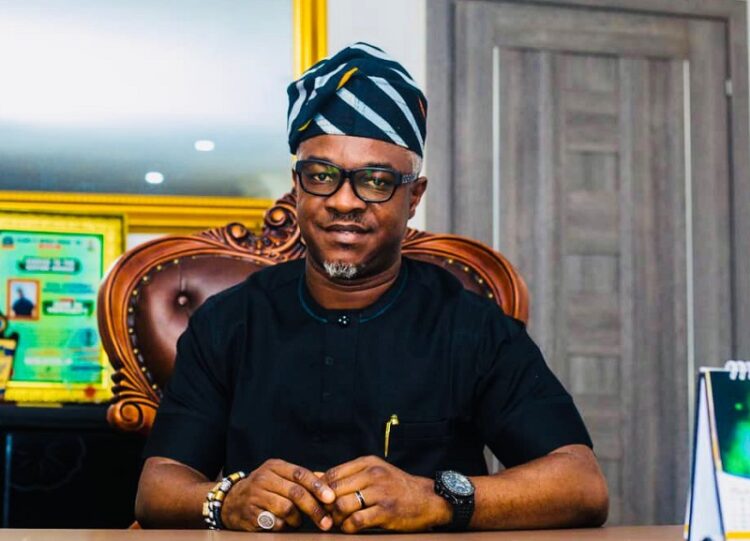
Oyo State Governor, Seyi Makinde, has appointed Bashorun Akinwale Akinwole, popularly known as Wolekanle, as his new Chief of Staff following the resignation of his predecessor, Segun Ogunwuyi.
The appointment was announced on Monday, October 12, 2026, in a statement signed by the Secretary to the State Government, Professor Musibau Babatunde. The new appointment takes immediate effect.
Akinwole previously served as chairman of the Oyo State Local Government Service Commission. He is a grassroots politician from Ogbomoso, the same hometown as Ogunwuyi.
Alongside the appointment, Makinde named Mrs Aderonke Adedayo as Director-General of the state’s Due Process Office. Adedayo, who currently serves as Special Adviser on General Intervention and Donor Agencies, will retain her existing position while taking on the additional responsibility.
The appointments followed Ogunwuyi’s resignation earlier on Monday. In his resignation letter, dated October 12, he said his decision took immediate effect and expressed gratitude to Makinde for the opportunity to serve the government and people of Oyo State.
Ogunwuyi, a former member of the Oyo State House of Assembly and the House of Representatives, did not publicly state any political disagreement as the reason for his resignation.
The departure comes amid the recent exits of several political appointees from the Makinde administration. However, no official reason linking Ogunwuyi’s resignation to the wider political developments has been established.
Governor Makinde congratulated the new appointees and urged them to discharge their responsibilities with loyalty, commitment and dedication to public service.
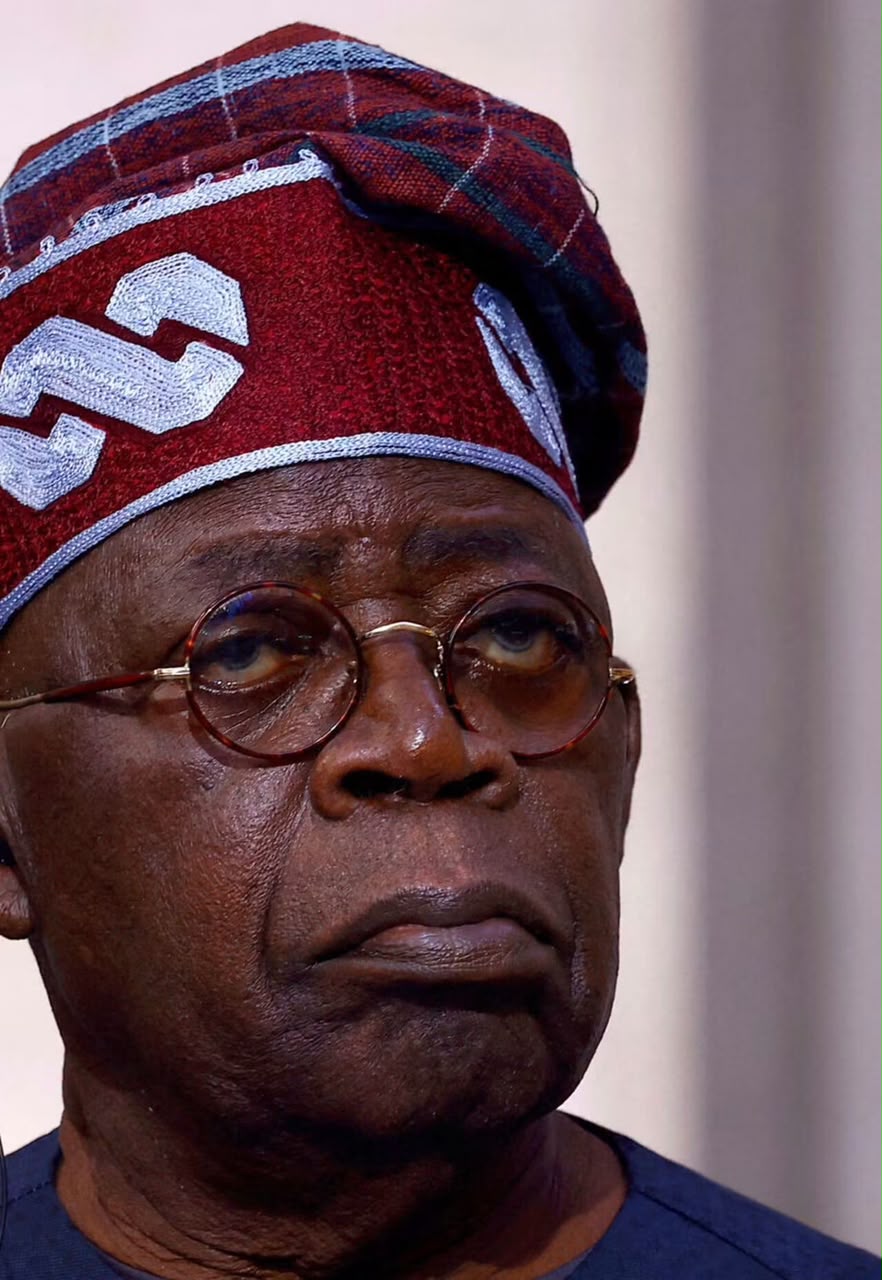
President Bola Ahmed Tinubu is scheduled to inaugurate the All Progressives Congress (APC) Presidential Campaign Council on Wednesday, October 14, 2026, ahead of the 2027 general elections.
The inauguration will take place at the Banquet Hall of the Presidential Villa in Abuja, bringing together party leaders and other stakeholders to coordinate the ruling party’s campaign activities.
Former Zamfara State Governor, Senator Abdulaziz Yari, who serves as Director-General of the campaign council, disclosed the development on Friday after meeting with Tinubu at the Presidential Villa. He said the President had approved the proposed campaign timetable.
Imo State Governor Hope Uzodimma is the council’s secretary, while former Minister of Humanitarian Affairs, Dr Betta Edu, is expected to play a key role in its women mobilisation directorate.
The campaign council is expected to coordinate the APC’s preparations for Tinubu’s re-election bid, including grassroots mobilisation, communication and engagement with voters across the country.
According to Yari, the campaign is scheduled to begin with a rally in Kaduna on October 24, before moving to Port Harcourt, Rivers State, and Maiduguri, Borno State.
Ahead of the formal inauguration, First Lady Oluremi Tinubu and members of the women mobilisation team have reportedly begun grassroots engagement across the country.
The team has set a target of mobilising 40 million women’s votes for the Tinubu-Shettima ticket through outreach across communities and polling-unit structures in the 36 states and the Federal Capital Territory.
The October 14 event is expected to formally activate the campaign council’s operations as the APC begins preparations for the 2027 presidential election.
Nigeria’s National Register of Voters has surpassed 103 million ahead of the 2027 general elections, the Independent National Electoral Commission (INEC) has announced.
INEC Chairman, Professor Joash Amupitan, disclosed the latest figure on Monday in Abuja while delivering a keynote address at a strategic workshop for media executives organised by the Nigerian Guild of Editors in collaboration with the commission.
According to Amupitan, the increase followed the completion of the three-phase Continuous Voter Registration (CVR) exercise and the final clean-up of the register using the Automated Biometric Identification System (ABIS).
The three phases of the CVR exercise produced a combined 10,772,421 new registrations.
The first phase, conducted between August 25 and December 10, 2025, recorded 2,611,266 registrations. The second phase, held from January 5 to April 17, 2026, produced 4,121,835 registrations, while the third phase, conducted from May 11 to July 26, recorded 3,867,997 registrations.
Amupitan said the newly registered voters were subjected to biometric verification, while the commission also completed the public display of the Preliminary Register to allow citizens to raise claims and objections.
Following the final ABIS clean-up, INEC said the national voter register had moved beyond the 103 million mark.
PVC Collection to Begin October 9
The INEC chairman also announced that nationwide collection of Permanent Voter Cards (PVCs) will commence on Friday, October 9, 2026.
Newly produced PVCs are expected to be distributed to Local Government Area collection centres for eligible voters to collect.
The commission has also introduced printable PVC technology, which it says is designed to reduce the waiting period for voters who need new or replacement cards.
INEC said the technology was introduced in accordance with Section 18(1) of the Electoral Act 2026.
The commission has completed eight of the 14 major statutory activities on its timetable for the 2027 elections, according to Amupitan.
The latest voter register figure marks a significant increase from the 93,469,008 registered voters recorded for the 2023 general elections.

 News3 years ago
Hardship: We Plan To Establish A National Commodity Board To Crash Food Prices – VP Shettima
- News8 years ago
Blog Reader; Samson Osagiede Celebrates Fiancè Benedicta Daniels’s Birthday With Sweet Words
- Home10 years ago
News Channel claims Donald Trump is an orphan from Pakistan,share alleged childhood photo
 Sport8 years ago
Modric, Marta Wins 2018 FIFA Best Player Of The Year Awards ⚽️
- Home10 years ago
Another $175m Found in Patience Jonathan’s wife’s firm’s Bank Account
- Home10 years ago
Oil Spillage: House of Reps Member Shares Photos of the Water her Constituents Drink .
- Home10 years ago
Zara Buhari & Ahmed Indimi’s Wedding Access Card
- News8 years ago
The Best Video You’ve Seen Today?