Politics
Abdulrazaq: Kwara APC’s Victory Shows People’s Determination to Achieve Freedom


Governorship candidate of All Progressives Congress (APC) in Kwara State, Alhaji Abdulrahman Abdulrasaq, on Sunday said Saturday’s by-election victory of the party in the Irepodun/Isin/Ekiti/Oke-Ero federal constituency of the state was an indication of the commitment and desire of the people of the state to achieve political freedom and return the governance of the state to APC in 2019.
Alhaji Abdulrasaq, in a statement issued in Ilorin on Sunday, said “there is no doubt that the APC would advance forward towards winning more seats during the next year general election in the state.”
The statement said, “This victory represents a great leap in our people’s lifelong yearning for political freedom, good governance, development, accountability and integrity.
“It is the beginning of the end for characters who have held our dear state to ransom, characters who have made Kwara and its people the butt of national jokes! The outcome, more than anything else, asserts the fact that our people have had enough of the status quo.
“They are saying enough is enough and the time to move Kwara to the next level is now.”
The APC governorship candidate said, “As we savour this well-deserved victory, we therefore urge our people to not relent as we head to the general election where, God willing, we will see to the end of a status quo that represents backwardness, corruption and disdain for socioeconomic advancement of the people and the state.”
He also noted that, “One of the secrets of our success in this by-election is the suppression and almost total eradication of criminals and armed thugs hitherto used in rigging elections in Kwara, adding that, “Kwarans will never forget the 31 lives lost in the Offa robbery; we will ensure that their lives were not lost in vain.”
Abdulrazaq commended the efforts of the security and electoral officers, saying We thank the security agencies for their efficiency and disciplined discharge of duties .
“We thank the electoral commission for conducting a free and fair election and resisting desperate attempts to subvert the rules and manipulate the poll. We urge these government agencies to keep up the good work.”
The Chief Returning Officer for the election, Prof. Abimbola Adesoji, while declaring the result of the by-election at the Irepodun Local Government Secretariat in Omu-Aran, said Hon. Raheem Olatunji Olawuyi polled 21,236 to emerge winner.
He defeated his closest rival, Saheed Damilare of the Peoples Democratic Party (PDP), who polled 18,095.
Abimbola, who is of the Obafemi Awolowo University, Ile-Ife, said Olawuyi having scored the highest number of votes in the election was declared winner.
Other contestants in the election were Femi Ona-Ara of Labour Party, Ajadi Olayemi of Peoples Party of Nigeria (PPN) as well as Olaniyan Ayorinde of Unity Party of Nigeria (UPN)


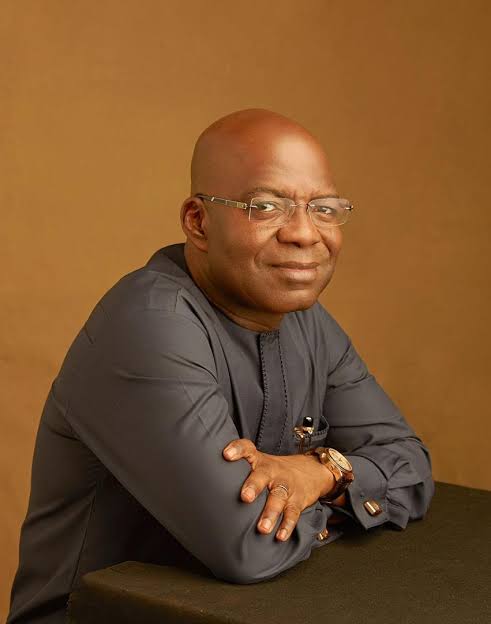
Abia State Governor Alex Otti has said he has no intention of becoming a political godfather or imposing a successor on the state after completing his second term in office.
Otti made the remarks on Thursday in Umuahia while receiving former Social Democratic Party (SDP) governorship candidate Ngozi Johnson-Chukwunenye and her supporters into the Labour Party (LP).
The governor said the process of choosing his eventual successor should focus on identifying the most suitable candidate, while the electorate would have the final say.
Otti: I Don’t Tolerate Godfathers
Otti said he would not seek to control Abia politics after leaving office, stressing that he does not support the practice of political godfatherism.
He said stakeholders would assess those interested in succeeding him, agree on the person they consider most suitable and support that candidate, but added that the people of Abia would ultimately decide through the electoral process.
The governor also said he expected whoever succeeds him to be better equipped to provide leadership for the state.
Governor Rules Out Senate Ambition
Otti also reiterated that he does not intend to seek another elective position after completing his second term as governor.
He said he was not interested in pursuing a Senate seat and planned to retire from elective politics after his tenure.
The governor said he wanted younger Nigerians to have greater opportunities to assume leadership responsibilities, describing the continuation of “sit-tight” politics as something that should be discouraged.
Otti Highlights Youth Leadership Development
According to the governor, his administration is already preparing younger people for future leadership through initiatives including the Abia Leadership Academy.the
Otti said more than 1,080 young people between the ages of 16 and 25 had recently graduated from the academy.
He said developing younger leaders was important because the next generation should be given opportunities to take responsibility for the country and the state.
Johnson-Chukwunenye Joins Labour Party
The event also marked the formal reception of Ngozi Johnson-Chukwunenye, who contested the 2023 Abia governorship election on the SDP platform, into the Labour Party.
Johnson-Chukwunenye said her decision followed her assessment of developments under Otti’s administration.
She cited the payment of salary arrears, regular payment of workers’ salaries, attention to pensioners and road rehabilitation in Aba and Umuahia among the developments that influenced her decision.
Otti Says Infrastructure Work Will Continue
The governor also defended his administration’s development efforts, saying work carried out in Aba and Umuahia would be extended to other parts of the state.
He said the administration was moving into the hinterlands and would continue its interventions across the state.
Otti also said his administration would not be distracted by criticism as it pursued its development programme.
2027 Politics Looms Over Abia
Otti is seeking re-election in the 2027 Abia governorship election, while his comments about succession focus on what he says should happen after his second tenure.
His position that he does not intend to become a political godfather comes as parties in the state begin preparations for the 2027 elections and debate succession, party structures and the future direction of Abia politics.
The Independent National Electoral Commission (INEC) has released the final list of candidates for Nigeria’s January 16, 2027 presidential and National Assembly elections, with a total of 4,878 candidates cleared to contest.
The final list contains 18 presidential candidates, while another 4,860 candidates are contesting the 109 Senate and 360 House of Representatives seats across the country.
Tinubu, Atiku and Obi Among Presidential Candidates
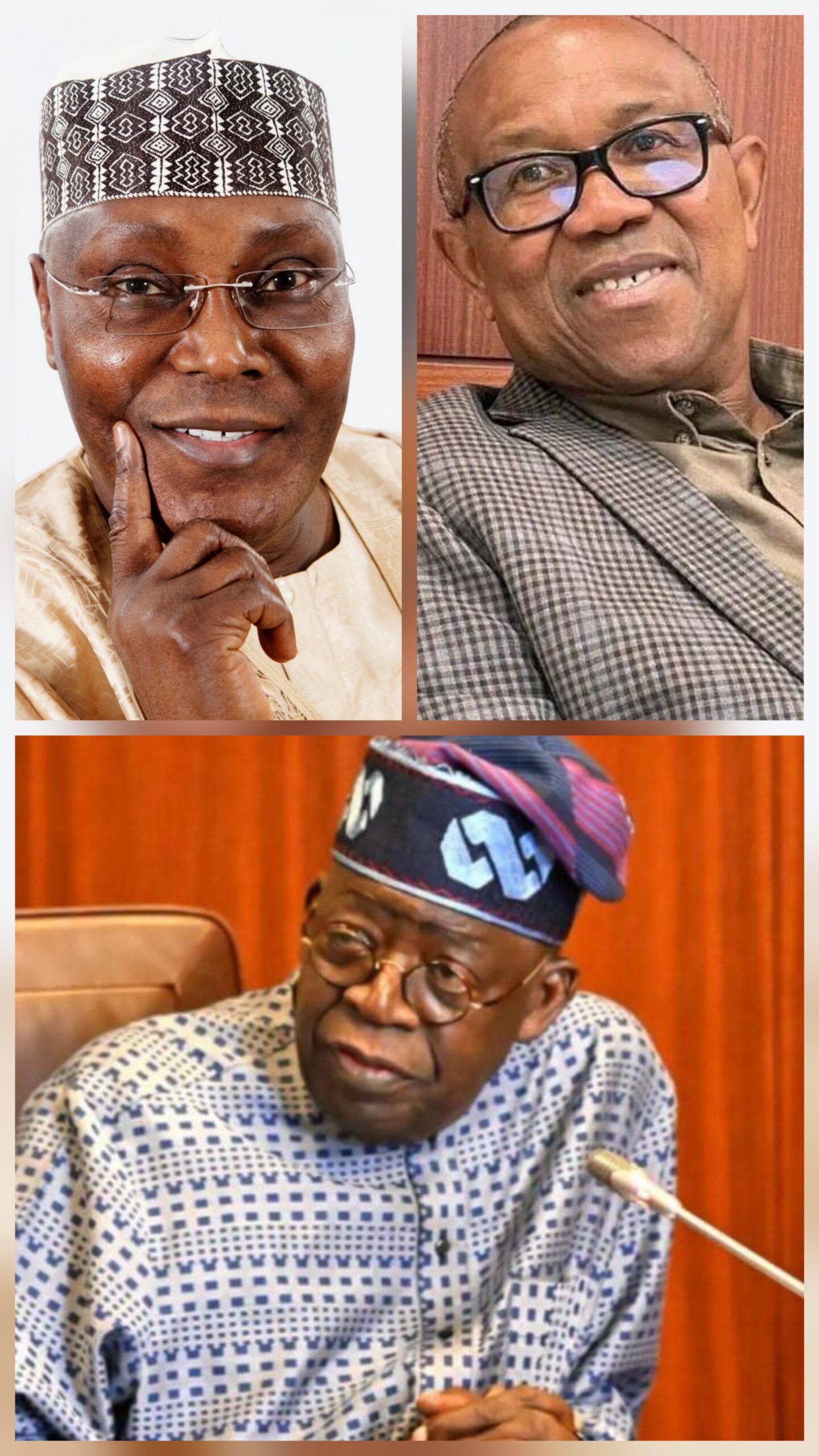
The presidential list includes incumbent President Bola Ahmed Tinubu, who is contesting on the platform of the All Progressives Congress (APC).
Also on the list are former Vice President Atiku Abubakar, representing the African Democratic Congress (ADC), and former Anambra State Governor Peter Obi, who is contesting under the Nigeria Democratic Congress (NDC).
The final list also contains two female presidential candidates: Ada Elizabeth Fredrick Okwori of the National Democratic Party (NDP) and Nkem Esther Okereke of the National Rescue Movement (NRM).
APC Fields Candidates Across All Positions
The ruling APC has the largest presence on the ballot, having submitted candidates for all the positions covered by the presidential and National Assembly elections.
The PDP is fielding 103 senatorial candidates and 302 candidates for the House of Representatives.
The ADC has 107 senatorial candidates and 220 House of Representatives candidates, while the NDC has 103 senatorial candidates and 327 House of Representatives candidates.
The Allied Peoples Movement (APM) is fielding 103 candidates for the Senate and 232 for the House of Representatives.
NNPP Presidential Candidate Missing From Final List
The final list does not contain the name of the presidential candidate of the New Nigeria Peoples Party (NNPP).
INEC’s publication also records changes involving some running mates.
The APM replaced Ibrahim Adamu Bala with Musa Lawal Daura as its running mate, while Sulaiman Nasir Mohammed replaced Abubakar Adamu Bala.
The Peoples Redemption Party (PRP) also replaced Baba Musa with Rabiu Kabiru as its running mate.
Four Parties Have Female Running Mates
The final list shows that four political parties have women as their vice-presidential candidates.
They are the Young Progressive Party (YPP), Labour Party (LP), Democratic Labour Alliance (DLA) and Action Peoples Party (APP).
The development adds a gender dimension to the presidential contest, although women remain a small minority among the overall presidential candidates.
2027 Presidential Election Holds January 16
INEC has scheduled the presidential and National Assembly elections for January 16, 2027.
The elections will determine Nigeria’s next president as well as members of the Senate and House of Representatives.
The release of the final candidate list marks another major milestone in the electoral process and gives voters a clearer picture of the politicians and political parties that will appear on the ballot.
With the final list now published, attention is expected to shift further towards campaigns, voter mobilisation and preparations for election day.
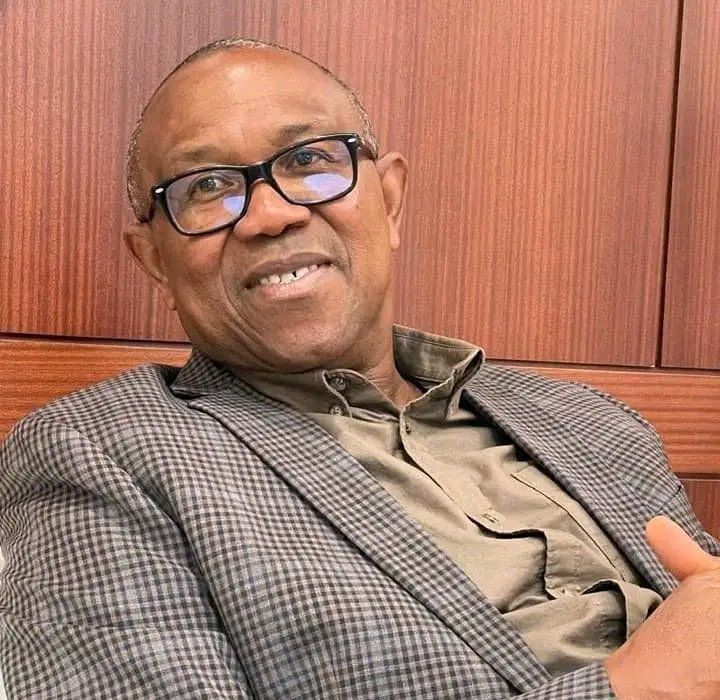
Presidential candidate of the Nigeria Democratic Congress (NDC), Peter Obi, has travelled to Germany and the United Kingdom for a series of high-level engagements as political activities intensify ahead of Nigeria’s 2027 general elections.
Obi disclosed his latest movement in a social media post on Thursday, September 10, following his return to Abuja from visits to Benue and Plateau states.
Obi Begins European Engagements
According to the former Anambra State governor, his engagements in Germany and the UK are focused on issues he considers critical to Nigeria’s future.
He listed democracy, electoral integrity, poverty, education, corruption and healthcare among the issues discussed during the engagements.
Obi said the meetings also explored practical measures that could improve the living conditions of Nigerians and protect their dignity.
The NDC candidate said he returned to Abuja on September 8 after his visits to Benue and Plateau before travelling to Europe, beginning with Germany and subsequently moving to the United Kingdom.
Education Takes Centre Stage
Obi said he was encouraged by the willingness of international partners to support Nigeria, particularly in the education sector.
He described education as the most important investment Nigeria can make in its citizens, arguing that sustainable development would remain difficult without building the knowledge, skills and capabilities of the population.
His emphasis on education comes as he continues to make human capital development a central part of his political messaging ahead of the 2027 election.
Obi Restates Economic Vision
The former Anambra governor also used the occasion to reiterate his call for a fundamental change in Nigeria’s economic direction.
He advocated a transition from consumption to production, dependence to productivity and wasteful practices to responsible resource management.
Obi said his broader objective was to build a country where children have access to quality education, democracy reflects the will of voters, healthcare is accessible and public resources are managed responsibly.
2027 Political Activities Gather Momentum
Obi’s European engagements come at a time when political activities surrounding the 2027 presidential election are intensifying.
The former Anambra governor has continued to position himself as a major opposition contender. On September 8, he described Oyo State Governor Seyi Makinde as qualified to become president while calling on opposition politicians to put their differences aside and focus on challenges including poverty, hunger and insecurity.
Obi has also recently made electoral integrity a major part of his campaign message, saying his primary concern is whether Nigerians will be able to protect their votes during the 2027 election rather than simply whether he personally wins.
Other Politicians Begin International Engagements
Obi is not the only presidential contender undertaking international engagements ahead of the election.
Politics Nigeria reported that African Action Congress presidential candidate Omoyele Sowore recently travelled to the United States and Canada as part of a North American tour involving engagements with Nigerians in the diaspora, supporters, activists and other stakeholders.
The movements come as the 2027 electoral calendar advances. According to the report, INEC’s official campaign period began on August 19, 2026, while the presidential and National Assembly elections are scheduled for January 16, 2027.

 News3 years ago
Hardship: We Plan To Establish A National Commodity Board To Crash Food Prices – VP Shettima
- News8 years ago
Blog Reader; Samson Osagiede Celebrates Fiancè Benedicta Daniels’s Birthday With Sweet Words
- Home10 years ago
News Channel claims Donald Trump is an orphan from Pakistan,share alleged childhood photo
- Home10 years ago
Another $175m Found in Patience Jonathan’s wife’s firm’s Bank Account
- Home10 years ago
Oil Spillage: House of Reps Member Shares Photos of the Water her Constituents Drink .
- Home10 years ago
Zara Buhari & Ahmed Indimi’s Wedding Access Card
 Sport8 years ago
Modric, Marta Wins 2018 FIFA Best Player Of The Year Awards ⚽️
- News8 years ago
The Best Video You’ve Seen Today?