Foreign
BREAKING: Namibia Elects First Female President

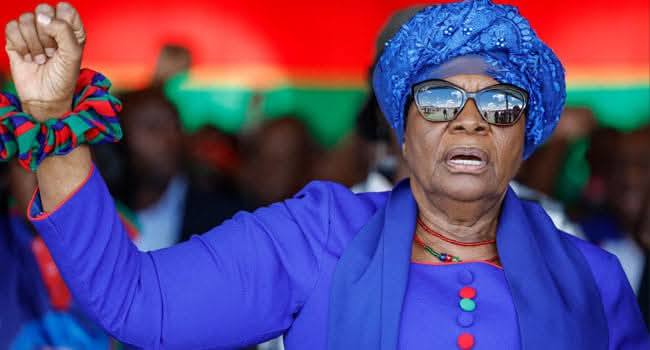
Namibia’s ruling SWAPO party was declared winner Tuesday of last week’s disputed elections, ushering in the southern African country’s first woman president after a disputed vote that the main opposition has already said it does not recognise.
Vice-President Netumbo Nandi-Ndaitwah took just over 57 percent of ballots followed by the candidate for the main opposition Independent Patriots for Change (IPC) with 25.5 percent, the election authority announced.
Nandi-Ndaitwah, 72, becomes the first woman to rule the mineral-rich southern African country that has been governed by the South West Africa People’s Organisation (SWAPO) since independence in 1990.
The November 27 election was extended twice as logistical and technical problems, including a shortage of ballot papers, led to long queues.
Some voters gave up on the first day of voting after waiting for up to 12 hours.
The IPC has already said this was a deliberate attempt to frustrate voters and it would not accept the results of the elections.
Its presidential candidate Panduleni Itula, 67, said last week there were a “multitude of irregularities”.
No matter the result, “the IPC shall not recognise the outcome of that election”, he said on Saturday, the last day of the extended vote.
Opposition Rejects Poll
Itula said the IPC would “fight… to nullify the elections through the processes that are established within our electoral process”.
An organisation of southern African human rights lawyers serving as election monitors said the delays at the ballot box were intentional and widespread.
The Electoral Commission of Namibia (ECN) admitted to failures in the organisation of the vote, including a shortage of ballot papers and the overheating of electronic tablets used to register voters.
Of the nearly 1.5 million registered voters in the sparsely populated country, nearly 77 percent had cast ballots in the presidential vote, it said Tuesday.
The election was seen as a key test for SWAPO after other liberation-era movements in the region have lost favour with young voters.
In the past six months, South Africa’s African National Congress lost its parliamentary majority and the Botswana Democratic Party was ousted after almost six decades in power.
Namibia is a major uranium and diamond exporter but analysts say not many of its nearly three million people have benefited from that wealth in terms of improved infrastructure and job opportunities.
Unemployment among 15- to 34-year-olds is estimated at 46 percent, according to the latest official figures from 2018, which is almost triple the national average.
Nandi-Ndaitwah, a SWAPO stalwart known by her initials NNN, will be among the few women leaders on the continent.
The conservative daughter of an Anglican pastor, she became vice president in February this year.


Poland expects a decision on the establishment of a new permanent United States military base in the country before the end of 2026, following Washington’s ongoing review of its military presence in Europe.
Polish Deputy Defence Minister Magdalena Sobkowiak-Czarnecka said the US review is expected to be completed in November or December, after which a decision on the proposed base could be made.
She stressed, however, that the final decision rests with US President Donald Trump.
Poland has already prepared a shortlist of possible locations for the proposed facility, although the government has not publicly disclosed the sites.
The development follows growing efforts by Warsaw to strengthen its long-term military relationship with Washington. The United States currently has about 10,000 troops in Poland, most of whom are deployed on a rotational basis.
US officials have also indicated that Washington is considering ways to strengthen its military presence in Poland. US Undersecretary of War for Policy Elbridge Colby said the United States was actively working to reinforce its presence in the country, according to the report.
US President Donald Trump had earlier said significant progress was being made towards establishing a new US Army base in Poland and suggested that its location could be announced soon.
Polish officials have previously discussed a potential deployment of up to 15,000 American troops, combining permanently stationed personnel with troops deployed on rotation.
The proposed base is part of Poland’s broader efforts to strengthen its defence capabilities and deepen cooperation with the United States amid heightened security concerns in Europe.
Meanwhile, Poland is also awaiting a separate decision on its proposal to host a European service centre for PAC-3 missiles used in Patriot air-defence systems. Polish officials say domestic servicing could significantly reduce the time required to repair the missiles.
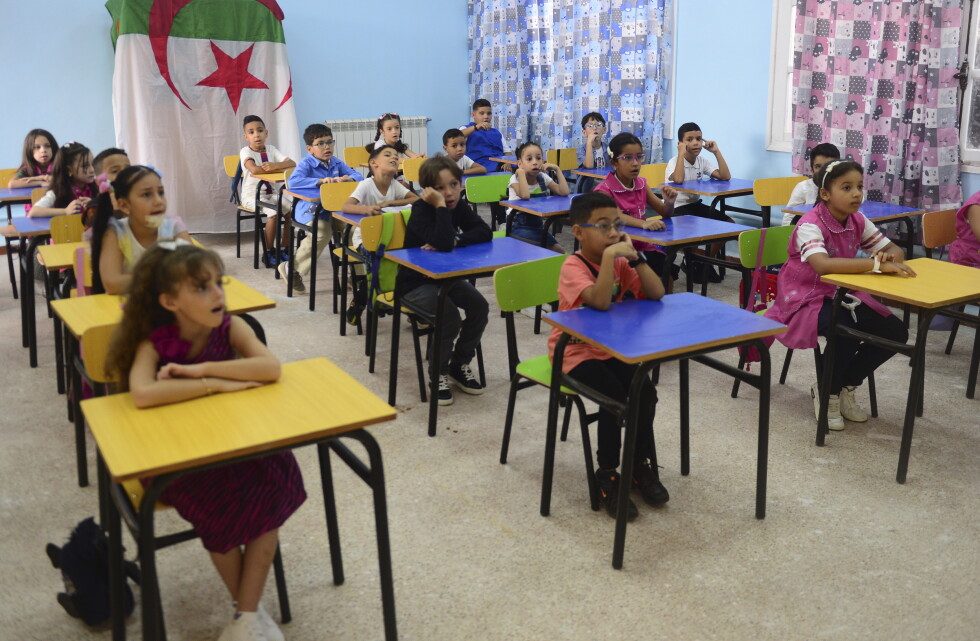
Algeria is moving further towards English in its education system, with the government confirming changes that reduce the prominence of French in primary schools from the 2026-2027 academic year.
Under the new arrangement, English will be introduced from the third year of primary school, while French will begin a year later, from the fourth year. The move effectively makes English the first foreign language pupils encounter in the primary-school system.
English to Start Earlier in Primary Schools
Algeria’s Ministry of National Education said the new arrangement would take effect from the 2026-2027 school year.
The ministry explained that English would be introduced in the third year of primary education, while French would continue as a second foreign language from the fourth year.
Officials said the policy is designed to strengthen foreign-language education and prepare pupils for future academic, technological, economic and cultural demands.
The ministry also said the decision is consistent with Algeria’s education law, which provides for pupils to study at least two foreign languages.
French Still Remains in the Curriculum
The reform does not remove French entirely from Algeria’s primary-school system.
Instead, French instruction will start one year later than English, meaning pupils will study English first before adding French from the fourth year.
The change therefore represents a shift in the order and emphasis of foreign-language teaching rather than an immediate end to French-language education in schools.
Policy Sparks Debate
The decision has generated debate in Algeria, particularly among French-speaking sections of society.
Critics have raised concerns about the possible impact of the change on the quality of education and argued that French remains deeply embedded in parts of Algeria’s education system and economy.
Supporters, meanwhile, see English as increasingly important for science, technology, international communication and the modern economy. The debate reflects Algeria’s long-running linguistic and cultural tensions surrounding Arabic, French and, increasingly, English.
English Expansion Extends Beyond Primary Education
The shift is also part of a broader move towards English in Algeria’s education sector.
The country has already been increasing the use of English in higher education, including the gradual switch from French to English in medicine and science-related university programmes.
The latest primary-school policy therefore forms part of a wider effort to expand English across Algeria’s education system.

UK PM Reaffirms Commitment to Union After 3 Nations Sign Self-Determination Declaration
British Prime Minister Andy Burnham has reaffirmed his commitment to keeping the United Kingdom together after the leaders of Scotland, Wales and Northern Ireland signed a joint declaration asserting their right to determine their constitutional futures.
Burnham’s spokesperson said on Monday that the prime minister “believes strongly in the union” and remains committed to delivering change across all four nations of the UK.
The statement came hours after the first ministers of Scotland, Wales and Northern Ireland signed a memorandum of understanding calling on the UK government to prepare for possible constitutional change.
Three Nations Demand Right to Decide Their Future
The declaration was signed by Scotland’s First Minister John Swinney, Wales’ First Minister Rhun ap Iorwerth and Northern Ireland’s First Minister Michelle O’Neill.
The three leaders said each of their nations has the right to determine its own future through democratic means and in accordance with the wishes of its people.
The agreement followed the first face-to-face meeting of the three nationalist leaders in Cardiff, the Welsh capital.
Their declaration argued that the political landscape in the three nations is changing and called for greater recognition of their right to pursue constitutional change.
Burnham Rejects Fresh Constitutional Focus
Responding to the declaration, the British prime minister’s spokesperson said the government would focus on economic security and improving living conditions rather than engaging in renewed constitutional disputes.
“The prime minister will continue to ease pressures on household finances,” the spokesperson said, while stressing the government’s focus on “greater economic security” rather than further constitutional debates or referendums.
The spokesperson also said the UK is “at its best” when its people work together around shared values and practical solutions rather than division.
Historic Political Development
The declaration represents a significant development in UK politics because, for the first time since devolution began in 1997, Scotland, Wales and Northern Ireland are led by first ministers whose parties support leaving the United Kingdom.
Scotland’s SNP has long campaigned for independence, while Plaid Cymru supports Welsh independence. Sinn Féin, which holds the first minister position in Northern Ireland, advocates Irish reunification.
The coordinated position therefore presents a fresh challenge to Westminster over the future constitutional structure of the United Kingdom.
Trump’s Ireland Comments Add to Pressure
The development also comes amid renewed debate over Northern Ireland’s constitutional future following comments by US President Donald Trump.
During his visit to Ireland, Trump said he would “love” to see a united Ireland and described the integration of Ireland and Northern Ireland as something he considered natural.
Burnham has previously said there is currently no majority public support for another referendum on Irish unification and that no such vote would take place unless public sentiment changes. His office subsequently confirmed that position remained unchanged following Trump’s comments.
UK Union Faces Renewed Constitutional Debate
While the declaration does not itself change the constitutional status of Scotland, Wales or Northern Ireland, it signals increased coordination among political leaders seeking greater autonomy or independence.
Burnham, however, has made clear that his government’s priority remains strengthening cooperation among the four nations while addressing economic pressures and household finances.
The competing positions are likely to keep the question of the UK’s constitutional future at the centre of political debate as nationalist parties in Scotland, Wales and Northern Ireland push for greater self-determination.

 News3 years ago
Hardship: We Plan To Establish A National Commodity Board To Crash Food Prices – VP Shettima
- News8 years ago
Blog Reader; Samson Osagiede Celebrates Fiancè Benedicta Daniels’s Birthday With Sweet Words
- Home10 years ago
News Channel claims Donald Trump is an orphan from Pakistan,share alleged childhood photo
- Home10 years ago
Another $175m Found in Patience Jonathan’s wife’s firm’s Bank Account
- Home10 years ago
Oil Spillage: House of Reps Member Shares Photos of the Water her Constituents Drink .
- Home10 years ago
Zara Buhari & Ahmed Indimi’s Wedding Access Card
 Sport8 years ago
Modric, Marta Wins 2018 FIFA Best Player Of The Year Awards ⚽️
- News8 years ago
The Best Video You’ve Seen Today?