Foreign
Iran-US Diplomacy: Pezeshkian Insists Tehran Has Not Changed Position

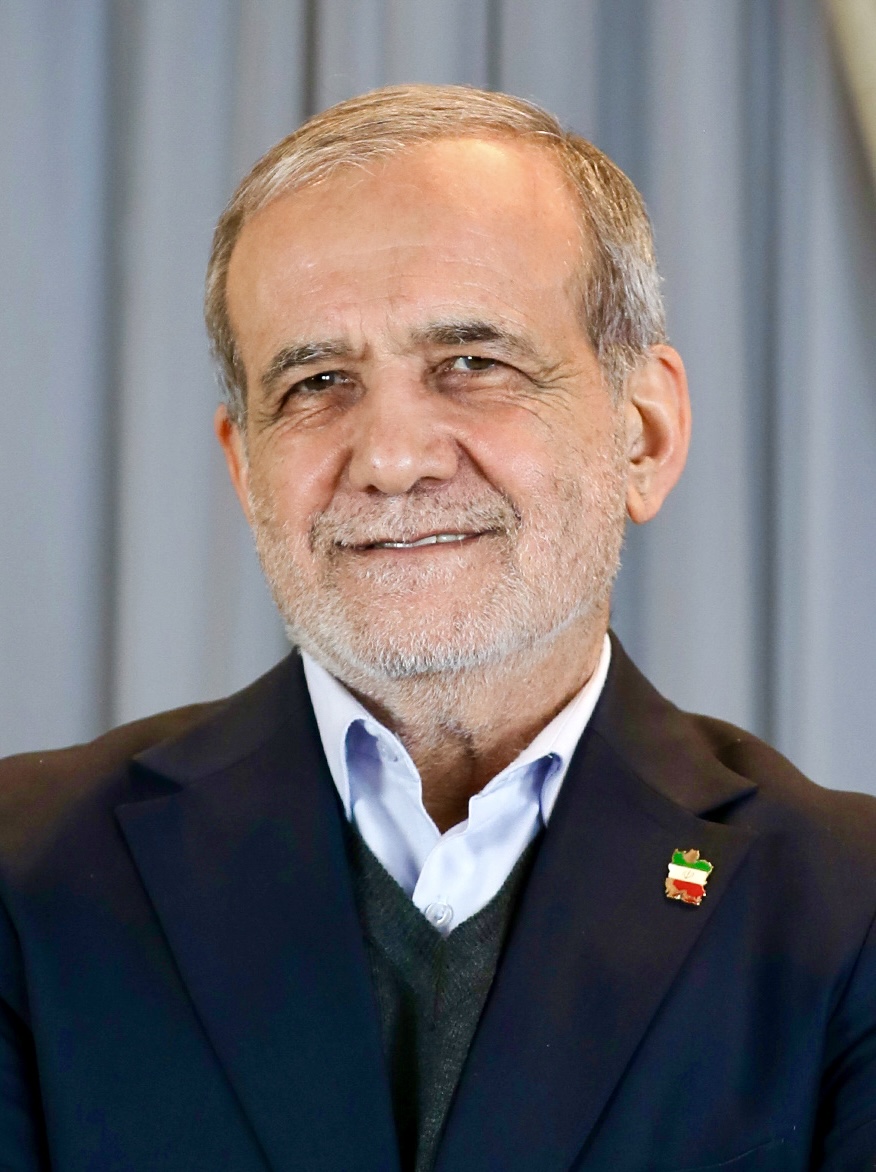
Iranian President Masoud Pezeshkian has maintained that Tehran’s fundamental position toward the United States remains unchanged despite recent diplomatic contacts between the two countries.
Speaking at a news conference on Saturday, Pezeshkian described the United States as a colonialist and criminal power, while insisting that Iran’s national principles and political identity had not been compromised by the recent engagement with Washington.
The Iranian president argued that the diplomatic process should not be interpreted as a change in Tehran’s long-standing stance toward the US. Rather, he said, the negotiations demonstrated that Washington had been compelled to engage with Iran through dialogue.
Pezeshkian also defended the memorandum recently concluded between Iran and the United States, rejecting criticism that Tehran had surrendered important interests in exchange for diplomatic progress.
According to the president, the agreement contains no provision requiring Iran to abandon its national interests or core positions. He maintained that Tehran remains firmly committed to the document despite the criticism it has attracted at home.
The president further accused Washington of failing to fully honour the understanding, particularly over arrangements concerning shipping through the Strait of Hormuz. He said the US had pursued alternative routes instead of following the procedures that Iran and Oman were expected to jointly establish.
Pezeshkian said any disagreements over the implementation of the memorandum should be handled through the mechanisms established under the agreement. He expressed hope that the diplomatic process would continue while preserving Iran’s dignity and national interests.
The Iranian leader also defended members of his negotiating team against domestic criticism, describing them as committed professionals who had worked hard to advance Iran’s interests during the discussions with the United States.
His comments come amid continued efforts to resolve disagreements between Tehran and Washington, particularly those surrounding the Strait of Hormuz, a strategically important waterway for international energy shipments. Recent negotiations have involved Iran, the United States and regional intermediaries, including Oman.
While diplomatic engagement has increased, Pezeshkian’s remarks underline the continued political differences between the two countries. Tehran appears willing to pursue negotiations while maintaining that such engagement does not amount to abandoning its broader foreign-policy principles.

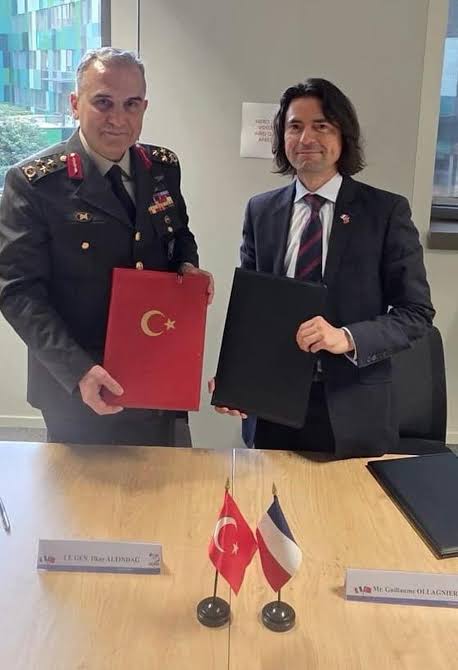
Türkiye and France have signed a Defence Cooperation Roadmap aimed at strengthening military ties and expanding strategic dialogue between the two countries.
The agreement was signed as part of ongoing efforts to deepen defence cooperation, according to Türkiye’s Ministry of National Defence.
The ministry disclosed that Lieutenant General İlkay Altındağ, Director General for Defence and Security, held discussions with senior French officials, including Minister Delegate for the Armed Forces Alice Rufo, French President’s Military Chief of Staff General Vincent Giraud, and Director General for International Relations and Strategy Guillaume Ollagnier.
The discussions focused on bilateral defence and military relations, strategic dialogue, and opportunities to expand existing areas of cooperation.
Both sides also emphasised the importance of maintaining regular and result-oriented engagements to ensure progress in their relationship.
According to the Turkish ministry, the newly signed roadmap represents an important step towards strengthening defence cooperation and translating positive messages exchanged by the leaders of both countries into practical collaboration.
The roadmap is expected to provide a framework for more consistent strategic discussions and mutually beneficial cooperation.
Türkiye and France, both members of the North Atlantic Treaty Organization (NATO), have continued to engage on defence matters, military industry cooperation and regional security issues.
Although the roadmap signals closer cooperation, the announcement did not disclose specific military procurement agreements, weapons deals or joint production commitments.
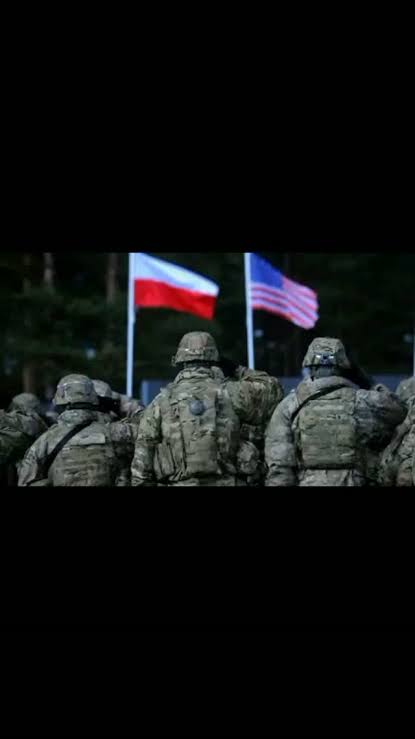
Poland expects a decision on the establishment of a new permanent United States military base in the country before the end of 2026, following Washington’s ongoing review of its military presence in Europe.
Polish Deputy Defence Minister Magdalena Sobkowiak-Czarnecka said the US review is expected to be completed in November or December, after which a decision on the proposed base could be made.
She stressed, however, that the final decision rests with US President Donald Trump.
Poland has already prepared a shortlist of possible locations for the proposed facility, although the government has not publicly disclosed the sites.
The development follows growing efforts by Warsaw to strengthen its long-term military relationship with Washington. The United States currently has about 10,000 troops in Poland, most of whom are deployed on a rotational basis.
US officials have also indicated that Washington is considering ways to strengthen its military presence in Poland. US Undersecretary of War for Policy Elbridge Colby said the United States was actively working to reinforce its presence in the country, according to the report.
US President Donald Trump had earlier said significant progress was being made towards establishing a new US Army base in Poland and suggested that its location could be announced soon.
Polish officials have previously discussed a potential deployment of up to 15,000 American troops, combining permanently stationed personnel with troops deployed on rotation.
The proposed base is part of Poland’s broader efforts to strengthen its defence capabilities and deepen cooperation with the United States amid heightened security concerns in Europe.
Meanwhile, Poland is also awaiting a separate decision on its proposal to host a European service centre for PAC-3 missiles used in Patriot air-defence systems. Polish officials say domestic servicing could significantly reduce the time required to repair the missiles.
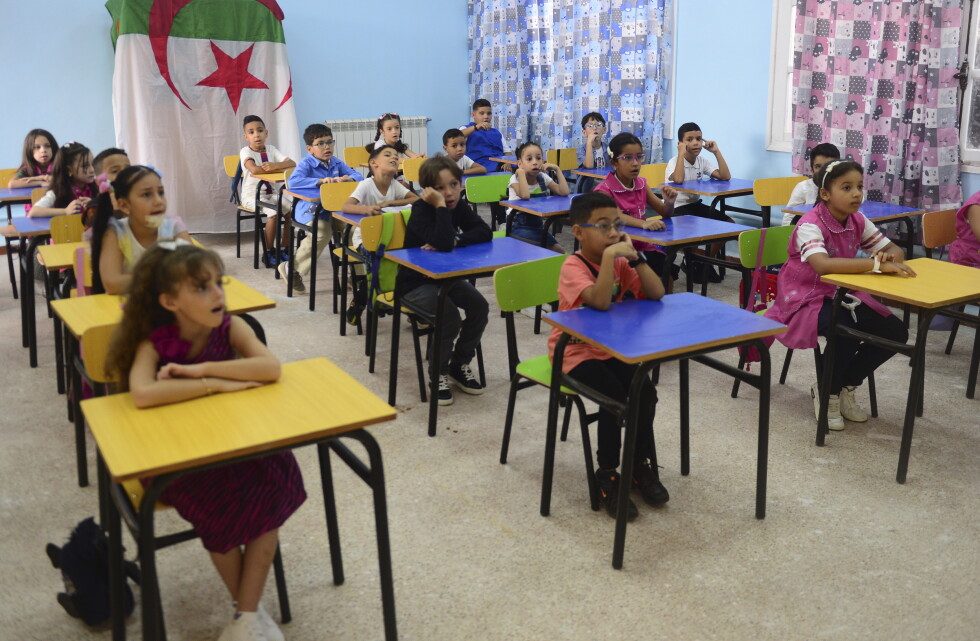
Algeria is moving further towards English in its education system, with the government confirming changes that reduce the prominence of French in primary schools from the 2026-2027 academic year.
Under the new arrangement, English will be introduced from the third year of primary school, while French will begin a year later, from the fourth year. The move effectively makes English the first foreign language pupils encounter in the primary-school system.
English to Start Earlier in Primary Schools
Algeria’s Ministry of National Education said the new arrangement would take effect from the 2026-2027 school year.
The ministry explained that English would be introduced in the third year of primary education, while French would continue as a second foreign language from the fourth year.
Officials said the policy is designed to strengthen foreign-language education and prepare pupils for future academic, technological, economic and cultural demands.
The ministry also said the decision is consistent with Algeria’s education law, which provides for pupils to study at least two foreign languages.
French Still Remains in the Curriculum
The reform does not remove French entirely from Algeria’s primary-school system.
Instead, French instruction will start one year later than English, meaning pupils will study English first before adding French from the fourth year.
The change therefore represents a shift in the order and emphasis of foreign-language teaching rather than an immediate end to French-language education in schools.
Policy Sparks Debate
The decision has generated debate in Algeria, particularly among French-speaking sections of society.
Critics have raised concerns about the possible impact of the change on the quality of education and argued that French remains deeply embedded in parts of Algeria’s education system and economy.
Supporters, meanwhile, see English as increasingly important for science, technology, international communication and the modern economy. The debate reflects Algeria’s long-running linguistic and cultural tensions surrounding Arabic, French and, increasingly, English.
English Expansion Extends Beyond Primary Education
The shift is also part of a broader move towards English in Algeria’s education sector.
The country has already been increasing the use of English in higher education, including the gradual switch from French to English in medicine and science-related university programmes.
The latest primary-school policy therefore forms part of a wider effort to expand English across Algeria’s education system.

 News3 years ago
Hardship: We Plan To Establish A National Commodity Board To Crash Food Prices – VP Shettima
- News8 years ago
Blog Reader; Samson Osagiede Celebrates Fiancè Benedicta Daniels’s Birthday With Sweet Words
- Home10 years ago
News Channel claims Donald Trump is an orphan from Pakistan,share alleged childhood photo
 Sport8 years ago
Modric, Marta Wins 2018 FIFA Best Player Of The Year Awards ⚽️
- Home10 years ago
Another $175m Found in Patience Jonathan’s wife’s firm’s Bank Account
- Home10 years ago
Oil Spillage: House of Reps Member Shares Photos of the Water her Constituents Drink .
- Home10 years ago
Zara Buhari & Ahmed Indimi’s Wedding Access Card
- News8 years ago
The Best Video You’ve Seen Today?