News
Buhari, Please Disappoint Me! By Remi Oyeyemi

For those who have followed my writings, it is not news to them that I have no iota of confidence in President Mohammadu Buhari either as a candidate or as President of Nigeria. It is not news that it has been difficult for me to believe that anything good could come out of Buhari’s Nazareth. My convictions are based on his trajectory on the political landscape of Nigeria. A trajectory of corruption, incompetence, deceit, nepotism and a genre of noxious tribalism are the contaminating clouds characterizing his contoured career.
But for someone like me, who is an avowed unbeliever in Buhari, it is nothing personal. It is all about the future of my children who despite having several opportunities for being Americans have fallen in love first of all with Ijeshaland, the Yoruba Nation, the unfortunate country called Nigeria and the continent Africa. That is the order of priority in which I have tried to educate them and they understand, or rather I did everything to make them understand, why it has to be that way.
So, because this is about the future of my children, I have prayed ceaselessly and hoped untiringly that President Buhari would disappoint me in his second coming. This is despite the fact that I did not think he would be able to rescue Nigeria. This is despite the fact that I know his second coming is a tragic mistake. This is despite the fact that I know that Buhari is a born –again corrupt military man turned politician dressed in the borrowed robe of integrity. This is despite the fact that I know that he does not believe in Nigeria.
But somehow, you just hope that you are wrong. You hope that the man could have been softened by age and experience. You just hope that at his age he would realize the futility of vanity and would seek to ingrain his name in immortality by doing the right thing and disappoint doubting Thomases like me. You hope that some of your friends and colleagues who bought into him hook, line and sinker would come around to wipe it in your face “we told you so.”
It would have been beautiful and worth it if I found myself in that position. It would not have mattered if President Buhari had disappointed me and performed very well. I would have appreciated it. I would have praised him. I would have been converted to one of his hailers. I would have been shameless about making a u-turn. All would have been worth it for the sake of the future of my children.
But rather than disappoint me, President Buhari further confirmed why I have been against him in the first instance. He cemented his reputation that made Nigerian electorate reject him three times as a congenital failure and incorrigibly untruthful. He continues to prove that he is not worthy of even the fake integrity with which he has been invested by the Asiwaju Bola Tinubu’s propaganda machine that ensured his election as Nigeria’s president.
Nigerians are wondering why Buhari has refused to act on the evidence based corruption charges against his Chief of Army Staff, General Tukur Yusuf Buratai. And with Sahara Reporters Expo on the current Interior Minister, Abdulrahman Dambazau, Nigerians are perplexed that President Buhari is still silent and not saying anything. But what do Nigerians expect from someone who told the world that General Sanni Abacha stole no money belonging to the country in spite of the overwhelming evidence to the contrary?
What makes Nigerians believe that if evidence did not matter in General Abacha’s case, why should it matter in General Buratai’s case? Why should evidence matter in General Dambazau’s case? Did Nigerians forget so soon how Buhari allowed retired Vice Admiral Murtala Nyako who stole the commonwealth of Adamawa State dry not to be detained? Are they surprised that the case has since receded into the background?
But for someone under whose nose $2,8 billion disappeared when he was Petroleum Minister in 1978, this ought not to be too strange. For someone who fails to account for the 100 Billion naira Petroleum Trust Fund that he presided over under the same Abacha, this should not be strange. For someone who led Nigerians in a lie that he did not have a house in Abuja when the contrary is true, why should this be news?
Did Buhari do anything on the Central Bank of Nigeria’s fraudulent employment practices that unfairly benefited his family members? Did he not keep silent with the hope that Nigerians would soon forget the monumental corruption? Did Buhari say anything about the murderous Fulani herdsmen rampaging across the south of the country? How could Nigerians forget so soon the trajectory of Buhari as someone inflicted by a dangerous version of tribalism? Have Nigerians forgotten what he did to Shehu Shagari and Alex Ekweme?
How can Nigeria not know by now that Buhari is a recidivous nepotist? Otherwise, how can a man who claims to fight a war against corruption fill his cabinet with corrupt elements and eat at the same table with born again crooks? Have Nigerians forgotten the Kwankwanzos, the Fasholas, the Amaechis, the Fayemis, the Dambazaus, the Dalongs of this world? How can Nigerians expect justice and fairness from Buhari with his history?
For those who still doubt if Buhari has nepotism flowing in his veins, the taste of the pudding is in the eating, according to Kay Gezzy who provided the information below for Nigerians to behold:
a) “Mamman Daura is President Buhari’s nephew. His father is the elder brother of Buhari.
b) Mamman Daura has a son. His name is Kabir Daura. He is President Buhari’s Personal Assistant.
c) Abba Kyari is the Chief of Staff to President Buhari. He also happens to be the foster child of Mamman Daura.
d) Hadi Sirika is the Federal Minister of Aviation. He is the son of Buhari’s elder sister.
e) Hadi Sirika has an elder sister – a niece of President Buhari. Her name is Amina Zakari. She was INEC acting Chairman last year.
f) Aisha Abubakar – Minister for Trade, Industry and Investment. Her mother is Buhari’s sister.”
In a country of 170 million people, this is what President Buhari is doing without let or hindrance. He has no qualms doing this because he could not see anything wrong. He could not just disappoint me.
Now, let us look at the Security appointments under the Buhari led APC government. According to the PUNCH newspaper the following are self evident:
Army – North
NSA – North
EFCC – North
Defence – North
Airforce – North
Police – North
SCDC – North
DSS – North
NIS – North
NIP – North
FRSC – North
Fire Service – North
NEMA – North
Customs – North
Defence Staff – North
NIA – South
Navy – South and
If by any chance, you consider the Ports Administration as important to Security of the country – North.
There is a lot of corruption going on under President Buhari. Buhari is the number one obstacle to the war on corruption. Buhari would never allow the war on corruption to succeed. The reason is that he is himself, eminently corrupt and dishonest. He has no integrity. This is why he has no qualms distancing himself from the promises he made during the electioneering campaign.
Buhari is not a man of honour. He has no sense of fairness. This has been evident from his trajectory. It was why I never supported him. It was why I was hoping that he would disappoint me. But as usual, he failed again. He could not even try to disappoint me.
Please, Buhari, if only for the sake of the future of my children, disappoint me and perform. Please.
“In the long history of the world, only a few generations have been granted the role of defending freedom in its hour of maximum danger. I do not shrink from this responsibility – I welcome it.”
– John F. Kennedy, in his Inaugural Address January 20, 1961
Please, follow me on Twitter@OyeyemiRemi
Sahara Reporters


The North-East Development Commission (NEDC) has distributed 1,330 electric vehicles across Nigeria’s North-East region as part of efforts to reduce transportation costs, create employment opportunities and promote environmentally friendly mobility.
The vehicles comprise 1,000 electric tricycles, 300 electric taxis and 30 electric buses, which are expected to improve transportation services across the region’s six states: Adamawa, Bauchi, Borno, Gombe, Taraba and Yobe.
The NEDC Adamawa State Coordinator, Khalifa Lawan, disclosed this during a stakeholders’ engagement and sensitisation workshop on electric mobility and seamless commuting held in Yola.
Initiative Targets Affordable Transportation
Lawan explained that the initiative was designed to make transportation more affordable while creating business opportunities, particularly for young people seeking sustainable sources of income.
According to him, the commission’s intervention forms part of its broader mandate to accelerate development in the North-East through investments in infrastructure, education, skills acquisition and other essential sectors.
He said Adamawa State was expected to benefit from the deployment of electric tricycles, taxis and buses, which could help improve mobility and support economic activities within communities.
The programme is also expected to generate employment opportunities across the electric mobility sector, including vehicle operations, repairs, maintenance and charging services.
Charging Stations Needed for Success
Lawan stressed that establishing adequate charging infrastructure would be critical to the success of the project.
He disclosed that the commission planned to provide at least two or three electric vehicle charging stations in each of the six states, with the possibility of expanding the facilities as demand increases.
The Adamawa State Commissioner for Transport, Rumpe Anthony, also emphasised the need for sufficient charging points, raising concerns about the state’s unreliable electricity supply.
She said proper planning and infrastructure would be necessary to ensure that the vehicles operate efficiently and deliver the expected benefits to commuters and operators.
Electric Vehicles Offer Environmental Benefits
The Chief Executive Officer of Attahir Enterprise Nigeria Limited, Umar Bunu Abacha, described the initiative as an effort to develop a more efficient and sustainable transportation system.
He said stakeholder engagement was important to ensure that beneficiaries and transport operators understood how the programme would work and the responsibilities involved in maintaining the vehicles.
Workshop facilitator Emmanuel Mwada Wapah highlighted the potential environmental benefits of electric vehicles, including reduced exhaust emissions and noise pollution.
He added that the vehicles could travel up to 300 kilometres on a full charge, while charging could take approximately one hour under specified conditions.
The NEDC urged beneficiaries to maintain the vehicles properly to ensure their durability and long-term usefulness.
The initiative comes amid broader efforts by the Federal Government and state governments to promote alternative-energy transportation as a means of easing the burden of rising transport costs.
Its success will depend partly on the availability of reliable charging infrastructure, effective vehicle maintenance and the extent to which operational savings translate into lower fares for commuters.
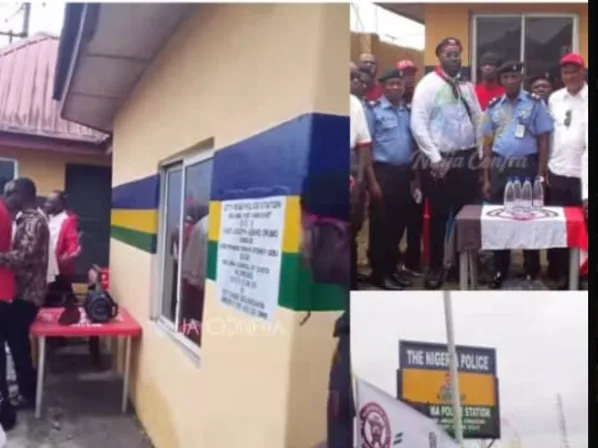
The Rivers State Police Command has removed the Divisional Police Officer (DPO) in charge of Abuloma Division and the officer overseeing the Abuloma Police Outpost following allegations that suspected cultists renovated the facility.
The command also ordered a full investigation to establish the circumstances surrounding the renovation, identify those who financed the project and determine whether any police personnel violated professional standards.
The development followed the circulation of a video on social media showing suspected cultists visiting the renovated outpost in Abuloma, Port Harcourt, on Thursday, October 15, 2026, to celebrate the completion of the project.
In a statement issued on Friday, the police said Commissioner of Police Olugbenga Adepoju had directed that both officers be queried and relieved of their duties pending the outcome of the investigation.
The statement was signed by the command’s spokesperson, ASP Agabe Kaborlo.
Police Investigate Funding and Approval of Renovation
According to the command, investigators will establish the identities and backgrounds of the individuals or groups that financed or facilitated the renovation.
The investigation will also determine which police officers authorised the project, whether the required procedures were followed and whether any personnel compromised the integrity of the Nigeria Police Force.
The police condemned any action or association capable of undermining the force’s discipline, professionalism and public confidence.
It warned that police facilities must not become platforms through which suspected criminal groups seek public recognition, influence or legitimacy.
Police Clarify Position on Community Donations
The command acknowledged that members of the public are permitted to support improvements to police facilities under Section 26(1)(d) of the Nigeria Police Act 2020, which provides for gifts and contributions to the Police General Fund.
However, it stressed that such contributions must follow established procedures and must not compromise police independence, security or professional standards.
The police added that accepting donations does not exempt anyone from investigation or prosecution where evidence of wrongdoing exists.
It also promised appropriate disciplinary and legal action against anyone found culpable after the investigation.
Viral Video Sparks Questions
The controversy emerged after videos circulated online showing a group of men at the renovated police outpost alongside some police officers.
The footage reportedly showed the individuals participating in what appeared to be a ceremony marking the completion of the renovation.
Some social media reports identified the group as members of a suspected cult organisation. However, the allegations surrounding their identity, involvement in the project and relationship with the police have yet to be conclusively established.
The police said the ongoing investigation would determine the facts of the incident and whether any laws or professional regulations were breached.
The command urged residents to remain calm and provide credible information to support efforts to tackle cultism and organised crime across Rivers State.
The Lagos Waste Management Authority (LAWMA) has announced plans to install surveillance cameras at strategic locations across Lagos State as part of efforts to curb indiscriminate waste disposal and strengthen environmental law enforcement.
The Managing Director and Chief Executive Officer of LAWMA, Dr Muyiwa Gbadegesin, disclosed the initiative during an interview on Lagos Talks 91.3 FM on Monday, October 12, 2026.
According to him, the planned deployment will complement an existing partnership with the Lagos State Command Centre to monitor environmental violations and identify individuals involved in illegal dumping.
Gbadegesin explained that the cameras would strengthen surveillance, discourage improper waste disposal and support the identification of offenders for appropriate sanctions under the law.
LAWMA to Strengthen Waste Collection
The LAWMA chief stressed that improving waste collection infrastructure alone would not guarantee a cleaner environment, noting that residents must also adopt responsible waste disposal habits.
He said the authority was combining technology, enforcement and public awareness campaigns to address persistent environmental sanitation challenges across the state.
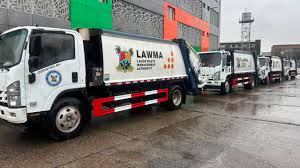
Gbadegesin also disclosed that the arrival of 150 new waste trucks would improve waste collection and evacuation services in Lagos.
He added that LAWMA had introduced house-to-house waste collection interventions to address accumulated refuse following the disengagement of underperforming Private Sector Participants responsible for waste collection in some areas.
Residents Warned Against Illegal Dumping
The authority urged residents to patronise approved waste collection operators, package their refuse properly and report cases of indiscriminate dumping.
Gbadegesin emphasised that government investments in waste management equipment and infrastructure must be supported by public cooperation to achieve lasting improvements in environmental sanitation.
The authority is also pursuing improvements to waste transfer stations, material recovery facilities and recycling infrastructure as part of broader efforts to improve waste handling across Lagos.
LAWMA has further highlighted the potential of converting organic waste into useful energy, including electricity, through proposed waste-to-energy initiatives.
The planned surveillance camera deployment is expected to strengthen the authority’s monitoring and enforcement capacity as Lagos intensifies efforts to maintain cleaner communities and discourage environmental violations.

 News3 years ago
Hardship: We Plan To Establish A National Commodity Board To Crash Food Prices – VP Shettima
- News9 years ago
Blog Reader; Samson Osagiede Celebrates Fiancè Benedicta Daniels’s Birthday With Sweet Words
- Home10 years ago
News Channel claims Donald Trump is an orphan from Pakistan,share alleged childhood photo
 Sport8 years ago
Modric, Marta Wins 2018 FIFA Best Player Of The Year Awards ⚽️
- Home10 years ago
Another $175m Found in Patience Jonathan’s wife’s firm’s Bank Account
- Home10 years ago
Oil Spillage: House of Reps Member Shares Photos of the Water her Constituents Drink .
- Home10 years ago
Zara Buhari & Ahmed Indimi’s Wedding Access Card
- News8 years ago
The Best Video You’ve Seen Today?