News
Historical Analysis (Steve Bankole Rhodes

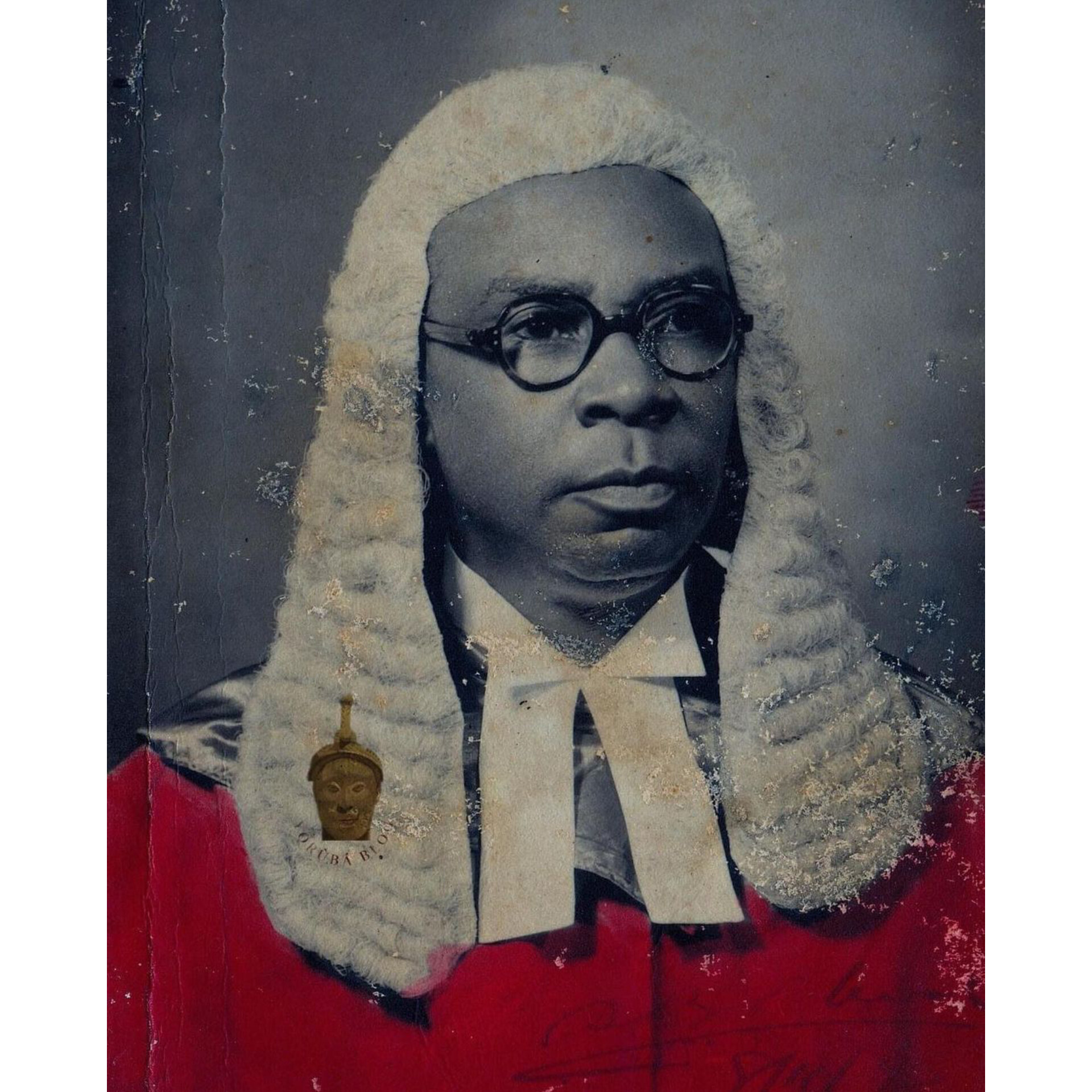
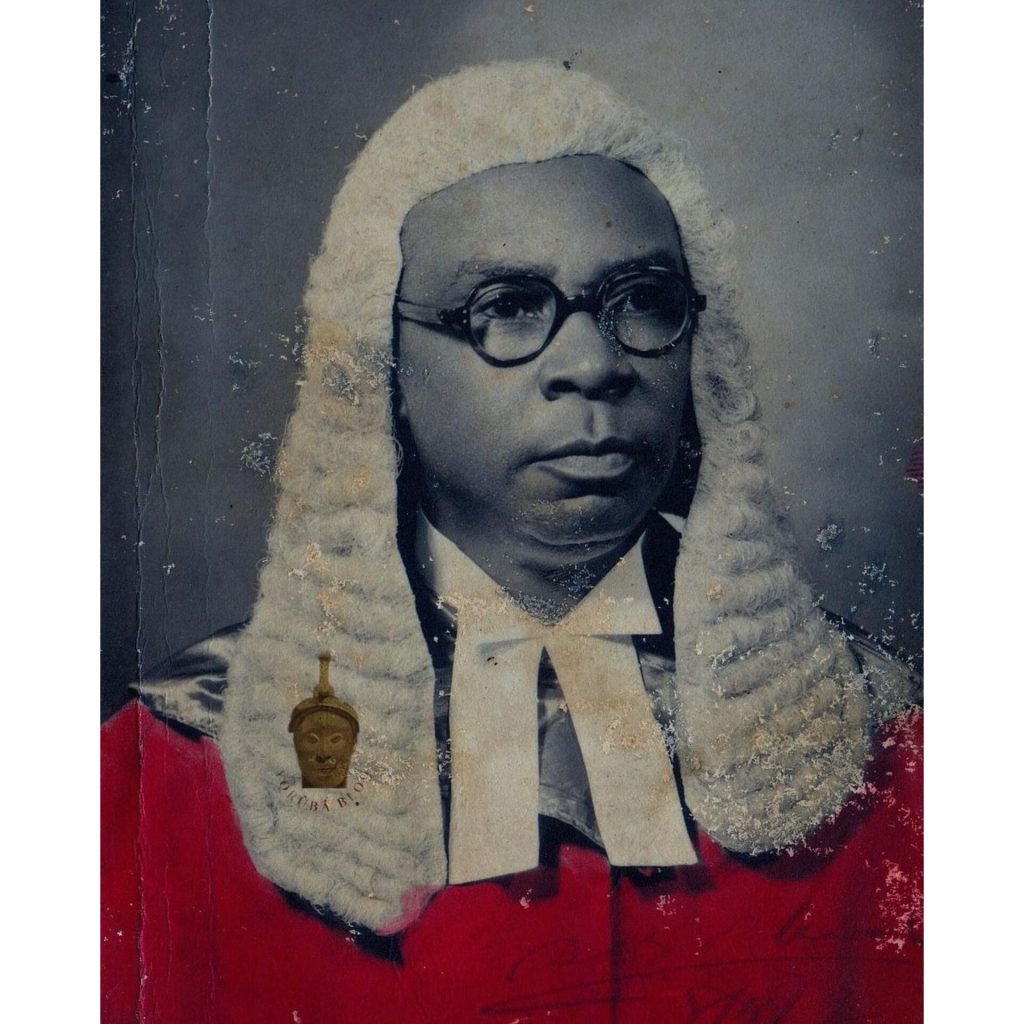
When Steven Bankole Rhodes (1890-1951) was appointed a member of the Executive Council of the then Colonial Nigeria on September 23, 1942. He was the only African to have had the opportunity to participate directly in policy formulation at the central executive level, before that time colonial administrators exempted Africans from participating in policy formulation.
Earlier In January of the same year, he was nominated as an Unofficial Member of the Legislative council of Nigeria. In this capacity he pushed for the nationalisation of all Nigerian industries, he also advocated for the autonomy of native courts.
In 1943, King George VI of England conferred on him the honour of the commander of the said Most Excellent Order – CBE for his dedication to public services in Nigeria. Justice S.B Rhodes became a Puisne Judge of the Supreme Court, King George VI also gave the directives for his appointment on October 9, 1945, thereby becoming the first Nigerian lawyer to be elevated to the Supreme court bench straight from the Bar.
He subsequently became the second indigenous judge appointed to the Nigerian Judiciary, After and before Justice Jibowu and Justice Ademola Adetokunbo respectively.
He also held the position of Chancellor of the Diocese on the Niger, Anglican Communion. At that time the diocese covered Eastern Nigeria, the Mid-West, Kwara and the Middle Belt. He was succeeded by Louis Mbanefo.
His son, Steve Rhodes, a successful musician and broadcaster was Fela Kuti’s manager in the 1960s.
He was Uncle to Justice R.W.A Rhodes-Vivour, Grand Uncle to Supreme Court Justice Bode Rhodes-Viviour and Great Grand Uncle to Labour Party Gubernatorial Candidate for Lagos State. Gbadebo Rhodes-Vivour.




Lagos Police Arrest 32 Suspects, Recover 43 Vehicles and 10 Firearms
The Lagos State Police Command has arrested 32 suspects in connection with alleged armed robbery, cultism and other criminal activities across the state.
The command also recovered 43 vehicles, 10 firearms and other items during various operations conducted by its operatives, The Nation reports.
According to the police, the arrests and recoveries were recorded as part of intensified efforts to tackle criminal activities and improve security across Lagos.
The command said the suspects are being investigated over their alleged involvement in different offences, while the recovered vehicles and firearms have been secured as exhibits.
The police also disclosed that a 20-year-old suspect was arrested in connection with the alleged killing of a police sergeant.
The command said investigations were ongoing into the various cases, with efforts being made to establish the roles of the suspects and identify other individuals who may be connected to the alleged crimes.
The latest arrests come amid broader police operations across the country. In a separate nationwide update covering September 12 to 18, the Nigeria Police Force said 177 high-profile criminal suspects were arrested and 52 stolen vehicles recovered during operations across different states.
The National Examinations Council (NECO) has released the results of the 2026 Senior School Certificate Examination (SSCE) Internal, with 58.67 per cent of candidates obtaining at least five credits, including English Language and Mathematics.
NECO Registrar and Chief Executive, Professor Dantani Wushishi, announced the results on Thursday at the council’s headquarters in Minna, Niger State.
A total of 1,378,048 candidates registered for the examination, comprising 682,352 males and 695,696 females. Of the registered candidates, 1,371,992 eventually sat for the examination.
According to NECO, 804,948 candidates, representing 58.67 per cent, obtained five credits and above, including English Language and Mathematics. Another 1,162,118 candidates, representing 84.70 per cent, obtained at least five credits irrespective of their results in the two subjects.
The 2026 examination was conducted between June 15 and July 23 across Nigeria and six foreign countries: Benin Republic, Equatorial Guinea, Niger Republic, Côte d’Ivoire, Togo and Saudi Arabia. The nationwide marking exercise took place from August 17 to September 4.
NECO also reported a significant reduction in examination malpractice. The council said the number of candidates involved in malpractice fell from 3,878 in 2025 to 1,406 in 2026, representing a 64.74 per cent decline.
The registrar attributed the reduction to strengthened examination monitoring, improved processes and collaboration with security agencies and other stakeholders.
The council also disclosed that candidates with special needs participated in the examination, as part of its efforts to make the examination process more inclusive.
NECO said candidates can now access their results through its official result-checking platform using their examination registration details.
The release of the results comes 63 days after the conclusion of the 2026 SSCE examination.

Nigeria’s foreign exchange supply increased by 20.5 per cent to $8.94 billion in 2025, up from $7.43 billion recorded in 2024, according to data from the Central Bank of Nigeria (CBN).
The figures were contained in the apex bank’s 2025 Statistical Bulletin and represent an increase of about $1.51 billion in annual foreign exchange supply.
Monthly figures showed that supply remained relatively low at the beginning of 2025 before rising significantly in March and April.
FX supply stood at $590.64 million in January and $607.63 million in February. It then climbed to $1.04 billion in March before reaching its highest monthly level of $1.65 billion in April.
However, supply declined in the following months, falling to $838.93 million in May and $676.31 million in June. It recovered slightly to $759.02 million in July before dropping to $677.84 million in August and $399.80 million in September.
October recorded the lowest monthly figure for the year at $150.10 million. Supply later recovered to $638.38 million in November and $910.73 million in December.
The CBN also reported that total foreign exchange inflows into Nigeria rose from $96.53 billion in 2024 to $109.86 billion in 2025, representing a 13.81 per cent increase.
However, foreign exchange outflows also increased during the period, rising by 27.83 per cent from $38.37 billion to $49.05 billion.
As a result, Nigeria recorded a net foreign exchange inflow of $60.81 billion in 2025, compared with $58.16 billion in 2024.
The CBN data, however, do not provide a detailed breakdown of the sources of the $8.94 billion supplied during the year.
The increase in FX supply comes amid continued efforts to improve liquidity and stability in Nigeria’s foreign exchange market, although the market remained volatile in 2026.

 News3 years ago
Hardship: We Plan To Establish A National Commodity Board To Crash Food Prices – VP Shettima
- News8 years ago
Blog Reader; Samson Osagiede Celebrates Fiancè Benedicta Daniels’s Birthday With Sweet Words
- Home10 years ago
News Channel claims Donald Trump is an orphan from Pakistan,share alleged childhood photo
- Home10 years ago
Another $175m Found in Patience Jonathan’s wife’s firm’s Bank Account
- Home10 years ago
Oil Spillage: House of Reps Member Shares Photos of the Water her Constituents Drink .
- Home10 years ago
Zara Buhari & Ahmed Indimi’s Wedding Access Card
 Sport8 years ago
Modric, Marta Wins 2018 FIFA Best Player Of The Year Awards ⚽️
- News8 years ago
The Best Video You’ve Seen Today?