News
Only 53 Aspirants Cleared as Kwara APC Screens 158 Ahead of 2027 Assembly Election


No fewer than 105 aspirants seeking the All Progressives Congress (APC) ticket for the 2027 Kwara State House of Assembly election have been screened out by the party.
The outcome of the screening exercise, pasted at the APC secretariat in Ilorin on Thursday and sighted by The PUNCH, revealed that several serving lawmakers seeking second and third terms were among those declared “uncleared” by the party’s screening committee.
The affected aspirants were listed in a document titled, “All Progressives Congress (APC) for the Nomination of Candidates for the 2027 General Election.”
Findings showed that out of the 158 aspirants who purchased nomination forms to contest for seats in the State House of Assembly under the APC, only 53 were cleared to continue in the race.
Among lawmakers from Kwara Central Senatorial District seeking re-election, all were reportedly cleared except the member representing Alanamu/Ajikobi Constituency, Hon. Ayishat Tundun Alanamu.
The situation, however, was different in parts of Kwara South, where several incumbent lawmakers failed to secure clearance from the screening panel.
The two lawmakers from Ifelodun Local Government Area — Hon. Ganiyu Folabi Salahu, representing Omupo Constituency, and Hon. Owolabi Olatunde Rasaq, representing Share/Oke-Ode Constituency — were screened out despite seeking another term in office.
Also affected were Hon. Bamigboye Joseph, Hon. Omotosho Olakunle Rasaq, and Hon. Yusuf Abdulwaheed Gbenga, representing Oke-Ero, Isin, and Essa/Shawo/Igboidun constituencies respectively, as they were equally declared uncleared by the committee.
However, lawmakers from Oyun Local Government Area, including the Deputy Speaker of the House, Hon. Ojo Olayiwola Oyebode, were cleared by the panel.
In Kwara North Senatorial District, the two serving lawmakers from Moro Local Government Area who sought re-election successfully scaled through the screening process.
The lawmaker representing Edu Constituency, Hon. Issa Gideon, who is currently under suspension by the House over alleged misconduct and actions said to have brought the legislature into disrepute, was also not cleared to contest for a second term.
Only the Speaker of the Kwara State House of Assembly, Rt. Hon. Yakubu Danladi-Salihu, and the member representing Ekiti Constituency, Hon. Ganiyu Gabriel, did not obtain nomination forms for re-election into the Assembly.
Danladi-Salihu is regarded as one of the leading contenders for the APC governorship ticket after reportedly undergoing screening by the party in Abuja last week ahead of the primaries.
Gabriel, on the other hand, is said to have obtained a nomination form to contest for the Ekiti/Isin/Irepodun/Oke-Ero Federal Constituency seat in the House of Representatives.
Speaking before the commencement of the screening exercise, the chairman of the committee, Prof. Success Musa, said the high number of aspirants reflected the growing popularity and acceptance of the APC in Kwara State.
“I learnt we have 158 aspirants for the House of Assembly alone. That is democracy. That is what APC represents. It is the leadership shown by the chairman and our governor,” he said.
The development has reportedly triggered anxiety among some incumbent lawmakers and their supporters across the state, particularly those seeking second and third-term tickets under the ruling party.
The Kwara State House of Assembly currently comprises 24 members representing constituencies across the state’s 16 local government areas.



A Kano State High Court has sentenced Aminu Sulaiman, popularly known as Bamfasi, to 14 years’ imprisonment for conspiracy and kidnapping.
Justice Maryam Sabo delivered the judgment at the court sitting on Miller Road after finding Sulaiman guilty of conspiring with another person to abduct a boy, Muhammad Abdulaziz. The prosecution had charged him alongside Abdurrashid Ishak, who died in custody, with criminal conspiracy, kidnapping and culpable homicide.
The prosecution, led by Barrister S. M. Ibrahim, called two witnesses during the trial. The court sentenced Sulaiman to six years for conspiracy and four years for kidnapping, and ordered that he serve a total of 14 years in prison. He was also directed to perform two years of community service within the correctional facility.
However, the court discharged and acquitted Sulaiman of the culpable homicide charge, ruling that the prosecution had not presented sufficient evidence to prove it.
The case arose from the kidnapping of Abdulaziz at Kwana Hudu, where a ransom of N150,000 was demanded. The boy’s body was later found in a village in Minjibir Local Government Area.
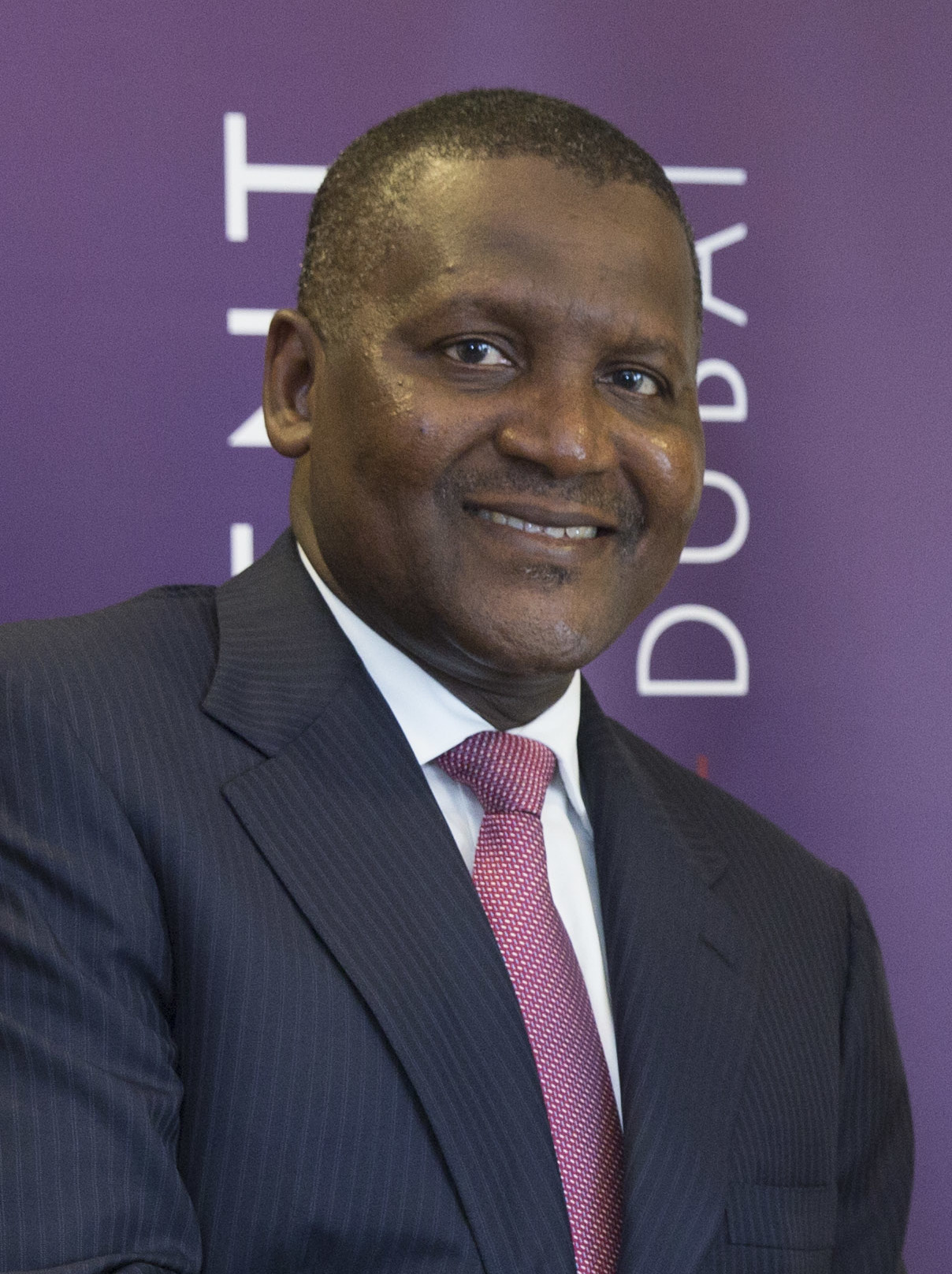
Aliko Dangote, president of Dangote Group, has been named recipient of the 2026 Obafemi Awolowo Prize for Leadership in recognition of his contributions to entrepreneurship, industrialisation and economic development in Nigeria and across Africa.
The Obafemi Awolowo Foundation announced Dangote’s selection in a statement issued on Monday. The selection committee was chaired by former Commonwealth Secretary-General, Chief Emeka Anyaoku, and assessed nominees against criteria including integrity, vision, courage, accountability and contributions to societal development.
The Foundation said Dangote was recognised for decades of investment in manufacturing, cement production, fertiliser, petroleum refining and other strategic sectors. It noted that his businesses had helped expand Africa’s productive capacity and strengthen prospects for economic self-reliance.
The committee also considered his philanthropic work through the Aliko Dangote Foundation, particularly in education, healthcare and social welfare. The Foundation’s education initiative, launched in 2026, is designed to support 45,000 students initially, with plans to reach 1.3 million by 2035. Its priorities include science, technology, engineering and mathematics education, literacy, teacher development and helping students move from education into employment.
The prize was established in honour of Chief Obafemi Awolowo, the first premier of Nigeria’s Western Region, whose legacy includes programmes in education, healthcare and rural development. The Foundation said the award recognises leadership that reflects his ideals of vision, integrity, discipline and people-centred development.
Dangote is expected to receive the prize on March 6, 2027, at a ceremony marking Awolowo’s birth anniversary. He will also deliver the Obafemi Awolowo Prize for Leadership Lecture.
In a related announcement, the Foundation named technology entrepreneur Iyinoluwa Samuel Aboyeji Jr. as the inaugural recipient of its Sectoral Leadership Award in Corporate Governance and Social Responsibility. The new awards will recognise contributions across four areas: politics and governance; corporate governance and social responsibility; educational transformation; and people-centred advocacy and support for the underprivileged.
The Centre for the Promotion of Private Enterprise (CPPE) says Nigeria’s graduate unemployment crisis is driven not only by skills deficiencies but also by inadequate job creation, weak labour-market absorption and declining investment in workforce development.
In a commentary released on Sunday, November 22, 2026, CPPE Chief Executive Officer, Dr Muda Yusuf, cautioned against describing Nigerian graduates broadly as unemployable. He said such claims overlook differences in educational quality across institutions and disciplines, as well as the economy’s limited capacity to generate suitable jobs.
Yusuf argued that graduates with technical, analytical and interpersonal skills may remain unemployed because appropriate job opportunities are unavailable. He said the debate must distinguish between a mismatch of skills and insufficient demand for skilled labour.
According to the CPPE, businesses face constraints including high borrowing costs, expensive energy, infrastructure deficits, logistics bottlenecks, taxation and regulatory burdens. These challenges, it said, can discourage investment and expansion, limiting employers’ capacity to create quality jobs.
The organisation acknowledged that some academic programmes have struggled to keep pace with changes in technology and workplace requirements. It identified digitalisation, artificial intelligence, automation, data analytics, financial technology and renewable energy as areas reshaping occupational demands.
However, Yusuf said skills gaps are not uniform across Nigeria’s education system. He pointed to practice-oriented fields such as medicine, nursing, pharmacy, laboratory sciences, architecture and information technology, where training often includes practical or clinical components.
The CPPE also called on employers to take greater responsibility for developing graduates, saying universities should not be expected to produce workers ready to perform specialised corporate roles without further training.
Yusuf urged businesses to strengthen graduate trainee schemes, internships, apprenticeships, mentoring and professional development. He said structured employer training had historically helped graduates build the industry-specific knowledge required for their roles.
The organisation further identified weak links between tertiary institutions and industry as a challenge. It recommended regular curriculum reviews involving employers and professional bodies, expanded industrial attachments, industry placements for lecturers and greater participation by experienced professionals in teaching and mentoring.
It also called for improved educational facilities, including laboratories, workshops, libraries and digital-learning infrastructure, alongside recruitment practices that assess candidates’ aptitude, adaptability and problem-solving abilities rather than relying excessively on academic qualifications.
Among its recommendations, the CPPE urged the government to pursue policies that encourage investment, business expansion and the creation of productive formal-sector jobs.
The organisation said addressing graduate unemployment requires action on both sides of the labour market: improving the relevance of skills supplied by educational institutions and expanding the economy’s capacity to absorb skilled workers.

 News3 years ago
Hardship: We Plan To Establish A National Commodity Board To Crash Food Prices – VP Shettima
- News9 years ago
Blog Reader; Samson Osagiede Celebrates Fiancè Benedicta Daniels’s Birthday With Sweet Words
- Home10 years ago
News Channel claims Donald Trump is an orphan from Pakistan,share alleged childhood photo
 Sport8 years ago
Modric, Marta Wins 2018 FIFA Best Player Of The Year Awards ⚽️
- Home10 years ago
Another $175m Found in Patience Jonathan’s wife’s firm’s Bank Account
- Home10 years ago
Zara Buhari & Ahmed Indimi’s Wedding Access Card
- Home10 years ago
Oil Spillage: House of Reps Member Shares Photos of the Water her Constituents Drink .
- Celebrities3 years ago
“Port Harcourt Has The Lousiest Men On Planet Earth” — Actress Sarah Martins Recounts How She Slapped A Married Man Who Asked Her For ‘H∞k Up’