News
Our Decision Is Irreversible and Will Be Enforced – Governor Akeredolu Fires Malami,

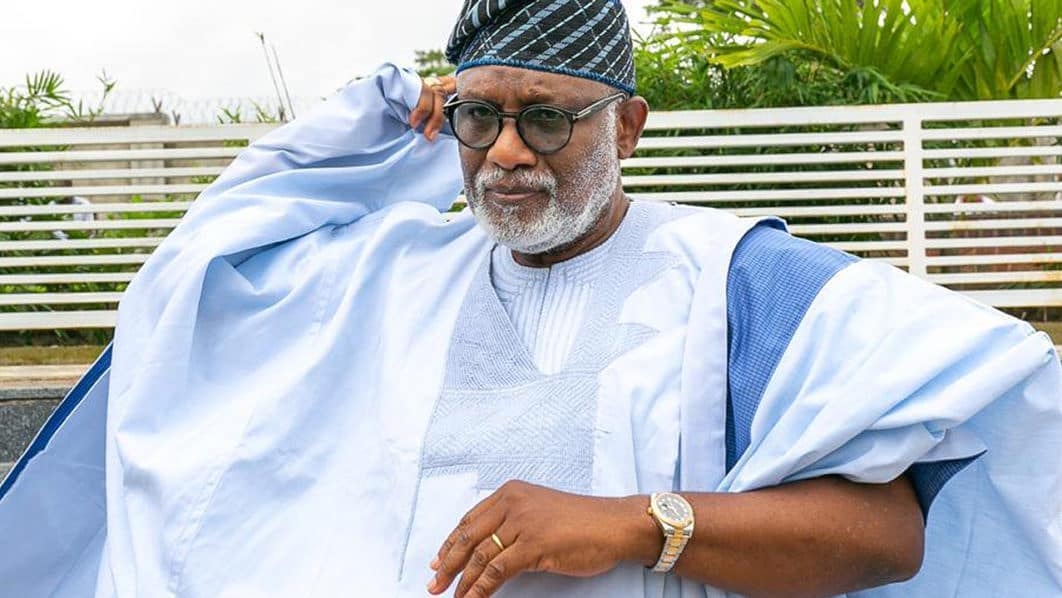

I have just read the press statement credited to the Attorney General of the Federation and Minister of Justice, Mr Shehu Malami SAN on the resolution of the Southern Governors Forum to ban open grazing in their respective States. The AGF is quoted to have said that this reasoned decision, among others, is akin to banning all spare parts dealers in the Northern parts of the country and is unconstitutional.
It is most unfortunate that the AGF is unable to distill issues as expected of a Senior Advocate. Nothing can be more disconcerting. This outburst should, ordinarily, not elicit response from reasonable people who know the distinction between a legitimate business that is not in anyway injurious and a certain predilection for anarchy. Clinging to an anachronistic model of animal husbandry, which is evidently injurious to harmonious relationship between the herders and the farmers as well as the local populace, is wicked and arrogant.
Comparing this anachronism, which has led to loss of lives, farmlands and property, and engendered untold hardship on the host communities, with buying and selling of auto parts is not only strange. It, annoyingly, betrays a terrible mindset.
Mr Malami is advised to approach the court to challenge the legality of the Laws of the respective States baning open grazing and decision of the Southern Governor Forum taken in the interest of their people. We shall be most willing to meet him in Court.
The decision to ban open grazing stays. It will be enforced with vigour.
SIGNED
ARAKUNRIN OLUWAROTIMI O AKEREDOLU, SAN
GOVERNOR, ONDO STATE


The Centre for the Promotion of Private Enterprise (CPPE) says Nigeria’s graduate unemployment crisis is driven not only by skills deficiencies but also by inadequate job creation, weak labour-market absorption and declining investment in workforce development.
In a commentary released on Sunday, November 22, 2026, CPPE Chief Executive Officer, Dr Muda Yusuf, cautioned against describing Nigerian graduates broadly as unemployable. He said such claims overlook differences in educational quality across institutions and disciplines, as well as the economy’s limited capacity to generate suitable jobs.
Yusuf argued that graduates with technical, analytical and interpersonal skills may remain unemployed because appropriate job opportunities are unavailable. He said the debate must distinguish between a mismatch of skills and insufficient demand for skilled labour.
According to the CPPE, businesses face constraints including high borrowing costs, expensive energy, infrastructure deficits, logistics bottlenecks, taxation and regulatory burdens. These challenges, it said, can discourage investment and expansion, limiting employers’ capacity to create quality jobs.
The organisation acknowledged that some academic programmes have struggled to keep pace with changes in technology and workplace requirements. It identified digitalisation, artificial intelligence, automation, data analytics, financial technology and renewable energy as areas reshaping occupational demands.
However, Yusuf said skills gaps are not uniform across Nigeria’s education system. He pointed to practice-oriented fields such as medicine, nursing, pharmacy, laboratory sciences, architecture and information technology, where training often includes practical or clinical components.
The CPPE also called on employers to take greater responsibility for developing graduates, saying universities should not be expected to produce workers ready to perform specialised corporate roles without further training.
Yusuf urged businesses to strengthen graduate trainee schemes, internships, apprenticeships, mentoring and professional development. He said structured employer training had historically helped graduates build the industry-specific knowledge required for their roles.
The organisation further identified weak links between tertiary institutions and industry as a challenge. It recommended regular curriculum reviews involving employers and professional bodies, expanded industrial attachments, industry placements for lecturers and greater participation by experienced professionals in teaching and mentoring.
It also called for improved educational facilities, including laboratories, workshops, libraries and digital-learning infrastructure, alongside recruitment practices that assess candidates’ aptitude, adaptability and problem-solving abilities rather than relying excessively on academic qualifications.
Among its recommendations, the CPPE urged the government to pursue policies that encourage investment, business expansion and the creation of productive formal-sector jobs.
The organisation said addressing graduate unemployment requires action on both sides of the labour market: improving the relevance of skills supplied by educational institutions and expanding the economy’s capacity to absorb skilled workers.

The Edo State Police Command has invited the Chairman of Owan East Local Government Area, Ernest Oyaole Aitalegbe, over an alleged attack on the secretariat of the National Democratic Congress (NDC) in Afuze, Edo State.
The police also confirmed that an investigation had commenced into the alleged involvement of armed men suspected to be members of the Edo State Security Network (ESSN) in the incident.
The command’s spokesperson, ASP Eno Ikoedem, disclosed this in a statement on Friday, November 20, 2026, saying the chairman had been invited to assist with the ongoing investigation.
According to the police, the incident occurred on Thursday, November 19, at about 4 p.m., while some NDC members and political aspirants were holding a meeting at the party’s secretariat.
The incident was reported by the party’s Edo North senatorial candidate, Mariam Iseme, and Professor Grant Eruhagan.
Ikoedem said the complainants alleged that armed men dressed in ESSN uniforms stormed the premises with weapons, destroyed political banners and other party materials, and threatened to kill those present.
The assailants reportedly fled after sighting police officers.
The police spokesperson said the command was making efforts to identify, locate and arrest everyone involved in the alleged attack.
She added that Aitalegbe was invited in connection with the incident to provide information that could assist the investigation. However, the invitation does not establish that the council chairman was involved in the attack.
Meanwhile, the Edo State Commissioner of Police, Patrick Daaor, warned politicians, political aspirants, supporters and their loyalists against violence, intimidation, destruction of property and the use of thugs to advance political interests.
Daaor stated that the command would not tolerate political lawlessness and warned that anyone found sponsoring, carrying out or aiding acts of violence would be arrested and prosecuted, regardless of their political status or affiliation.
He also urged political actors to avoid actions capable of disrupting public peace, assuring residents that the police would enforce the law without fear or favour.
Nigeria has been selected to host the regional instant payment system being developed by the Economic Community of West African States (ECOWAS) to facilitate faster cross-border financial transactions among member countries.
The Governor of the Central Bank of Liberia, Henry Saamoi, disclosed this on Wednesday, November 18, on the sidelines of the launch of the 2026 State of Inclusive Instant Payment Systems (SIIPS) report in Mauritius.
According to Saamoi, Nigeria was selected because of the development of its National Instant Payment (NIP) system, which has been recognised as Africa’s only mature instant payment system.
Under the proposed arrangement, Nigeria will host the regional Instant Payment System (IPS), while Ghana will provide backup hosting. Senegal, through the Central Bank of West African States (BCEAO), will host the Real-Time Gross Settlement (RTGS) component.
Saamoi explained that the three-country arrangement followed recommendations from a consultancy firm engaged by ECOWAS to assess the proposed regional payment infrastructure.
He said the arrangement was designed to distribute responsibilities among participating countries and prevent any single nation from having excessive control over the regional payment network.
The proposed system is expected to connect national instant payment platforms across West Africa, allowing individuals and businesses to transfer money more easily between participating countries.
One of its major objectives is to reduce the challenges associated with cross-border payments, particularly the dependence on the United States dollar as an intermediary currency for transactions within the region.
Saamoi said the system could adopt a local-currency settlement model similar to the Pan-African Payment and Settlement System (PAPSS), which allows payments between participating African countries in their respective currencies.
He, however, noted that the base currency and other operational details of the ECOWAS payment arrangement had not yet been determined.
The Liberian central bank governor also expressed support for the proposed distribution of hosting responsibilities, noting that regional cooperation was important in building an effective payment infrastructure.
Nigeria already operates one of Africa’s established instant payment platforms through the Nigeria Inter-Bank Settlement System (NIBSS), which supports real-time electronic transfers between financial institutions.
The country has also strengthened its participation in cross-border payment integration through PAPSS, a platform developed to promote intra-African trade by enabling transactions in local currencies.
The proposed ECOWAS system is expected to improve financial connectivity, support regional commerce and make it easier for traders, businesses and individuals to conduct transactions across West African borders.
Meanwhile, Saamoi provided an update on the proposed ECOWAS single currency, the ECO, saying the 2027 target for its introduction remained unchanged. He added that a major decision concerning the currency’s launch was expected to be taken in Abidjan, Côte d’Ivoire.
Although Nigeria’s hosting role has been disclosed, the regional payment system’s final operational framework, settlement currency and implementation timeline are still being worked out.

 News3 years ago
Hardship: We Plan To Establish A National Commodity Board To Crash Food Prices – VP Shettima
- News9 years ago
Blog Reader; Samson Osagiede Celebrates Fiancè Benedicta Daniels’s Birthday With Sweet Words
- Home10 years ago
News Channel claims Donald Trump is an orphan from Pakistan,share alleged childhood photo
 Sport8 years ago
Modric, Marta Wins 2018 FIFA Best Player Of The Year Awards ⚽️
- Home10 years ago
Another $175m Found in Patience Jonathan’s wife’s firm’s Bank Account
- Home10 years ago
Zara Buhari & Ahmed Indimi’s Wedding Access Card
- Home10 years ago
Oil Spillage: House of Reps Member Shares Photos of the Water her Constituents Drink .
- Celebrities3 years ago
“Port Harcourt Has The Lousiest Men On Planet Earth” — Actress Sarah Martins Recounts How She Slapped A Married Man Who Asked Her For ‘H∞k Up’