Foreign
UK PM Reaffirms Union Commitment After Scotland, Wales, Northern Ireland Declaration


UK PM Reaffirms Commitment to Union After 3 Nations Sign Self-Determination Declaration
British Prime Minister Andy Burnham has reaffirmed his commitment to keeping the United Kingdom together after the leaders of Scotland, Wales and Northern Ireland signed a joint declaration asserting their right to determine their constitutional futures.
Burnham’s spokesperson said on Monday that the prime minister “believes strongly in the union” and remains committed to delivering change across all four nations of the UK.
The statement came hours after the first ministers of Scotland, Wales and Northern Ireland signed a memorandum of understanding calling on the UK government to prepare for possible constitutional change.
Three Nations Demand Right to Decide Their Future
The declaration was signed by Scotland’s First Minister John Swinney, Wales’ First Minister Rhun ap Iorwerth and Northern Ireland’s First Minister Michelle O’Neill.
The three leaders said each of their nations has the right to determine its own future through democratic means and in accordance with the wishes of its people.
The agreement followed the first face-to-face meeting of the three nationalist leaders in Cardiff, the Welsh capital.
Their declaration argued that the political landscape in the three nations is changing and called for greater recognition of their right to pursue constitutional change.
Burnham Rejects Fresh Constitutional Focus
Responding to the declaration, the British prime minister’s spokesperson said the government would focus on economic security and improving living conditions rather than engaging in renewed constitutional disputes.
“The prime minister will continue to ease pressures on household finances,” the spokesperson said, while stressing the government’s focus on “greater economic security” rather than further constitutional debates or referendums.
The spokesperson also said the UK is “at its best” when its people work together around shared values and practical solutions rather than division.
Historic Political Development
The declaration represents a significant development in UK politics because, for the first time since devolution began in 1997, Scotland, Wales and Northern Ireland are led by first ministers whose parties support leaving the United Kingdom.
Scotland’s SNP has long campaigned for independence, while Plaid Cymru supports Welsh independence. Sinn Féin, which holds the first minister position in Northern Ireland, advocates Irish reunification.
The coordinated position therefore presents a fresh challenge to Westminster over the future constitutional structure of the United Kingdom.
Trump’s Ireland Comments Add to Pressure
The development also comes amid renewed debate over Northern Ireland’s constitutional future following comments by US President Donald Trump.
During his visit to Ireland, Trump said he would “love” to see a united Ireland and described the integration of Ireland and Northern Ireland as something he considered natural.
Burnham has previously said there is currently no majority public support for another referendum on Irish unification and that no such vote would take place unless public sentiment changes. His office subsequently confirmed that position remained unchanged following Trump’s comments.
UK Union Faces Renewed Constitutional Debate
While the declaration does not itself change the constitutional status of Scotland, Wales or Northern Ireland, it signals increased coordination among political leaders seeking greater autonomy or independence.
Burnham, however, has made clear that his government’s priority remains strengthening cooperation among the four nations while addressing economic pressures and household finances.
The competing positions are likely to keep the question of the UK’s constitutional future at the centre of political debate as nationalist parties in Scotland, Wales and Northern Ireland push for greater self-determination.

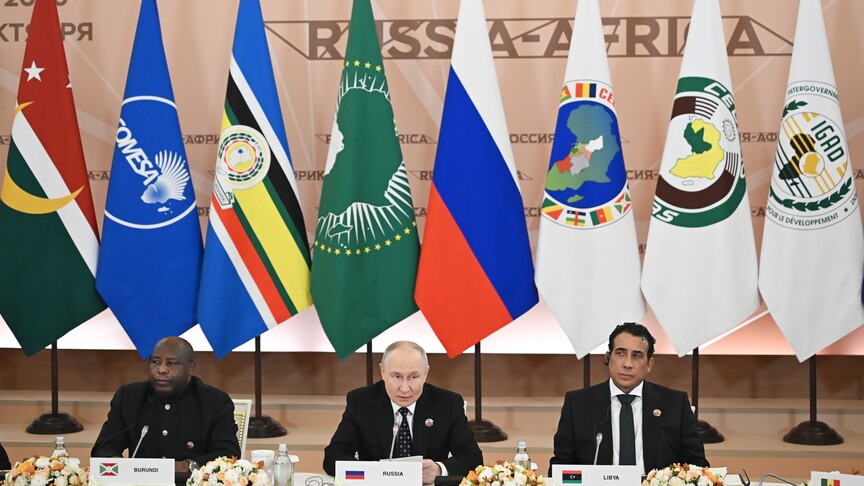
Russian President Vladimir Putin has invited African airlines to begin operating flights to Russia as Moscow seeks to strengthen trade, tourism and economic cooperation with countries across the continent.
Putin made the invitation on Wednesday, October 28, while addressing the plenary session of the Russia-Africa Economic and Humanitarian Forum in Moscow. He said Russia was ready to expand its partnerships with African countries in areas including trade, energy, pharmaceuticals and transportation.
The Russian leader said Moscow was prepared to support the development of reliable logistics networks to facilitate trade and investment between Russia and Africa.
He also offered Russian expertise in the design, construction and modernisation of roads, railways, maritime routes and transport hubs. According to Putin, these facilities could be equipped with digital systems for management, cargo tracking and customs declarations.
Putin expressed confidence that trade between Russia and African countries could exceed $50 billion in the near future. He disclosed that bilateral trade surpassed $27 billion in 2025, compared with $18 billion in 2022, and said both sides had the potential to increase the figure significantly.
He also revealed that Russia was involved in more than 30 potential energy projects across 16 African countries, highlighting energy as another area for expanded cooperation.
In the pharmaceutical sector, Putin said Russia planned to support local production of medicines and vaccines in Africa, alongside the establishment of laboratories and diagnostic centres.
The forum is taking place alongside the Russia-Africa summit, which brings together African leaders and representatives to discuss cooperation in trade, investment, infrastructure, energy and other areas.
Putin’s invitation could create opportunities for African airlines to explore direct routes to Russian destinations, potentially improving connectivity for passengers and businesses. However, the announcement did not identify specific airlines or confirm when new routes might begin operating.
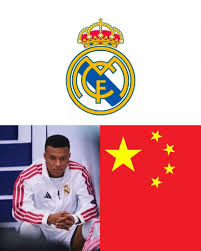
Spanish football club Real Madrid has apologised to the Chinese people following controversy surrounding comments made by its French forward, Kylian Mbappé, about former Chinese leader Mao Zedong.
The club issued the apology on Wednesday, October 28, 2026, after Mbappé’s remarks triggered widespread criticism in China, prompting several Chinese companies to terminate their commercial partnerships with the football star.
In a statement, Real Madrid expressed regret over any offence caused by the player’s comments and reaffirmed its respect for China, its history, culture and citizens, including the millions of Chinese supporters who follow the club.
The statement also acknowledged Mbappé’s personal apology, in which the France captain expressed regret and reiterated his respect for the Chinese people.
The controversy began after a video from an interview with the French podcast The Bridge circulated online. In the clip, Mbappé discussed an internet meme featuring his face superimposed on an image of Mao, describing the former Chinese leader as a dictator.
The video was subsequently removed from the programme’s social media accounts, but the remarks had already generated significant backlash among Chinese football fans and social media users.
Mbappé issued an apology on Tuesday, acknowledging that his comments had been ill-judged and had hurt people in China and Chinese communities around the world.
The 27-year-old said offending people was not his intention and reiterated his respect for China and its history. His statement was published in French, Chinese and English.
However, the apology did not immediately end the controversy.
Chinese companies, including dairy producers Mengniu and Shanghai Milkground Food Tech, as well as beverage company Eastroc, announced that they were ending their commercial relationships with the footballer.
Chinese social media platforms also restricted activity involving Mbappé’s accounts, while the country’s state broadcaster suspended coverage of Spanish LaLiga matches.
The controversy prompted LaLiga president Javier Tebas to establish a crisis unit to address the situation and its potential impact on the league’s relationship with Chinese fans and commercial partners.
Tebas also apologised to Chinese supporters, expressing regret over the offence caused by Mbappé’s comments and promising measures to improve cultural awareness among clubs and players.
China’s Foreign Ministry spokesperson, Guo Jiakun, said on Wednesday that Beijing took Mbappé’s apology seriously when asked about the player’s statement.
The incident highlights the commercial and reputational risks international sports figures and organisations face when their remarks provoke controversy in China, a significant market for football broadcasting, sponsorships and merchandise.
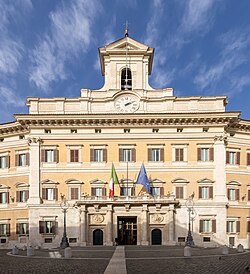
Italy’s Chamber of Deputies has given final approval to a major overhaul of the country’s electoral system, clearing the way for new voting rules ahead of next year’s general election.
The legislation, backed by Prime Minister Giorgia Meloni’s government, was approved in a secret ballot by 227 votes to 164 on Thursday, October 8.
The reform replaces Italy’s existing mixed electoral system with a fully proportional representation system. Under the new arrangement, a coalition securing more than 42 per cent of the vote would receive bonus seats intended to give it a working parliamentary majority.
The bonus would provide an additional 70 seats in the 400-member Chamber of Deputies and 35 seats in the 200-member Senate, although limits have been placed on the maximum number of seats a coalition can obtain through the system.
The reform also requires political parties and coalitions to identify their candidate for prime minister before the election. However, Italy’s constitution continues to give the president the formal authority to appoint the prime minister.
Meloni and her governing coalition have argued that the changes are designed to produce clearer election outcomes and improve government stability. Opposition parties, however, have strongly criticised the legislation, arguing that the new rules could restrict voter choice and unfairly benefit the governing coalition.
The opposition has also indicated that it intends to challenge aspects of the reform before Italy’s Constitutional Court once the law takes effect.
The final vote concludes months of debate and disagreements within both the governing coalition and opposition. The new electoral framework is expected to play an important role in Italy’s next general election, which is due in 2027.

 News3 years ago
Hardship: We Plan To Establish A National Commodity Board To Crash Food Prices – VP Shettima
- News9 years ago
Blog Reader; Samson Osagiede Celebrates Fiancè Benedicta Daniels’s Birthday With Sweet Words
- Home10 years ago
News Channel claims Donald Trump is an orphan from Pakistan,share alleged childhood photo
 Sport8 years ago
Modric, Marta Wins 2018 FIFA Best Player Of The Year Awards ⚽️
- Home10 years ago
Another $175m Found in Patience Jonathan’s wife’s firm’s Bank Account
- Home10 years ago
Oil Spillage: House of Reps Member Shares Photos of the Water her Constituents Drink .
- Home10 years ago
Zara Buhari & Ahmed Indimi’s Wedding Access Card
- News8 years ago
The Best Video You’ve Seen Today?