News
Unifoam Debunks Alleged Staff Maltreatment, Warns Against Blackmail

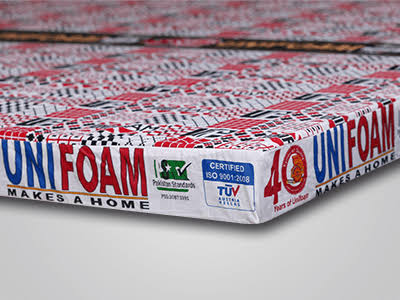
A company, United Foam Products Limited, has dismissed an online report accusing it of maltreating and enslaving its workers among other allegations.
The firm described the report published on Sahara Reporters as a lie from the pit of hell, saying that a huge number of people including educated, non-educated and artisans have been engaged through its operation spanning four decades in Ilorin, the Kwara State capital alone.
This was contained in a statement issued by Barrister O.T Olorunnisola, an External Solicitor to the company, a copy of which was made available to Journalists in Ilorin, saying that the company prioritizes staff salaries and welfare.
The statement said there was no time the factory enslaved its workforce, pointing out that while they work for seven hours daily, they receive pay above the recommended minimum wage.
It described the report as the handiwork of the blackmailers, who were only out to drag the reputation the company built over the years in the mud and mislead the unsuspecting members of the public.
The statement also debunked the allegation that it bribed the police to arrest any staff with audacity to challenge the management of the company, saying that the reputable company of its nature would not indulge in such an unholy practice.
The statement also said the company enrolled with National Social Industrial Trust Fund (NSITF) on job hazards for contract staff, adding that the company also takes care of any job related accidents.
Contrary to the claim in the report that the company worked during COVID-19 lock down, the statement clarified that it got exemption from the state government to mass produce mattresses for donation in Kwara and Oyo States, just as it added that the company remains the longest surviving private company in the history of Kwara State with minimum of 500 staff strength.
The statement entitled ‘Re: We work like slaves, Nigerian workers in Lebanese company cry out over maltreatment’, read:
“Our attention has been drawn by our client (UNIFOAM)to a report on an online news platform, Sahara Reporters, alleging that client has been enslaving its staff and maltreating them at will among other spurious allegations.
We wouldn’t have dignified the catalogue of unsubstantiated allegations against our client , United Foam Products Limited, which the report identified as Unique Foam( a company which doesn’t exist) with a response but as a responsible and responsive organization, it behoves us to correct the erroneous impression created and set the record straight so as not to mislead the undiscerned.
First, our client has been operating as a company for the past four decades in Ilorin, the Kwara State capital being the Head Office, providing employment opportunities for educated, non-educated and even artisans. This, we believe, has gone a long way in curbing unemployment debacle in our society.
Secondly, our client maintain and sustain corporate and social responsibility and contribute its quota to the development of its host community in the spirit of giving back to the host community as a responsible organization.
Therefore, we want to state it clearly that there was never a time whatsoever that our client maltreated its staff in terms of payment of salaries and other welfare packages. The allegation that staff are paid peanuts is nothing but lie from the pit of hell.
In Unifoam, staff work for seven hours and they are paid more than the recommended minimum wage. This is a verifiable fact. Testimonies are there for people to see except for those who are in the habit of maligning and dragging the name of client in the mud, which obviously the writer is part of.
They also alleged in the report that our client sack staff arbitrarily. This is nothing but a cheap blackmail all in an attempt to portray our client in bad light. Nothing could be farther from the truth.
Part of the allegations was that our client bribed the police authority to arrest any staff, who challenged the management on condition of service and welfare. This is another sensation and ploy to malign our client. As a responsible organization, our client has never and would never under whatever guise engage in such an unholy practice.
Our client is enrolled with National Social Industrial Trust Fund (NSITF) on job hazards for contract staff. In spite of that, the company takes care of any job related accidents. Unifoam also has a standard clinic on its premises to handle minor incidences, a facility which most corporate organizations cannot boast of. The company safety and security procedures are industrial standard and we are being regulated by all manufacturing regulatory bodies.
On the allegation that our client worked during COVID-19 lock down, we need to make it abundantly clear that our client was covered under the provider of essential services by Kwara State government to mass produce mattresses for Isolation Centres in Kwara and Oyo States among other states. These were DONATIONS from our client in support of the battle against coronavirus pandemic. We ensured all COVID-19 protocols were and still being observed in the company.
It is imperative to state that in spite of COVID-19 induced lock down, our client continued paying staff salaries in full regardless of whether they were at work or not. It would be recalled that the period under review was when most private companies laid off staff due to their inability to pay salaries.
For the record, United Foam Products Limited remains the longest surviving private company in the history of Kwara State with minimum of 500 staff strength.
We want to therefore urge the public to disregard the erroneous impression created by some faceless people through the unsubstantiated report. Our client is committed to prioritizing welfare of its staff and hold its customers and the general public in high etseem.


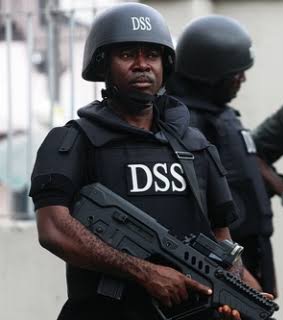
The Delta State Police Command has arrested two suspected criminals and recovered firearms, ammunition, and other dangerous weapons during intelligence-led operations aimed at tackling crime across the state.
According to the command’s spokesperson, SP Bright Edafe, operatives of the Safer Highway Patrol intercepted the suspects during a routine stop-and-search operation. A thorough search reportedly led to the recovery of firearms, live ammunition, and other incriminating items believed to be linked to criminal activities.
In a separate operation, police also arrested another suspect identified as a member of a criminal network while recovering additional weapons and ammunition. The operations form part of the command’s sustained efforts to curb violent crime, armed robbery, kidnapping, and other security threats in Delta State.
The suspects are currently in police custody as investigators work to determine their level of involvement in other criminal activities and identify possible accomplices. Authorities said those found culpable would be charged in court after investigations are concluded.
The Delta State Police Command reaffirmed its commitment to intensifying intelligence-led policing and urged residents to continue providing timely information that could assist security agencies in combating crime across the state.
OpenAI has officially launched Health in ChatGPT for users in the United States, introducing a new feature that enables eligible adults to securely connect their Apple Health data and supported medical records directly within ChatGPT. The rollout is currently available to users aged 18 and above on the web and iOS platforms.
The feature allows users to import information such as medical records, laboratory results, medications, allergies, fitness activity, sleep data, and other health metrics from Apple Health and participating healthcare providers. ChatGPT can then use this information to provide more personalised explanations and help users better understand their health information.
OpenAI said users remain in control of their information, with connected health data protected through additional encryption and excluded from training the company’s AI models. The company also emphasised that Health in ChatGPT is designed to complement—not replace—professional medical advice or clinical care.
The launch marks a significant expansion of OpenAI’s healthcare ambitions, aiming to help users prepare for medical appointments, understand test results, organise health records, and receive contextual explanations based on their personal data. Support is expected to expand to additional healthcare providers over time.
The rollout comes amid growing discussions about the role of artificial intelligence in healthcare, with experts welcoming the technology’s potential while continuing to stress the importance of consulting qualified healthcare professionals for diagnosis, treatment, and emergency medical decisions.
President Bola Tinubu has approved what is being described as Nigeria’s most significant military expansion in recent decades, authorising the Nigerian Army to grow from eight to 12 divisions alongside the recruitment of 28,000 additional personnel. The move is aimed at strengthening the country’s response to persistent security challenges.
According to the Presidency, the expansion forms part of a broader effort to modernise the Armed Forces through increased manpower, improved troop welfare, enhanced operational readiness, and the acquisition of critical military equipment. The government says the reforms are intended to improve the military’s capacity to combat insurgency, banditry, kidnapping, communal violence, and other security threats across the country.
Under the new structure, four additional divisions will be established in Makurdi, Ilorin, Jalingo, and Benin City. The first phase, covering the creation of the 5th, 9th, and 10th Divisions, is expected to be completed by September 2026, while the second phase, including the establishment of the 83rd Division, is scheduled for completion by December 2026.
Presidential spokesperson Bayo Onanuga said the expansion would improve command and control, decentralise operational decision-making, strengthen border security, enhance the protection of critical national infrastructure, and enable faster military responses to emerging threats nationwide.
President Tinubu also commended the Chief of Army Staff, Lieutenant General Waidi Ibrahim Shuaibu, as well as officers and soldiers of the Nigerian Army for their dedication and professionalism. He reaffirmed his administration’s commitment to ensuring the Armed Forces remain adequately equipped and prepared to safeguard Nigeria’s sovereignty and protect its citizens.

 News2 years ago
Hardship: We Plan To Establish A National Commodity Board To Crash Food Prices – VP Shettima
- News8 years ago
Blog Reader; Samson Osagiede Celebrates Fiancè Benedicta Daniels’s Birthday With Sweet Words
- Home10 years ago
News Channel claims Donald Trump is an orphan from Pakistan,share alleged childhood photo
- Home10 years ago
Another $175m Found in Patience Jonathan’s wife’s firm’s Bank Account
- Home10 years ago
Oil Spillage: House of Reps Member Shares Photos of the Water her Constituents Drink .
- Home10 years ago
Zara Buhari & Ahmed Indimi’s Wedding Access Card
 Sport8 years ago
Modric, Marta Wins 2018 FIFA Best Player Of The Year Awards ⚽️
- News8 years ago
The Best Video You’ve Seen Today?