Home
Who Governs Nigeria? By Ruben Abati


During the Jonathan administration, and outspoken opposition spokesperson had
argued that Nigeria was on auto-pilot, a phrase that was gleefully even if ignorantly echoed by an excitable opposition crowd. Deeper reflection should have made it clear even to the unthinking that there is no way any country can ever be on auto-pilot, for there are many levels of governance, all
working together and cross-influencing each other to determine the structure of inputs and outcomes in society.
To say that a country is on auto-pilot is to assume wrongly that the only Centre of governance that exists is the official corridor, whereas governance is far more complex. The question should be
asked, now as then: who is governing Nigeria?
Who is running the country? Why do we blame government alone for our woes, whereas we share a collective responsibility, and some of the worst violators of the public space are not even in public office?
The President of the country is easily the target of every criticism. This is perhaps understandable to the extent that what we have in Nigeria is the perfect equivalent of an Imperial Presidency. Whoever is President of Nigeria wields the powers of life and death, depending on how he uses those
enormous powers attached to his office by the Constitution, convention and expetations. Nigeria’s President not only governs, he rules. The kind of
President that emerges at any particular time can determine the fortunes of the country. It helps if the President is driven by a commitment to make a difference, but the challenge is that every President invariably becomes a
prisoner.
He has the loneliest job in the
land, because he is soon taken
hostage by officials and various
interests, struggling to exercise
aspects of Presidential power
vicariously. And these officials do
it right to the minutest detail: they
are the ones who tell the
President that he is best thing
ever since the invention of
toothpaste. They are the ones who
will convince him as to every
little detail of governance: who to
meet, where to travel to, and who
to suspect or suspend. The
President exercises power, the
officials and the partisans in the
corridors exercise influence. But
when things go wrong, it is the
President that gets the blame. He
is reminded that the buck stops at
his desk. We should begin to worry about these dangerous officials in the system, particularly within the public service, the reckless mind readers who exploit the system for their own ends, and who walk free when the President gets all the blame. To govern properly, every
government not only needs a good man at the top, but good officials who will serve the country. We are not there yet.
The same civil servants who
superintended over the omissions of the past 16 years are the ones still going up and down today, and it is why something has changed but nothing has change. The reality is terrifying.
The officials at the state levels are no different, from the Governor down to the local government chairman and their staff. They hardly get as much criticism as the folks in Abuja, but they are busy every day governing Nigeria,
and doing so very badly too. Local
government chairmen and their
officials do almost nothing. The
Governors also try to act as if they are Imperial Majesties. The emphasis one ceremony rather than actual performance is the bane of governance in Nigeria. Every one seems to be obsessed with ceremony and privileges.
A friend sent me a picture he took
with the Mayor of London inside
a train, in the midst of ordinary
citizens and asked if that would
ever happen in Nigeria. The
Mayor had no bodyguards. He
was on his own. In the
Netherlands, the Prime Minister
is a part-time lecturer in one of
the local colleges. Nigerian pubic
officials are often too busy to
have time for normal life. Even if
they want to live normally, the
system also makes it impossible.
We need people in government
living normal lives. Leaders need
not be afraid of the people they
govern. They must identify with
them. There is too much royalty
in government circles in Nigeria.
No matter how well-intentioned
you may be, once you find
yourself in their midst, you will
soon start acting and sounding
like one, because it is the only
language that is spoken in those
corridors.
Elsewhere, ideas govern countries.
People become leaders on the basis of ideas and they govern with ideas. That is why the average voter in Europe or North America knows that what he votes for is what he is likely to get.
Clearly in the on-going Presidential
nomination process in the United
States, every voter knows the difference between Bernie Sanders and Hillary Clinton on the Democratic side and between Ted Cruz and Donald Trump on the Republican side. Such differences
are often blurry in Nigeria: our politics is driven by partisan interests; a primordial desperation for power, not ideas . It is also why Nigerian politicians can belong to five different political parties and movements within a decade.
Even when men of ideas show up
in the political arena, they are
quickly reminded that they are
not politicians and do not
understand politics. Gross anti-
intellectualism is a major problem
that Nigeria would have to
address at some stage. Some of the administrations in the past who had brainy men and women of
ideas in strategic positions ended
up not using them. They were
either frustrated, caged, co-opted
or forced to adapt or shown the
door. The question is often asked:
why don’t such people walk away?
The answer that is well known in
official corridors is this: doing so
may be a form of suicide. Once
inside, you are not allowed to
walk out on the Federal
Government of Nigeria, and if you
must, not on your own terms. So,
governance fails even at that level
of values: that other important
element that governs progressive
nations. Partisan interests are major factors in the governance process. These seem to be the dominant factor in Nigeria, but
again, they are irresponsibly deployed. The crowd of political parties, religious groups, traditional rulers, ethnic and community associations, professional
associations, pastors, priests, traditional rulers, imams and alfas, shamanists, native doctors, soothsayers and traditional healers: they all govern.
They wield enormous influence. But they have never helped Nigeria and they are not helping. All the people in public offices have strong links to all these other governors of Nigeria, but what kind of morality do they discuss?
Those with partisan interests, including even promoters of Non-governmental groups (NGOs) all have one interest at
heart: power and relevance.
The same priests who saw grand
visions for the PDP and its
members over a 16-year period
are still in business seeing visions
and making predictions. Those
who claim to be so powerful they
can make the lame walk and the
blind see have not deemed it
necessary to step forward to help
the NNPC turn water into petrol.
If any of these miracle-delivering
pastors can just turn the Lagos
Lagoon alone into a river of
petrol, all Nigerians will become
believers, but that won’t happen
because they are committed to a
different version of the gospel. As
for the political parties: they are
all in disarray. The private sector also governs Nigeria. But what is the quality of governance in the corporate sector? The Nigerian
corporate elite is arrogant. They claim that they create jobs so the country may prosper, but they are, in reality, a rent-seeking class. They survive on government patronage, access to the Villa and its satellites, and claims of
indispensability. But without
government, most private sector
organizations will be in distress. The withdrawal of public funds into a Treasury Single Account is a case in point. And with President Muhammad Buhari not readily available to the eye- service wing of the Nigerian private sector, former sycophants in the
corridors are clandestinely resorting to sabotage and blackmail. A responsible private sector has a duty in society: to
build society, not to donate money to politicians during elections and see patronage thereafter. And if it must co-operate with government, it must be for much nobler reasons in the public interest. The military are still governing Nigeria too. They may be in the background, but their exit 16 years ago, has not
quite translated into a loss of influence
or presence. In the early years of their
de-centering, many of them chose to
join politics and replace their uniforms
with traditional attires. Their original
argument is that if other professionals
can join politics, then a soldier should
not be excluded. They failed to add that
the military class in politics in Africa has shown a tendency to exercise proprietorial rights and powers, which delimit the democratic project. In Nigeria such powers and rights have been exercised consistently and mostly
by, happily for us, a gerontocratic class, whose impact, I believe, will be determined by the effluxion of time. And it is like this: the President that emerged in 1999 was a soldier: the received opinion was that only such a strong man could stabilize the country. His
successor was the brother of
another old soldier; he and his
Deputy were personal chosen by
the departing President. He died
in office, but for his Deputy to
succeed him, it helped a lot that
he was also a favourite of the
General who chose his own
successors. When this protégé fell
out with the General, in retrospect
now, a miscalculation, the General turned Godfather swore to remove him from office. And it happened. In 2015, another former soldier and strong man, had to be brought back to office and power. When anything goes wrong, a class of old Generals are the ones who step forward to protect and guide the country.
The only saving grace is that they
do not yet have a successor–class
of similarly influential men with
military pedigree. But when their
time passes, would there be
equally strong civilians who can
act as protectors of the nation?
The media governs too. But the media in Nigeria today is heavily politicized, compromised and a victim of internal censorship occasioned by hubris. Can the media still save Nigeria? It is in the
same pit as the Nigerian voter, foreign interests, the legislature and the judiciary. But when there is positive change at all of these centres of power and influence, only then will there be change, movement and motion, and a
new Nigeria.


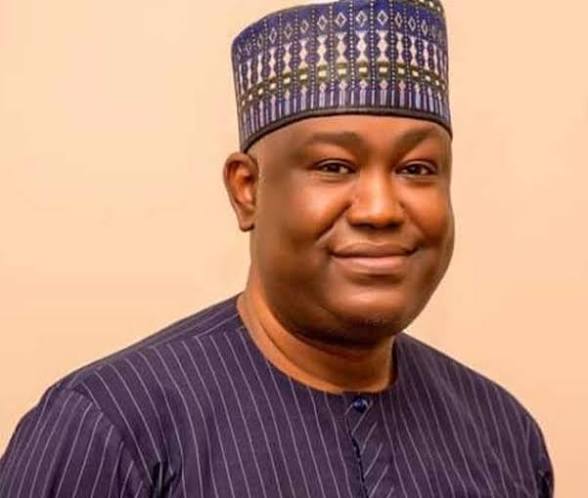
Accord Party presidential aspirant Dr. Gbenga Olawepo-Hashim has criticised President Bola Tinubu’s approach to tackling insecurity, saying Nigeria is effectively at war but lacks a clear and coordinated strategy to defeat terrorist groups and criminal gangs.
Hashim argued that despite ongoing military operations, terrorists and armed criminal groups continue to dictate the pace of violence in several parts of the country. He maintained that the nation’s security challenges require more than isolated military offensives, calling instead for a comprehensive national strategy backed by strong political leadership.
According to him, Nigeria’s armed forces possess the capacity to restore security if provided with consistent direction, adequate support, and a clearly defined mission. He stressed that defeating insecurity requires improved intelligence gathering, stronger inter-agency coordination, and sustained political commitment.
Hashim further urged the federal government to treat the country’s security situation with greater urgency, warning that prolonged instability could continue to undermine economic growth, investment, and public confidence in government institutions.
His comments come amid ongoing national debate over security policy, even as the Tinubu administration has announced measures including expanding the Nigerian Army and increasing investment in technology and military capabilities to address the country’s security threats.
Home
President Tinubu Approves Major Road Infrastructure Boost – Reconstruction of Key Federal Roads in Niger State and Extension of Bodo–Bonny Road in Rivers State

In a significant move to enhance connectivity, durability, and economic development across Nigeria, President Bola Ahmed Tinubu has given the green light for the immediate reconstruction of three critical federal roads in Niger State, alongside the extension of the strategic Bodo–Bonny Road in Rivers State to link up with the East–West Road.
The three roads in Niger State earmarked for full reconstruction will utilize reinforced concrete pavement to guarantee long-lasting performance and better value for money. The projects include:
- Mokwa–Bida Road(approximately 120 km)
- Mokwa–Makeri Road (63 km)
- Bida–Labata Road (123.5 km)
These upgrades aim to improve transportation efficiency, reduce maintenance costs over time, and support socio-economic activities in the North-Central region.
Additionally, President Tinubu has directed the extension of the Bodo–Bonny Road in Rivers State by connecting it to the East–West Road. This extension will be constructed as a *dual carriageway using concrete pavement and will feature solar-powered street lighting for enhanced safety and sustainability. The initiative is expected to boost access to coastal communities, facilitate trade, and strengthen integration in the Niger Delta area.
This approval underscores the administration’s ongoing commitment to revitalizing legacy infrastructure projects and delivering durable, high-quality road networks nationwide under the Renewed Hope Agenda.

Home
“Political Hushpuppi” Ugochinyere is one of PDP’s aberrations, he is only cashing out – Wike’s Aide
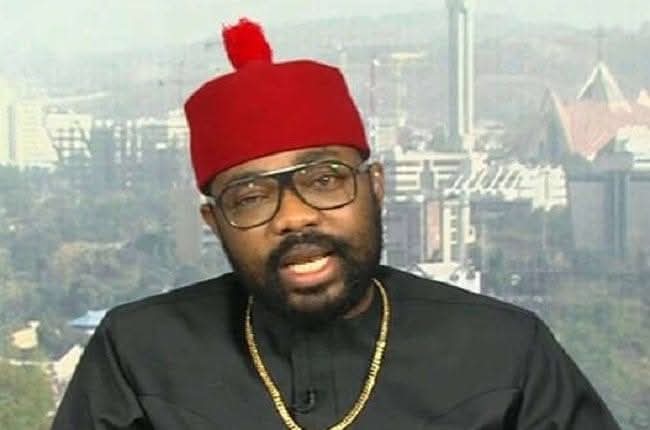
Lere Olayinka, Senior Special Assistant on Public Communications and New Media to the Minister of Federal Capital Territory (FCT), Nyesom Wike, has described House of Representatives member from Ideato North and South Federal Constituency of Imo State, Imo Ugochinyere Ikeagwuonu, as a “political hushpuppi” who was produced by part of the aberrations in the People’s Democratic Party (PDP) that must be made to stop.
Olayinka, who told Ugochinyere to “stop going about masturbating about anything Wike,” admonished him to face the reason for which he was elected into the House of Representatives so that his constituents will stop seeing him as a failure and consistently passing votes of no confidence against him.
While featuring on Channels TV’s Politics Today on Friday, Ugochinyere, had said that the FCT Minister and other G5 Governors like Governor Seyi Makinde of Oyo State, former governors Samuel Ortom (Benue), Ifeanyi Ugwuanyi (Enugu) and Okezie Ikpeazu (Abia) were determined to destroy the Peoples Democratic Party (PDP).
However, in a statement in Abuja on Saturday, Olayinka said; “This is one of the things you get when people who joined the PDP today are awarded the ticket of the party tomorrow morning. If not for the aberration in the PDP that produced a character like Ugochinyere, someone who only joined the party in 2022 won’t be the one to lecture us about who is loyal to the party and who’s not.
“If PDP had functioned properly, would a ‘political hushpuppi’ like Ugochinyere have gotten the party’s ticket while still in another party? Even till today, as a PDP Rep member, Ugochinyere is still holding on to his Action Peoples Party (APP), using it to cash-out in Rivers State.
“Therefore, we on this side are not bothered because we understand why Ugochinyere must now mount the podium and accuse Wike of playing childish and kindergarten politics. He must satisfy those feeding him from the resources of Rivers State.”
While mocking Ugochinyere for always having an organization to speak for to carry out his political hustle, Olayinka said; “In saner climes, such character would have been arrested, tried and jailed for impersonation.
“When he got to the House of Representatives and there was no title under which his political hushpuppism would continue, he awarded to himself a non-existing title of ‘Spokesperson of Opposition Lawmakers Coalition in the 10th National Assembly,’ claiming to have been so appointed by the Coalition of United Political Parties (CUPP).
“But the questions are, is CUPP a political party with members in the House of Representatives? Where and when was CUPP registered? Apart from the positions of Minority Leader, Deputy Minority Leader, Minority Whip and Deputy Minority Whip, is there anything like spokesperson of opposition lawmakers in the National Assembly?
“Being a political hustler that he has always been, Ugochinyere, knew that he will be contravening the rules of the National Assembly by allocating to himself, a non-existing position, but he just must have a title to keep his hustle going, and indeed, it has been booming.
“Impersonating as spokesperson of opposition lawmakers in the House of Representatives, Ugochinyere has been cashing out in Rivers State in particular. If he is not using his former party, APP, to cash-out, he will be using his amorphous opposition lawmakers to chop from inside the Rivers.”

 News3 years ago
Hardship: We Plan To Establish A National Commodity Board To Crash Food Prices – VP Shettima
- News8 years ago
Blog Reader; Samson Osagiede Celebrates Fiancè Benedicta Daniels’s Birthday With Sweet Words
- Home10 years ago
News Channel claims Donald Trump is an orphan from Pakistan,share alleged childhood photo
- Home10 years ago
Another $175m Found in Patience Jonathan’s wife’s firm’s Bank Account
- Home10 years ago
Oil Spillage: House of Reps Member Shares Photos of the Water her Constituents Drink .
- Home10 years ago
Zara Buhari & Ahmed Indimi’s Wedding Access Card
 Sport8 years ago
Modric, Marta Wins 2018 FIFA Best Player Of The Year Awards ⚽️
- News8 years ago
The Best Video You’ve Seen Today?