News
“This Is a Recipe for Looting” — Abdul Mahmud Tears Apart Tinubu’s Oil Revenue Executive Order as Unconstitutional

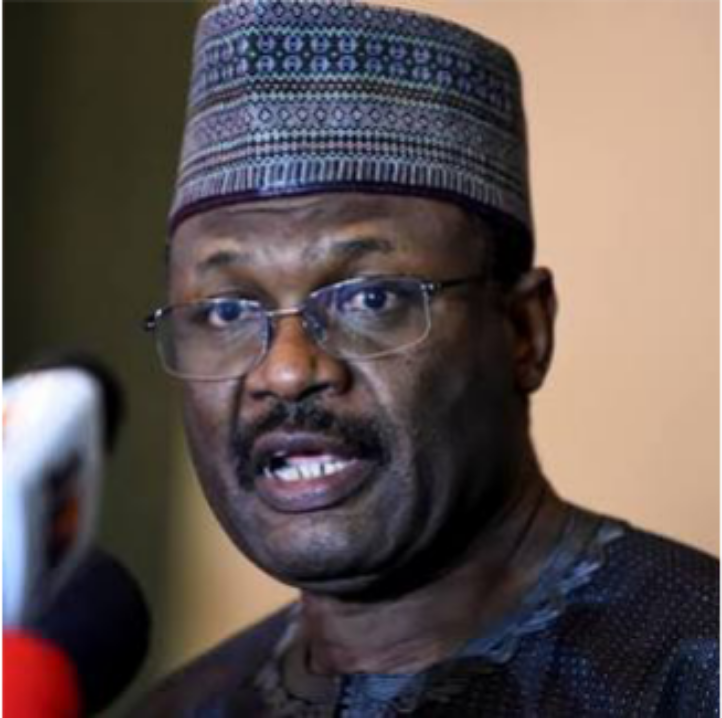
Not everyone is celebrating President Bola Tinubu’s sweeping Executive Order on oil and gas revenues — and prominent human rights lawyer and constitutional scholar Abdul Mahmud is making very sure you know why.
In a sharply worded intervention that has since set social media alight, Mahmud declared that Executive Order No. 9 of 2026, signed by President Tinubu on February 13, 2026, and publicly announced five days later, is far from the bold fiscal reform the Presidency is packaging it to be. He described the order as reckless, constitutionally indefensible, and most alarmingly, a carefully engineered gateway for Nigeria’s political elite to loot the country’s oil wealth on an even grander scale than before.
His argument cuts to the bone. While the Tinubu administration has framed the executive order as an effort to end what it describes as decades of illegal deductions by the Nigerian National Petroleum Company Limited — specifically the 30 percent management fee and 30 percent Frontier Exploration Fund deduction that were taking billions away from the Federation Account before distribution — Mahmud insists that the President has used the wrong tool entirely. He argued that an executive order cannot legally set aside or override provisions of the Petroleum Industry Act 2021, a statute passed by the National Assembly. To do so, he said, is a direct assault on the doctrine of separation of powers and a violation of the Constitution that Tinubu swore to uphold.
At its core, Mahmud’s position is this — a president cannot use the stroke of a pen to suspend an Act of the National Assembly. He pointed out that Section 5 of the Constitution, under which the President claims authority to issue the order, does not confer on the executive the power to override legislation. That power belongs exclusively to the National Assembly, and any president who bypasses it is not reforming the system — he is subverting it.
But it is Mahmud’s second line of attack that carries perhaps the sharpest edge. He warned that by dramatically increasing the volume of oil revenues flowing directly into the Federation Account for distribution to the three tiers of government through FAAC, the executive order does not solve Nigeria’s accountability problem — it deepens it. The money that was previously sitting inside NNPC, regardless of how corruptly it was managed there, will now flow in far larger quantities into the hands of federal ministers and state governors who, in Mahmud’s view, have proven themselves equally incapable of spending public funds with transparency or purpose. He described the arrangement as moving billions from one set of looters to another, without building any credible framework of accountability to protect the money in between.
Mahmud’s concern is not isolated. The Petroleum and Natural Gas Senior Staff Association of Nigeria has also condemned the order, describing it as a direct attack on the PIA and warning that it signals to the international community that Nigeria can override its own laws by executive fiat at any moment — a message that could significantly damage investor confidence in the country’s oil and gas sector. PENGASSAN’s National President, Festus Osifo, said no president who truly understood the sector could have signed the order in its current form.
The Tinubu administration has pushed back firmly. Presidential spokesman Bayo Onanuga has insisted that the order is rooted in Section 44(3) of the Constitution, which vests ownership of all mineral resources in the Federation, and described the directive as a necessary correction to revenue distortions that have robbed Nigerians of their hydrocarbon wealth for decades. The Minister of State for Finance, Dr. Doris Uzoka-Anite, told FAAC members that the reform would significantly boost monthly allocations to all levels of government — a development that state governors have largely welcomed.
That welcome, Mahmud argues, is precisely the problem. Governors are celebrating not because the reform serves ordinary Nigerians, but because it puts more money within their reach — money that, without stronger accountability structures, will follow the same path as every other public fund that has passed through their hands.
For a country that is preparing for a 2027 election cycle in which fiscal credibility will be a central battleground, the debate triggered by Mahmud’s critique is one that is unlikely to fade quietly. The question being asked is not simply whether the executive order is constitutional — it is whether any amount of revenue reform can deliver results in a system where accountability remains an afterthought.
- Mahmud’s answer, for now, is an emphatic no.

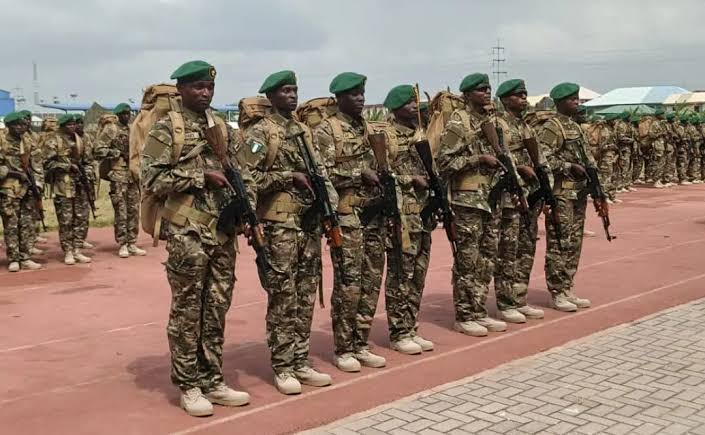
The Nigerian Navy has rescued two kidnapped victims and recovered several stolen outboard engines during an operation against suspected sea robbers and kidnappers in Ibeno, Akwa Ibom State.
The operation was carried out on September 30 by the Maritime Quick Response Team of Nigerian Navy Ship (NNS) JUBILEE in Ibeno, following intelligence reports about criminal activities targeting fishermen in the area.
The Director of Naval Information, Navy Captain Abiodun Folorunsho, disclosed the development in a statement, explaining that the suspected criminals had been attacking fishermen, taking away their boats and stealing their outboard engines”
Suspects Flee as Navy Launches Pursuit
According to the Navy, its personnel encountered two boats believed to have been operated by the suspected criminals during the operation.
The occupants reportedly fled into nearby creeks after sighting the naval team, prompting the personnel to pursue them.
During the chase, the suspects abandoned one of their boats, which contained several stolen outboard engines and the two kidnapped victims.
The naval team subsequently rescued the victims and escorted them to safety, while the recovered engines were secured for verification and further necessary action.
Navy Intensifies Efforts to Track Suspects
The Navy said efforts were ongoing to locate and apprehend the fleeing suspects, adding that the operation reflected its commitment to protecting lives and securing legitimate maritime activities across the country’s waterways.
Folorunsho also emphasised the importance of intelligence sharing and cooperation with coastal communities in tackling maritime crimes.
He urged fishermen, residents of coastal communities and other maritime stakeholders to report suspicious activities and provide timely information that could help security agencies respond to threats.
The Navy reaffirmed its commitment to sustained patrols, search-and-rescue operations and intelligence-driven interventions to protect lives and property along Nigeria’s waterways.

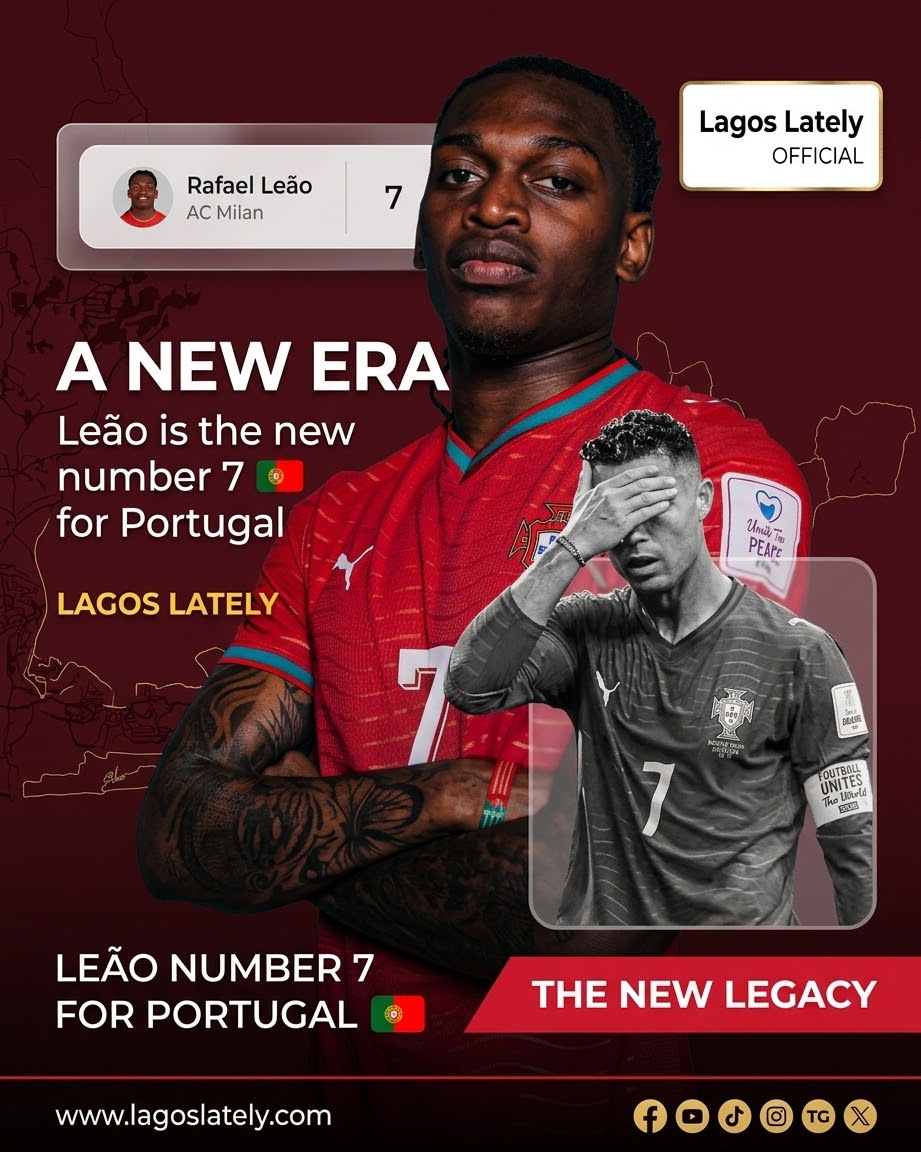
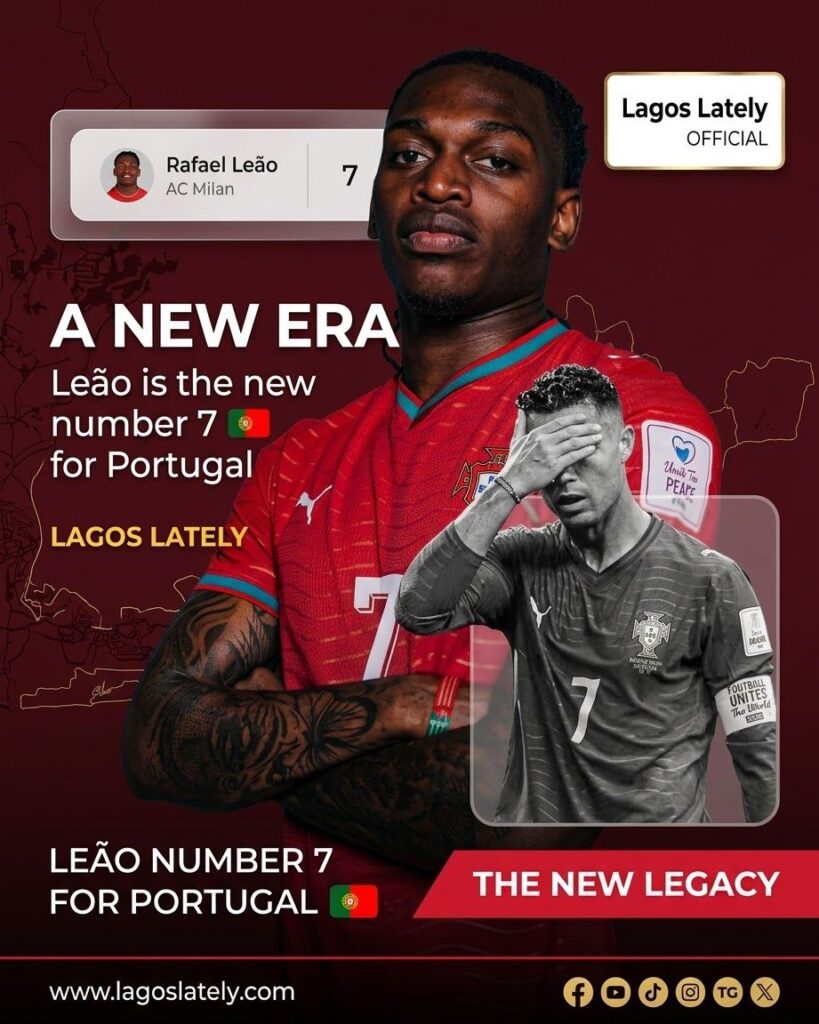
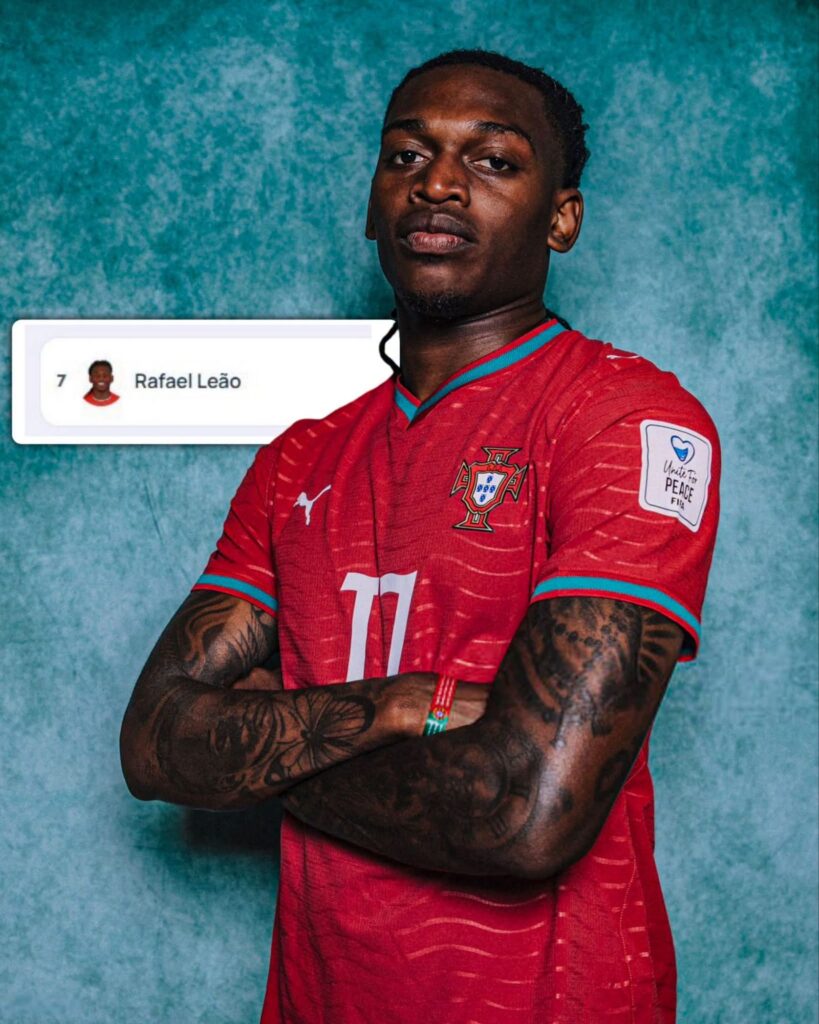
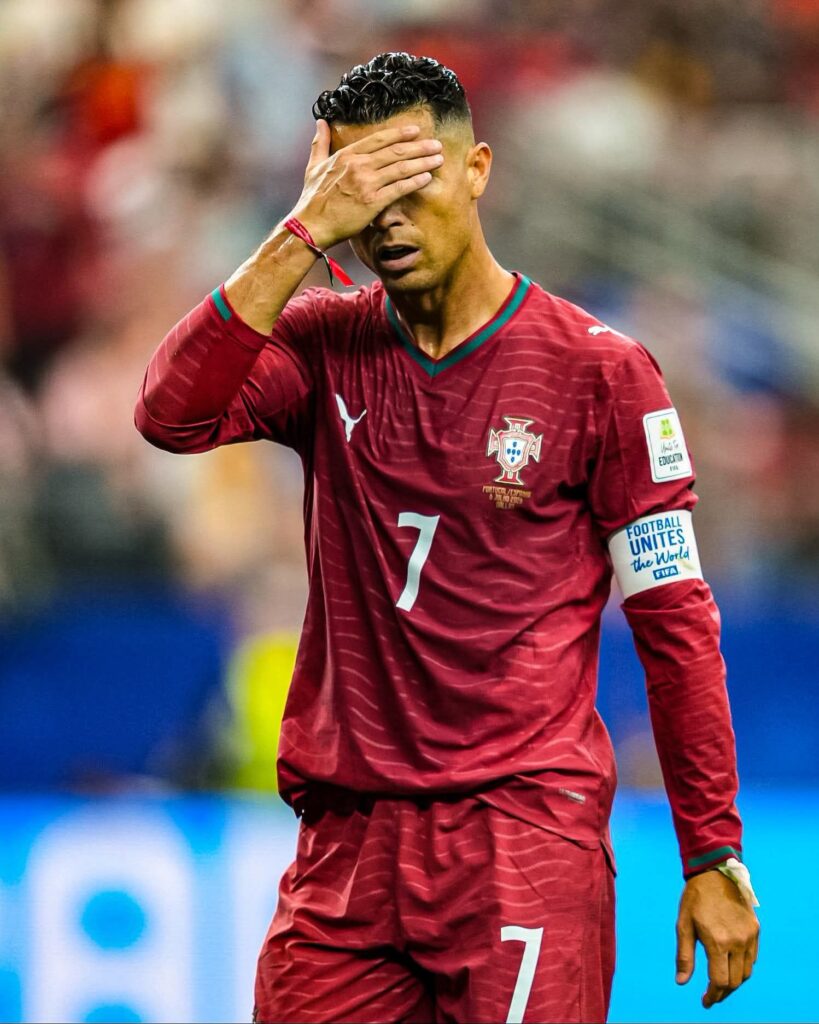
Barely hours after football legend; Cristiano Ronaldo announced his departure from the national team camp, his iconic number 7 shirt has officially been given to Rafael Leão in a move that has set social media alive.
The No. 7 is among the most closely watched shirts in world football, and the speed of the handover is what has fans talking. There was no long gap between one chapter ending and the next beginning, and Leão is now the face of that change.
Leão, a left winger who plays his club football in Europe, has been a regular in the national setup in recent years. Taking over the shirt places him at the centre of Portugal’s attacking plans and gives him one of the biggest responsibilities in the squad.
Supporters are already debating whether he can carry the weight of the number.
Reactions online are split between excitement and nostalgia. Some see the announcement as a bold statement that Portugal is ready to move forward with a new generation. Others say it will take time to accept anyone else in the shirt. Either way, all eyes will be on Leão the next time he steps onto the pitch wearing it. 👀
Neither the Portuguese football federation’s full statement nor any comment from Leão himself had been widely reported at the time of writing, and further details are expected.
Is Leão the right man to inherit the No. 7 shirt? Tell us in the comments.

The Joint Admissions and Matriculation Board (JAMB) has extended the deadline for candidates with outstanding admission offers from the 2021 to 2025 admission exercises to accept or reject the offers.
The new deadline is November 30, 2026, giving affected candidates an additional two months to update their admission status on the Central Admissions Processing System (CAPS).
JAMB had previously fixed September 30 as the deadline for candidates to take action on outstanding offers. The latest extension followed a temporary disruption of the CAPS platform, which was reportedly unavailable for about 96 hours.
JAMB Warns Candidates Against Missing New Deadline
The board described November 30 as the final deadline for candidates affected by the outstanding admission offers.
Candidates who wish to retain their previous admission offers are expected to log into their CAPS accounts and accept them. Those who no longer want the offers can reject them so that JAMB can update its records.
According to JAMB, candidates who accept their offers will be able to proceed with printing their admission letters.
The board also explained that candidates who are no longer studying at the institutions where they were previously offered admission, or who have changed programmes, may accept the outstanding admission and subsequently apply for the appropriate correction or deletion where necessary.
What Happens After November 30?
JAMB warned that candidates who fail to either accept or reject their outstanding offers by the new deadline will have the admissions reverted to “Not Admitted” on the board’s records.
Any subsequent request to update an admission record from the affected years will also attract the applicable penalty fee, according to the board.
JAMB further assured candidates who have already secured admission for the 2026 academic session that rejecting an outstanding admission offer from an earlier year will not affect their current admission.
The board urged all affected candidates to check their CAPS accounts and take the necessary action before the November 30 deadline.

 News3 years ago
Hardship: We Plan To Establish A National Commodity Board To Crash Food Prices – VP Shettima
- News8 years ago
Blog Reader; Samson Osagiede Celebrates Fiancè Benedicta Daniels’s Birthday With Sweet Words
- Home10 years ago
News Channel claims Donald Trump is an orphan from Pakistan,share alleged childhood photo
- Home10 years ago
Another $175m Found in Patience Jonathan’s wife’s firm’s Bank Account
 Sport8 years ago
Modric, Marta Wins 2018 FIFA Best Player Of The Year Awards ⚽️
- Home10 years ago
Oil Spillage: House of Reps Member Shares Photos of the Water her Constituents Drink .
- Home10 years ago
Zara Buhari & Ahmed Indimi’s Wedding Access Card
- News8 years ago
The Best Video You’ve Seen Today?