News
The Mark Zuckerberg visit By Reuben Abati


Mark Zuckerberg’s two-day visit to Nigeria has done a lot for the country; it is a pity no government official or agency has tried to tap into the gains of that visit. He arrived at a time there was much talk about economic recession, concerns about companies folding up or retrenching staff, or international investors leaving the country in droves, out of frustration with the uncertainties in the system.
Zuckerberg’s arrival raised our hopes: co-founder of Facebook and the 5th richest man in the world, sneaked into Nigeria to meet with developers and entrepreneurs and to discuss investments in Nigeria’s growing start-up ecosystem. And for two days, he went round the city of Lagos, visiting start-ups and interacting with young entrepreneurs.
The way Nigeria is often painted abroad, and in those travel advisories that foreign ministries issue, you would think Nigeria is such an unsafe place where kidnappers are permanently on the prowl. Zuckerberg helped to show the rest of the world that Nigeria is not so bad at all, and that something really exciting is happening here among the country’s young population. He had no bodyguards. He did not have to hire a lorry load of Nigerian policemen to keep watch over him. He trekked on the streets of Lagos, surrounded by a few of his hosts.
On Wednesday morning, he jogged across the Ikoyi-Lekki bridge. He ate pounded yam, shrimps, snails (I thought they said he is a vegan!) and jollof rice (Nigerian jollof (!) not that one from Ghana). His visit went smoothly. More investors may well be encouraged to visit Nigeria too, seeing how confidently a whole $53.7 billion walked freely about in Nigeria, and he was not stolen or kidnapped..
Zuckerberg’s visit also provided great publicity for Nigeria’s emerging Silicon Valley, and the young entrepreneurs to whom Zuckerberg paid compliments. He has already invested in a Nigerian start-up, Andela, and he has made friends with other young Nigerians, the guys behind Jobberman and C-Creation Hub (CcHUB) and so many others. Zuckerberg cut the picture throughout his visit of a true inspirational figure. His simplicity and humility was impressive. He kept going about in a T-shirt, and interacted freely with everyone he met.
Many young Nigerians can learn from his example: the way some people whose biggest possession is a laptop sometimes carry their shoulders in the sky, if they were to be half of what Zuckerberg is, they won’t just claim that they are voltrons or overlords, they will look for more intimidating labels. But Mark Zuckerberg, who is just 32, shows that it is not all about money, or influence, character matters. There is no doubt that his hosts were also impressed with him. And that probably explains the protest that greeted the attempt by CNN International and American artiste, Tyrese Gibson, to refer to the visit as Zuckerberg’s visit to sub-Saharan Africa. Young Nigerians kept shouting back that Zuckerberg is in Nigeria, not sub-Saharan Africa! They wanted the publicity for their country.
Inspired by Zuckerberg’s visit as the tech entrepreneurs in Nigeria’s Silicon Valley may have been, the Nigerian government should see in the visit, and the excitement that it has generated, the need to provide greater support for technological innovation in the country. There are many young Nigerians out there who are gifted, hardworking and innovative. They belong to the 21st Century. They are aggressive. They want to operate at the international level and become superstars. They have ideas. They are ready and willing. The basic thing that government owes them is to provide an enabling environment for their talents to flower. It has taken a few young men and ladies to bring Mark Zuckerberg to Nigeria. There are other young Nigerians doing wonderful things in other sectors of the economy who can save this country if they are given the chance. There is also a large army of untapped and yet-to-be-discovered talents, whose future we cannot afford to waste. Investment in education will help. Uncommon sense will make things happen.
Zuckerberg’s visit also did a lot for Nollywood. He described Nollywood as “a national treasure”. That statement should be framed and sent to every major agency in the private and public sectors in Nigeria. He may not yet have invested in Nollywood, but there was no doubt that the members of Nollywood and other celebrities who met with him appreciated their being recognized by one of the most successful young men of the 21st century. I watch Nollywood movies, but I don’t think I have ever seen those Nollywood stars who met with Zuckerberg smile that heartily and broadly – not even in the movies. The ones who did not bare their 32, were staring at the Facebook ambassador in that typical Nigerian fashion: “ah, see money, Mark, abi make I send you script make you sponsor?” ..
The way the visit went, if Mark Zuckerberg had wanted a Nigerian wife, or girlfriend, he would have been met at every turn with echoes of “Yes, Yes, Yes…come and hold something.” But he is already married. So, don’t worry, Priscilla Chan (Mark’s wife), your husband is safe, Nigerian ladies will only admire him, they don’t mean any harm, and they won’t initiate him into coded runs. But of course you trust him – you know he is not Justin Bieber. But money is good oh. After money, it is money. Ha, Ori lonise, eda ko la’ropin o, Edumare funmi ni money…
Altogether, it was a great business outing for Zuckerberg and Facebook. Over 16 million Nigerians are on Facebook, it is the largest and most influential social media platform in the country; on a daily basis, over 7 million Nigerians log onto the website. Many more are on whatsapp, another Facebook acquired platform. With Zuckerberg’s visit, that number is bound to grow. The strategic friendships and partnerships that he has been able to build is a demonstration of power and influence: Facebook is on the ground in Nigeria, the most populous country in Africa, and he has taken that further by visiting Kenya – look beyond the T-shirt, this young American billionaire is building constituencies and spheres of influence across Africa; he is exploring new markets and staying ahead of the competition in a continent that many other investors may overlook, or desert for reasons of inconvenience.
As a business strategy, Mark Zuckerberg’s exploration of the African market is brilliant. It may be the subject someday of a Management, Leadership and Marketing Class. Businesses must innovate, innovate and innovate and the best way to do that is through people. Nigerian entrepreneurs have a lot to learn in this regard: the mindset of the business leader is the soul of strategy. There are too many thermostatic leaders in the Nigerian business environment, and that is why at the slightest confrontation with hard choices, they close shop and run. Here is Mark Zuckerberg, in the face of proven recession, he wants to support start-ups and SMEs in Nigeria; at a time others are fleeing, he is coming into Nigeria and Africa. He is smart. Wicked problems in a business environment should inspire genius, change and innovation. That is what leadership is all about.
Beyond business and culture, there was a small political side to the Zuckerberg visit. The Facebook CEO had said Facebook will promote the use of Hausa Language, some reports indicated he had said he loves Hausa language, and then a storm followed, resulting in a hot, healthy spat between two friends, colleagues and brothers of mine, Femi Fani-Kayode (@realFFK) and Reno Omokri (@renoomokri), with one claiming that Americans are promoting Northern hegemony (John Kerry, now Zuckerberg and Facebook), and the other saying it is not a big deal, and in the exchange, we got some lectures about Nigeria’s ethnic and hegemonic politics.
On Wednesday at a town hall meeting, Zuckerberg more or less edited himself by saying “I am glad we support Hausa, and we are planning on supporting more languages soon.” He didn’t specify what those other languages are. I hope he knows Nigeria has over 400 languages and ethnic groups, and they all form part of the Nigerian Facebook community. He should tread carefully here, because I am not too sure Facebook can adopt Yoruba language before Igbo, or vice versa, without a social media war on its hands, and if Facebook chooses to accommodate the three major languages in Nigeria, it could be confronted with a major battle over minority rights on its platform. We are like that in this country, Mark.
But the difference is that Mark Zuckerberg is not a politician, he has voted only once (in 2008) and he doesn’t make political statements, except when business interests are at stake. Eyin boys, FFK and Reno, Zuckerberg doesn’t really care about the local fights we fight: he wants to create new markets and if promoting Hausa on Facebook will create more customers in that part of Nigeria, so be it. And in case religion is part of that politics, it doesn’t concern him either, he was born Jewish, but he is a self-declared atheist. If he worships any religion, it is the religion of Facebook. In Nigeria, he has Igbos, Yorubas and other Nigerians working for him.
He is interested in their intellect not where they come from. One more thing: The Nigerian government snubbed him or did he snub our government? When he got to Kenya, he was received at the airport by the Cabinet Secretary of Information and Communications and later given a delicious lunch of fish, semo and soup , no Nigerian government official offered him common sachet water and yet he was here to create jobs and markets!.
We shouldn’t frighten him away with our politics! The good news, though, is that he is a humanist even if a secular humanist: End of story. Thank you Marky, for the visit and for giving us a good story to tell.


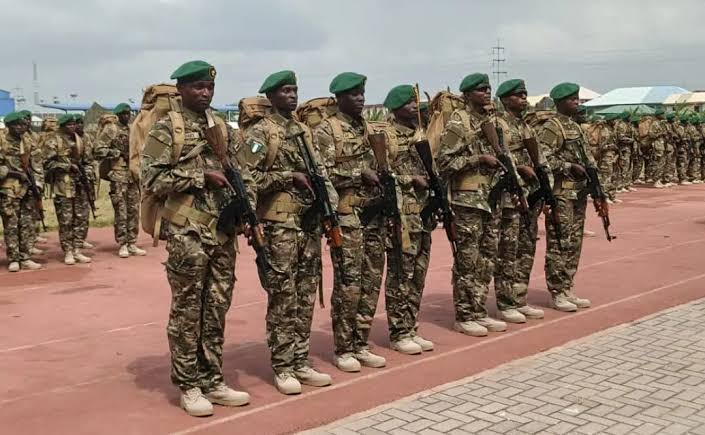
The Nigerian Navy has rescued two kidnapped victims and recovered several stolen outboard engines during an operation against suspected sea robbers and kidnappers in Ibeno, Akwa Ibom State.
The operation was carried out on September 30 by the Maritime Quick Response Team of Nigerian Navy Ship (NNS) JUBILEE in Ibeno, following intelligence reports about criminal activities targeting fishermen in the area.
The Director of Naval Information, Navy Captain Abiodun Folorunsho, disclosed the development in a statement, explaining that the suspected criminals had been attacking fishermen, taking away their boats and stealing their outboard engines”
Suspects Flee as Navy Launches Pursuit
According to the Navy, its personnel encountered two boats believed to have been operated by the suspected criminals during the operation.
The occupants reportedly fled into nearby creeks after sighting the naval team, prompting the personnel to pursue them.
During the chase, the suspects abandoned one of their boats, which contained several stolen outboard engines and the two kidnapped victims.
The naval team subsequently rescued the victims and escorted them to safety, while the recovered engines were secured for verification and further necessary action.
Navy Intensifies Efforts to Track Suspects
The Navy said efforts were ongoing to locate and apprehend the fleeing suspects, adding that the operation reflected its commitment to protecting lives and securing legitimate maritime activities across the country’s waterways.
Folorunsho also emphasised the importance of intelligence sharing and cooperation with coastal communities in tackling maritime crimes.
He urged fishermen, residents of coastal communities and other maritime stakeholders to report suspicious activities and provide timely information that could help security agencies respond to threats.
The Navy reaffirmed its commitment to sustained patrols, search-and-rescue operations and intelligence-driven interventions to protect lives and property along Nigeria’s waterways.
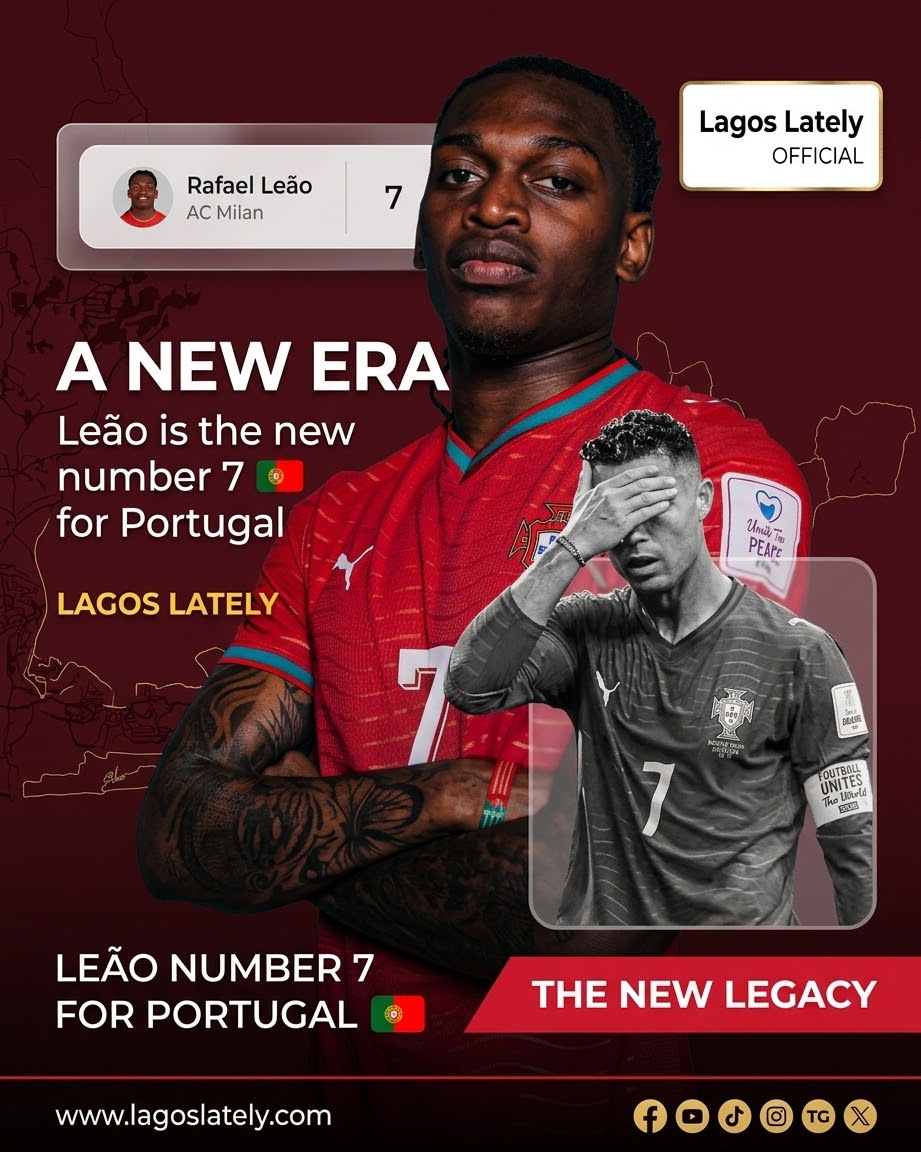
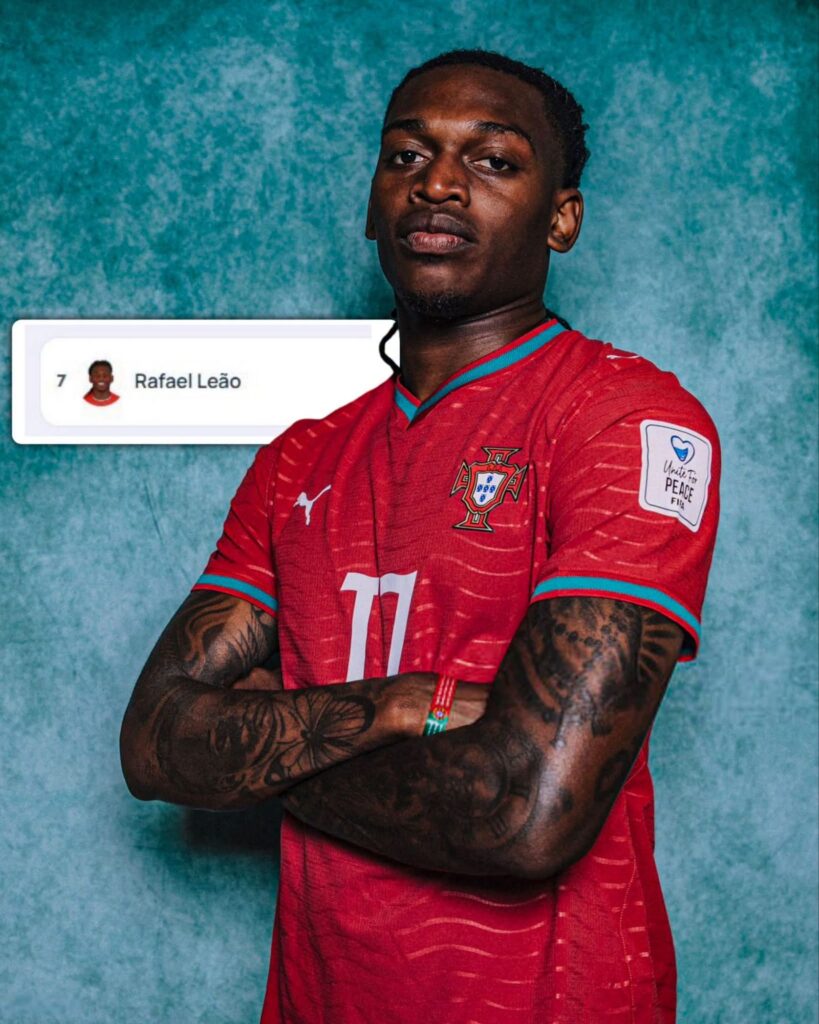
Barely hours after football legend; Cristiano Ronaldo announced his departure from the national team camp, his iconic number 7 shirt has officially been given to Rafael Leão in a move that has set social media alive.
The No. 7 is among the most closely watched shirts in world football, and the speed of the handover is what has fans talking. There was no long gap between one chapter ending and the next beginning, and Leão is now the face of that change.
Leão, a left winger who plays his club football in Europe, has been a regular in the national setup in recent years. Taking over the shirt places him at the centre of Portugal’s attacking plans and gives him one of the biggest responsibilities in the squad.
Supporters are already debating whether he can carry the weight of the number.
Reactions online are split between excitement and nostalgia. Some see the announcement as a bold statement that Portugal is ready to move forward with a new generation. Others say it will take time to accept anyone else in the shirt. Either way, all eyes will be on Leão the next time he steps onto the pitch wearing it. 👀
Neither the Portuguese football federation’s full statement nor any comment from Leão himself had been widely reported at the time of writing, and further details are expected.
Is Leão the right man to inherit the No. 7 shirt? Tell us in the comments.
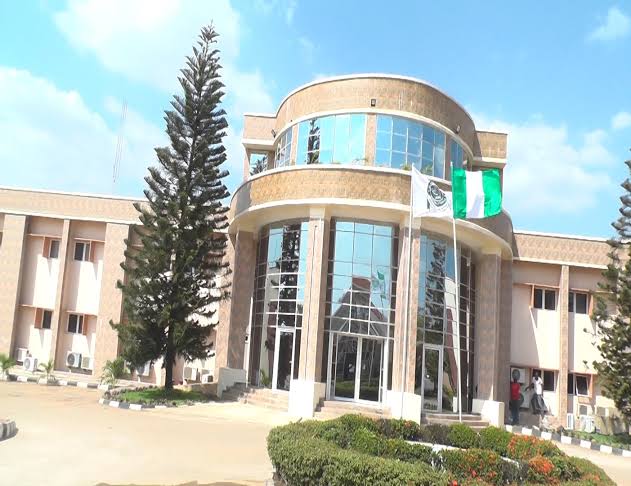
The Joint Admissions and Matriculation Board (JAMB) has extended the deadline for candidates with outstanding admission offers from the 2021 to 2025 admission exercises to accept or reject the offers.
The new deadline is November 30, 2026, giving affected candidates an additional two months to update their admission status on the Central Admissions Processing System (CAPS).
JAMB had previously fixed September 30 as the deadline for candidates to take action on outstanding offers. The latest extension followed a temporary disruption of the CAPS platform, which was reportedly unavailable for about 96 hours.
JAMB Warns Candidates Against Missing New Deadline
The board described November 30 as the final deadline for candidates affected by the outstanding admission offers.
Candidates who wish to retain their previous admission offers are expected to log into their CAPS accounts and accept them. Those who no longer want the offers can reject them so that JAMB can update its records.
According to JAMB, candidates who accept their offers will be able to proceed with printing their admission letters.
The board also explained that candidates who are no longer studying at the institutions where they were previously offered admission, or who have changed programmes, may accept the outstanding admission and subsequently apply for the appropriate correction or deletion where necessary.
What Happens After November 30?
JAMB warned that candidates who fail to either accept or reject their outstanding offers by the new deadline will have the admissions reverted to “Not Admitted” on the board’s records.
Any subsequent request to update an admission record from the affected years will also attract the applicable penalty fee, according to the board.
JAMB further assured candidates who have already secured admission for the 2026 academic session that rejecting an outstanding admission offer from an earlier year will not affect their current admission.
The board urged all affected candidates to check their CAPS accounts and take the necessary action before the November 30 deadline.

 News3 years ago
Hardship: We Plan To Establish A National Commodity Board To Crash Food Prices – VP Shettima
- News8 years ago
Blog Reader; Samson Osagiede Celebrates Fiancè Benedicta Daniels’s Birthday With Sweet Words
- Home10 years ago
News Channel claims Donald Trump is an orphan from Pakistan,share alleged childhood photo
 Sport8 years ago
Modric, Marta Wins 2018 FIFA Best Player Of The Year Awards ⚽️
- Home10 years ago
Another $175m Found in Patience Jonathan’s wife’s firm’s Bank Account
- Home10 years ago
Oil Spillage: House of Reps Member Shares Photos of the Water her Constituents Drink .
- Home10 years ago
Zara Buhari & Ahmed Indimi’s Wedding Access Card
- News8 years ago
The Best Video You’ve Seen Today?