News
Emir Bayero Formally Notifies Kano Police of Sallah Durbar Plans Amid Ongoing Emirate Succession Dispute

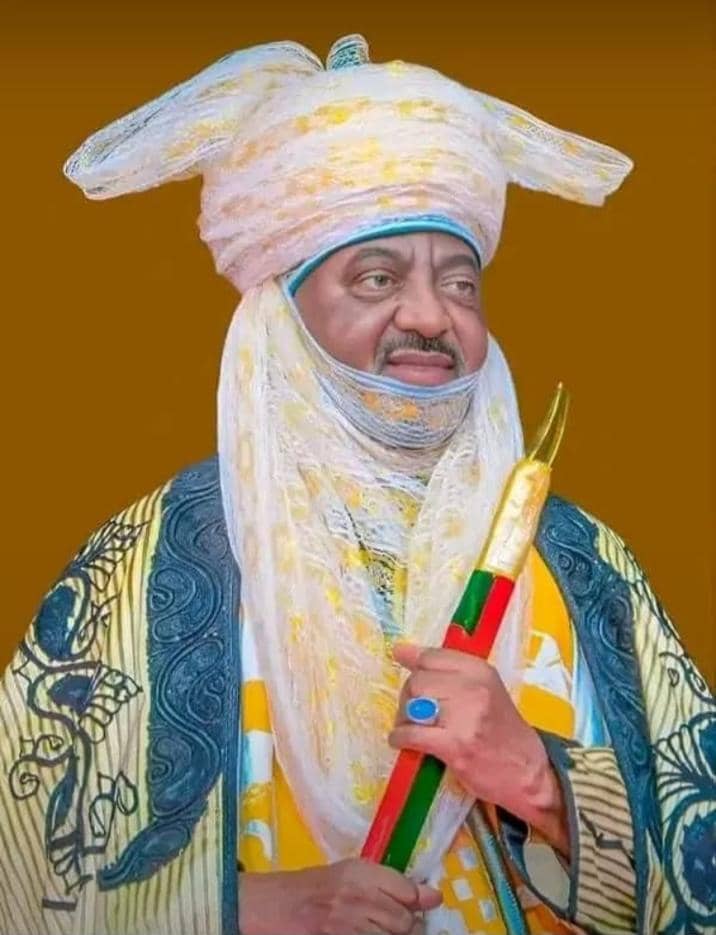
The 15th Emir of Kano, Alhaji Aminu Ado Bayero, has officially notified the Nigeria Police Force in Kano State of plans to hold the traditional Sallah durbar to mark the end of the Ramadan fasting period. The announcement was contained in a formal correspondence dated March 7, 2026, addressed to the state Commissioner of Police, Ibrahim Adamu Bakori, and endorsed by the emir’s Private Secretary, Abdullahi Haruna Kwaru on behalf of the Kano Emirate Council.
The letter confirmed that the schedule of activities had already received the approval of the emir and members of the Kano Emirate Council, with planned outings to include iconic durbar ceremonies such as Hawan Sallah, Hawan Daushe, Hawan Nasarawa, and Hawan Panisau, alongside other traditional displays associated with the historic festival. The celebrations are set to commence from the emir’s palace in the Nasarawa area of Kano before proceeding to other designated locations across the city.
The notification immediately reignites the familiar tension that has characterised Sallah preparations in Kano since the emirate succession crisis erupted in May 2024. Bayero and Muhammadu Sanusi II are both currently laying claim to the Kano throne, with the state government backing Sanusi while Bayero draws support from the federal centre — a divide that has repeatedly threatened to boil over during high-profile traditional ceremonies.
The durbar itself carries particular symbolic weight for Bayero’s camp. The Emirate Council’s letter emphasised that this year’s Sallah coincides with the fifth anniversary of Bayero’s enthronement, describing the occasion as one that holds special significance for both the emir and his supporters.
The history of Sallah durbar preparations in Kano over recent years has been fraught with last-minute cancellations and police bans. As recently as June 2025, the Kano State Police Command prohibited all forms of Sallah durbar celebrations by both emirs, citing intelligence reports suggesting that miscreants were planning to exploit the festivities to instigate violence and unrest in the ancient city.
Whether this year’s notification translates into an actual durbar or another tense standoff will depend largely on how security agencies respond — and on whether the emirate dispute, still winding its way through the courts, produces any decisive resolution before Eid-el-Fitr arrives.

The Federal High Court in Abuja has struck out the eight-count criminal charge against Adeniyi Adeyemi, who is accused of posing as the Director-General of the purported Presidential Foreign Intervention Promotion Council (PFIPC), following legal issues identified in the prosecution’s case.
Justice Mohammed Umar struck out the charges on Monday, October 12, 2026, after the Federal Government applied to discontinue the case before the court and pursue fresh charges at the High Court of the Federal Capital Territory (FCT).
The Director of Public Prosecutions of the Federation, Rotimi Oyedepo, SAN, told the court that a review by the Attorney-General of the Federation and Minister of Justice had revealed jurisdictional problems with the original charges filed by the Inspector-General of Police.
According to the prosecution, the allegations relating to documents allegedly forged by Adeyemi fell within the jurisdiction of the FCT High Court rather than the Federal High Court, where the case was initially instituted.
Oyedepo therefore asked the court to strike out the existing charges, explaining that fresh charges had already been filed before the FCT High Court and that the government intended to proceed with a new arraignment.
Adeyemi’s counsel, Ibrahim Angulu, SAN, did not oppose the application, following which Justice Umar granted the request.
Adeyemi had been arraigned on September 30, 2026, on eight counts bordering on alleged conspiracy and forgery. He pleaded not guilty to all the charges.
The prosecution alleges that he presented himself as the head of a government agency that was neither established nor authorised by the Federal Government. The allegations also involve purported official documents used in connection with the agency’s activities.
Adeyemi has previously maintained that the organisation was legitimate and denied wrongdoing. The allegations have not been established by a court.
Following his earlier arraignment, he was remanded at the Kuje Correctional Centre pending further proceedings. The fresh charges are expected to be heard by the FCT High Court.
The striking out of the charges at the Federal High Court does not amount to an acquittal on the allegations, as the Federal Government has indicated its intention to continue the prosecution through the new case.

The Kano State Police Command has arrested 10 suspected members of an interstate vehicle theft syndicate and recovered 12 stolen vehicles during coordinated operations across Kano and neighbouring states.
The Commissioner of Police, Ibrahim Adamu Bakori, disclosed the development on September 16, 2026, during a press briefing at the Tarauni Area Command in Kano.
According to the commissioner, the operation began on September 7 when operatives of the Special Intervention Squad (SIS), acting on intelligence, arrested five suspects in Adamawa State and recovered a white Mercedes-Benz GLK 350.
Further investigations led to the recovery of 10 additional vehicles from different locations across Kano and neighbouring states. Five more suspects were subsequently arrested on September 12 at Kwankwasiya City Quarters in Tarauni, Kano, bringing the total number of suspects to 10.
Police said the syndicate allegedly stole vehicles and moved them across state boundaries for resale. The suspects reportedly confessed to involvement in vehicle thefts in Kano, Katsina, Bauchi, Gombe and other states, although the allegations remain subject to investigation and judicial proceedings.
Bakori expressed concern that 11 of the 12 recovered vehicles were unregistered, a situation he said made it difficult for investigators to establish their ownership.
He urged motorists to register their vehicles properly and avoid using concealed or improperly displayed number plates, warning that such practices could make it harder to trace vehicles linked to criminal activities.
The police commissioner also commended members of the public and neighbouring police commands for providing information and supporting the operations.
He said investigations were continuing to identify other suspected members of the syndicate and recover additional stolen vehicles. The suspects are expected to be charged in court after the conclusion of investigations.
Owners seeking to identify and reclaim recovered vehicles were advised to contact the Kano State Police Command with valid proof of ownership.

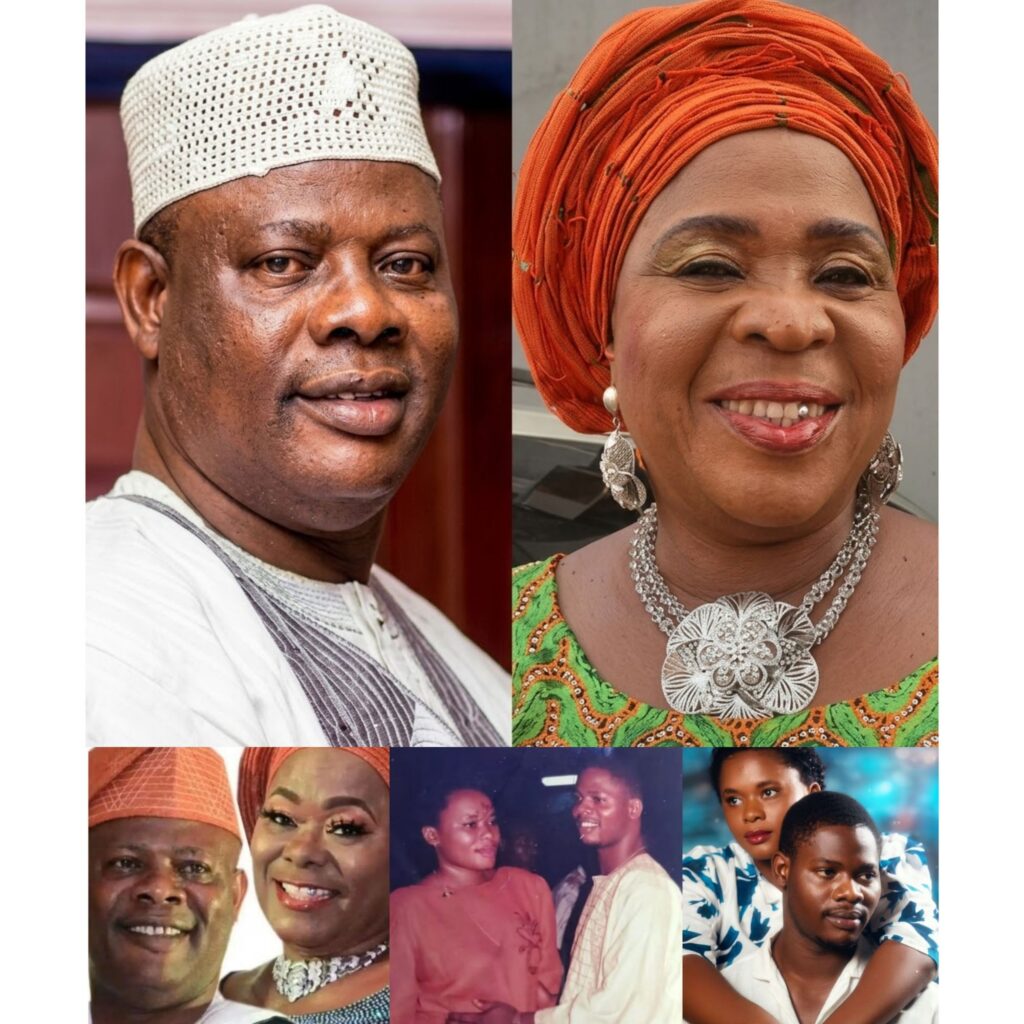
Veteran Nollywood actor Yinka Quadri has spoken about his decades-long friendship with fellow actress Saje, which dates back to their early days in the movie industry.
According to Quadri, Saje was already close to his wife before the couple married, and she has kept that bond over the years without engaging in gossip. He said she knew about some of his relationships with other women but never passed the information on to his wife, describing her as someone who can be trusted.
The Agba Aki of Oro Kingdom also recalled a time he considered helping Saje’s husband, Rafiu Balogun, during a difficult period in their marriage. He told Saje that Rafiu wanted to accompany him to a movie location, expecting her to object because of their misunderstanding. Instead, she welcomed the idea. Quadri said he felt obliged to inform her because of her friendship with his wife.
The actor also spoke on pay in the movie industry, insisting he would not expect to earn more than younger colleagues simply because of his experience.
Citing Funke Akindele and Lateef Adedimeji as examples, he said, “If I’m being called to a job, and Funke Akindele and Lateef Adedimeji are going to be paid the same amount, I’m an enemy of God if I’m expecting that they should pay me more than him.”
The veteran actor added that actors negotiate their fees differently. Some accept whatever they are offered, while others insist on the amount they want. He concluded that such differences are simply part of life.

 News3 years ago
Hardship: We Plan To Establish A National Commodity Board To Crash Food Prices – VP Shettima
- News8 years ago
Blog Reader; Samson Osagiede Celebrates Fiancè Benedicta Daniels’s Birthday With Sweet Words
- Home10 years ago
News Channel claims Donald Trump is an orphan from Pakistan,share alleged childhood photo
 Sport8 years ago
Modric, Marta Wins 2018 FIFA Best Player Of The Year Awards ⚽️
- Home10 years ago
Another $175m Found in Patience Jonathan’s wife’s firm’s Bank Account
- Home10 years ago
Oil Spillage: House of Reps Member Shares Photos of the Water her Constituents Drink .
- Home10 years ago
Zara Buhari & Ahmed Indimi’s Wedding Access Card
- News8 years ago
The Best Video You’ve Seen Today?