Politics
“I Won’t Leave PDP — I’ve Repented From Wike’s Camp” — Makinde Makes Bold Declaration at New Party Secretariat in Ibadan

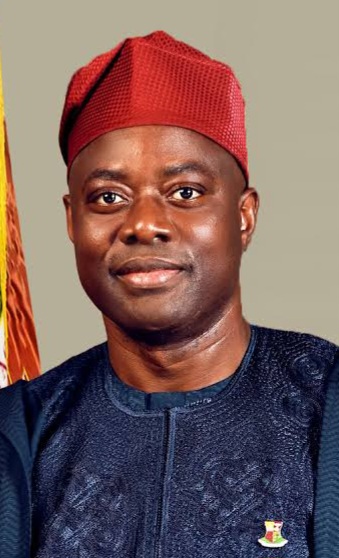
Oyo State Governor Seyi Makinde has drawn a very clear line in the sand — and he wants every political actor in Nigeria to know exactly which side of it he is standing on.
Speaking at the commissioning of a newly constructed PDP Secretariat at Oke-Ado, Ibadan — a building he personally donated and which was named after the late former Oyo State PDP Chairman, Alhaji Omokunmi Mustapha — Makinde used the occasion not just to celebrate a party infrastructure milestone, but to address the persistent speculation surrounding his political future head on.
“But now I’ve repented. I will not go again. But for them to hold PDP for another party to be in power, it is no, no, no,” he declared, pausing just long enough for the room to absorb the weight of what he was saying.
The admission carried significance far beyond its brevity. In those few words, Makinde publicly acknowledged what many within opposition circles had long whispered — that during the 2023 presidential election cycle, he had been aligned with individuals within the PDP whose true agenda was not to strengthen the party but to weaken it from inside and create an opening for the APC at the centre. He said he had come into government in 2019 and drifted into alignment with that camp heading into 2023, but insisted that chapter was firmly closed. He did not name Nyesom Wike directly in every instance, but the target of his criticism was never in doubt — and he was not subtle about it. He criticised Wike’s involvement in Oyo PDP affairs, insisting that the FCT Minister lacks any moral justification to interfere in the party’s operations in the state.
The defection rumours Makinde was pushing back against have taken several forms in recent months. In December 2025, reports emerged placing him on his way to the Peoples Redemption Party. By January 2026, a fresh wave of speculation claimed he was headed to the African Democratic Congress, with some political commentators even framing a visit he paid to former Vice President Atiku Abubakar as the beginning of a negotiation for an ADC vice-presidential ticket — a claim his aide Taiwo Adisa flatly and publicly rejected. “I am not APC, and I am not about to become APC,” Makinde had said at a public event in Abuja in December 2025, in what was the first of several public affirmations of his loyalty to the PDP.
But the Ibadan declaration carried a different energy. This was not a denial issued through a press statement or a footnote at someone else’s event. This was Makinde on his own turf, at a ceremony he funded, surrounded by his own people — and he used it to restate his political identity on his own terms.
On the party’s ongoing internal crisis, Makinde remained measured but firm. He noted that certain individuals who had seized the opportunity of the PDP’s 2015 defeat to gain control of the party would no longer be allowed to hold it down, describing them as illegitimate players whose expulsion at the party’s November 2025 convention in Ibadan was not a crisis but a necessary correction. He expressed full confidence in the judiciary to resolve the legal disputes surrounding the PDP’s factional battle, describing the courts as the last hope of the common man and insisting that truth, however long delayed, always catches up with falsehood.
The event was attended by PDP National Chairman Alhaji Kabiru Tanimu Turaki, former Oyo First Lady Chief Mutiat Ladoja, former Oyo House Speaker Senator Monsurat Sunmonu, and a broad cross-section of party faithful from across the state. All speakers thanked Makinde for standing firm during one of the most turbulent periods in the PDP’s recent history, and pledged that the party would return in full force for the 2027 elections at both the state and federal levels.
What Wednesday’s event made plain is this — Seyi Makinde is not going anywhere, he knows it, and he wants his opponents to know it too.


President Bola Tinubu has appointed former Director-General of the Department of State Services (DSS), Yusuf Magaji Bichi, as Chairman of the Governing Board of the National Institute for Security Studies (NISS), Abuja.
The appointment was announced on Thursday, October 22, 2026, by the institute’s Director of Coordination and Liaison, Lilian Omo-Odigwe.
According to the announcement, Tinubu approved the appointment following a recommendation by the incumbent DSS Director-General, Oluwatosin Adeola Ajayi.
Bichi’s appointment takes effect from October 22, 2026, for an initial four-year term in accordance with Section 4 of the National Institute for Security Studies (Establishment) Act, 2019.
He succeeds former DSS chief A.A. Gadzama as chairman of the institute’s governing board.
The NISS said Bichi’s experience in intelligence, security administration, operational leadership and institutional training would contribute to the institute’s strategic direction and governance.
The institute is responsible for strategic security training, research and capacity development for personnel within Nigeria’s security sector and allied institutions.
Bichi previously served as Director-General of the DSS from September 2018 until August 2024, when he left the position and was succeeded by Adeola Ajayi.
During his career, he held several positions within the intelligence agency, including State Director of Security in Jigawa, Niger, Sokoto and Abia states. He also served in different directorates at the DSS national headquarters and headed the State Services Academy in Lagos.
Before joining the DSS, Bichi began his career in the Security Division of the Kano State Cabinet Office and transferred his service in 1984. He later received specialised training in intelligence processing, analysis and security administration.
His appointment comes as the Federal Government continues efforts to strengthen Nigeria’s security institutions amid persistent challenges, including kidnapping, banditry and other forms of violent crime.
As chairman of the NISS Governing Board, Bichi is expected to provide oversight on the institute’s strategic direction and contribute to strengthening professional training and institutional capacity within the country’s security sector.
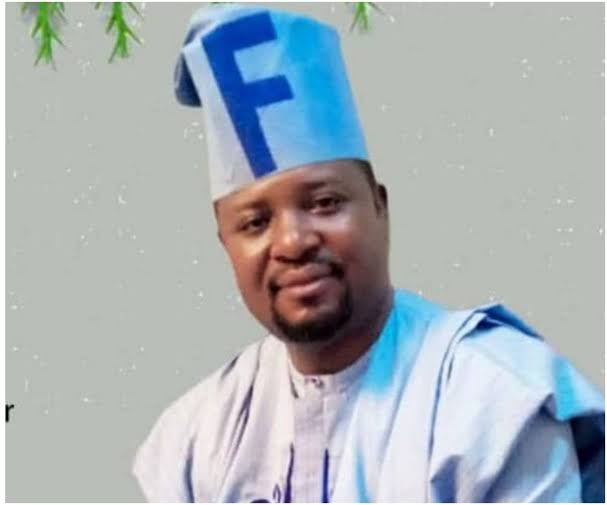
The Social Democratic Party (SDP) governorship candidate in Lagos State, Femi Olaniyi-Ferrari, has declared his intention to defeat the ruling All Progressives Congress (APC) in the 2027 governorship election.
Olaniyi-Ferrari made the declaration during an interview in Lagos on Monday, October 19, 2026, saying his party was prepared to offer residents an alternative leadership focused on public welfare, accountability and socioeconomic development.
According to the News Agency of Nigeria, the candidate argued that Lagos residents deserved a government that listens to their concerns and responds to their needs.
He also questioned the prolonged dominance of one political party in the state, maintaining that a change in leadership should be considered by voters.
Olaniyi-Ferrari said the SDP intended to reshape the state’s political landscape through policies and programmes designed to improve residents’ living standards.
SDP Promises People-Centred Governance
The governorship candidate said his party would prioritise transparency, economic opportunities, social welfare and sustainable development if given the mandate to govern Lagos.
He explained that the SDP would intensify grassroots mobilisation and engagement across the state to communicate its policy proposals and attract support ahead of the election.
Olaniyi-Ferrari also urged eligible voters to examine the manifestoes and policy commitments of political parties before deciding whom to support in 2027.
He emphasised that elections provide citizens with an opportunity to influence the direction of governance through their votes.
According to him, the SDP’s proposed approach would focus on responsible management of public resources, broader access to opportunities and government policies that reflect residents’ aspirations.
The candidate expressed confidence in his party’s ability to mobilise supporters across Lagos and compete for the governorship seat.
He further called on residents to participate actively in the electoral process, stressing the importance of credible elections and informed choices in strengthening democracy.
The SDP’s declaration comes as political parties and their candidates intensify preparations for the 2027 elections, with the APC facing challenges from opposition parties seeking to secure the support of Lagos voters.
However, the outcome of the contest will ultimately depend on the candidates’ campaigns, policy proposals and decisions made by voters at the polls.
The Nigeria Democratic Congress (NDC) has withdrawn recognition of its chapters operating outside Nigeria, citing a subsisting court judgment that reportedly restricts Nigerian political parties from establishing and supervising branches abroad.
The party announced the decision on Sunday through its National Publicity Secretary, Osa Director, who said the move followed a review of the party’s relationship with its foreign-based chapters.
According to Director, the decision was taken in deference to a judgment delivered by Justice Peter Kekemeke of the Federal Capital Territory High Court in Maitama in a case involving Professor Ali Alao, the All Progressives Congress (APC) and another party.
The suit, identified as No. CV/187/2025, reportedly addressed the legal status of diaspora chapters established by political parties registered in Nigeria.
The NDC spokesperson said the court held that Nigerian political parties lacked the legal authority to establish, operate or supervise chapters outside the country’s territorial boundaries.
Consequently, the party said it was halting recognition of its foreign chapters and withdrawing all previously granted recognition in compliance with the judgment.
Despite the decision, the NDC expressed appreciation to Nigerians living abroad for their support, loyalty and contributions to the party.
Director disclosed that the party had begun a harmonisation process in locations where multiple groups were operating, with the aim of bringing them together under a unified structure.
He added that the party was still reviewing the judgment and had referred the matter to its legal department for further advice and guidance.
The NDC also acknowledged the interest of Nigerians in the diaspora in its candidates ahead of the 2027 general elections, particularly its presidential candidate, Peter Obi.
The party encouraged its supporters abroad to remain engaged, continue interacting and maintain their political interests through appropriate and lawful channels.
The development comes as political parties prepare for the 2027 elections, with the NDC indicating that its withdrawal of formal recognition would not prevent continued engagement with supporters outside Nigeria.

 News3 years ago
Hardship: We Plan To Establish A National Commodity Board To Crash Food Prices – VP Shettima
- News8 years ago
Blog Reader; Samson Osagiede Celebrates Fiancè Benedicta Daniels’s Birthday With Sweet Words
- Home10 years ago
News Channel claims Donald Trump is an orphan from Pakistan,share alleged childhood photo
 Sport8 years ago
Modric, Marta Wins 2018 FIFA Best Player Of The Year Awards ⚽️
- Home10 years ago
Another $175m Found in Patience Jonathan’s wife’s firm’s Bank Account
- Home10 years ago
Oil Spillage: House of Reps Member Shares Photos of the Water her Constituents Drink .
- Home10 years ago
Zara Buhari & Ahmed Indimi’s Wedding Access Card
- News8 years ago
The Best Video You’ve Seen Today?